

Introduction
If you have spent any time browsing herbal remedies, you have probably come across mullein tea. It is one of the most talked about respiratory herbs on the internet, and for good reason. People search for it when they have a nagging cough, a stuffy chest, or simply want to add another herbal option to their wellness routine.
Mullein comes from a tall, soft leafed plant that has been used in traditional herbal practices for generations. At CareSalve, we like to look closely at what these traditions actually say, and what modern research does and does not confirm. Mullein leaf tea is widely valued for respiratory comfort, but it is important to understand that traditional use is not the same thing as a proven medical treatment.
In this guide, we will walk through what mullein tea is, its potential benefits, possible side effects, how to prepare it, and answers to the most common questions people ask.
What Is Mullein Tea?
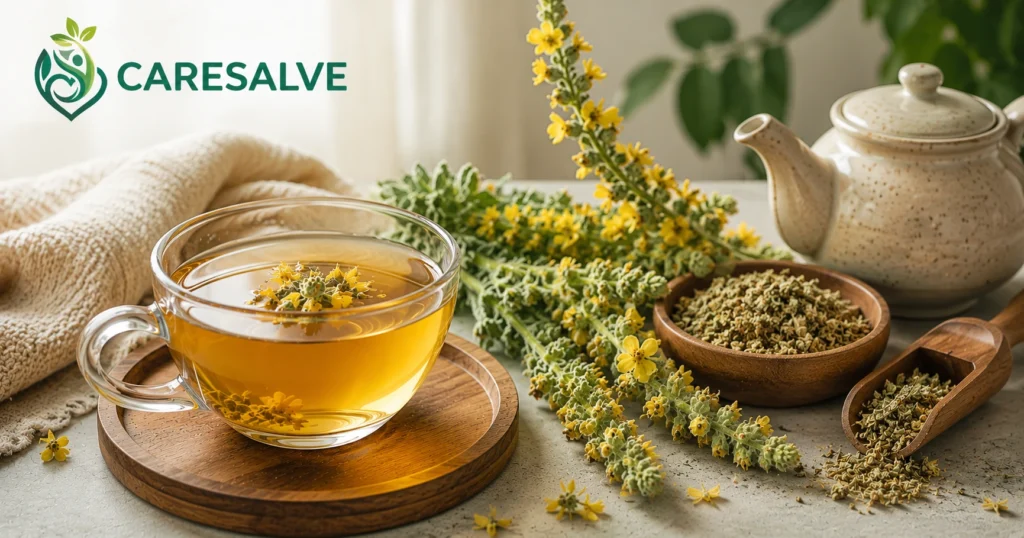
Mullein tea is an herbal infusion typically made by steeping dried mullein leaves in hot water. The mullein plant, scientifically known as Verbascum thapsus, is a biennial herb with large, fuzzy leaves and tall flowering stalks. It grows across parts of Europe, Asia, Africa, and North America, and has a long history in folk herbalism.
While mullein leaf tea is the most common version, some people also brew mullein flower tea or mullein root tea. Each part of the plant has been used differently in traditional practice. The leaves are most often associated with respiratory support, while the flowers are sometimes used in oil infusions and topical preparations. The root is less commonly used for tea.
In Spanish speaking communities, mullein is often referred to as gordolobo, and gordolobo tea is a familiar remedy in many households for cough and cold symptoms.
What Is Mullein Tea Good For?
So what is mullein tea actually good for? Traditionally, mullein tea has been used to support:
- Respiratory comfort
- Cough and throat irritation
- Congestion
- Phlegm and mucus clearing
- General herbal wellness
These uses come primarily from centuries of folk herbalism rather than large scale human clinical trials. Some laboratory and animal studies have looked at compounds found in mullein, and early findings are interesting, but they are not the same as strong evidence in humans. If you are dealing with a persistent or severe respiratory issue, mullein tea should be viewed as a complementary option rather than a replacement for medical care.
Mullein Tea Benefits
May Support Respiratory Health
Mullein has traditionally been used as a soothing herb for the throat and respiratory tract. The leaves contain mucilage, a naturally occurring substance that can create a soothing, coating sensation when consumed as tea. This is likely part of why mullein has been associated with respiratory comfort for so long.
It is worth being clear that mullein tea does not treat or cure any respiratory disease. It may offer a comforting addition to your routine, but it should not be relied upon as a stand alone treatment for lung conditions.
May Help With Cough
One of the most common reasons people search for mullein tea for cough is its traditional use for dry or irritated throats. The soothing quality of the tea may offer temporary comfort when the throat feels scratchy or raw.
That said, evidence specifically studying mullein tea for cough in humans is limited. If a cough lasts more than a couple of weeks, comes with fever, chest pain, or difficulty breathing, it is time to speak with a healthcare professional rather than relying on herbal tea alone.
May Help With Congestion and Phlegm
People also turn to mullein tea for congestion and phlegm. Historically, mullein was used to help the body manage excess mucus during colds and seasonal congestion. This is likely connected to its soothing properties rather than any dramatic effect on mucus production itself.
It is important to avoid the idea that mullein tea “cleans” or detoxes the lungs. The body already has its own highly effective systems for clearing mucus and irritants, and no herbal tea can replace those processes.
May Have Anti Inflammatory Properties
Preliminary laboratory research has looked at certain compounds found in mullein, including flavonoids and saponins, for their potential anti inflammatory activity. Anti inflammatory activity in a lab setting means that a compound may reduce markers of inflammation in cells or tissue samples.
This is a meaningful area of interest for researchers, but laboratory findings do not automatically translate into proven effects when the herb is consumed as tea by humans. More research is needed before any firm conclusions can be drawn.
May Have Antibacterial Properties
Some early studies have explored antibacterial activity of mullein extracts against certain bacteria in controlled lab settings. While this is scientifically interesting, it does not mean mullein tea can treat a bacterial infection.
If you suspect you have a bacterial infection, such as strep throat or bacterial bronchitis, mullein tea should never be used as a substitute for prescribed antibiotics or professional medical care.
May Have Antiviral Properties
Similarly, a small number of studies have examined antiviral activity of mullein compounds in laboratory conditions. These early findings are worth watching, but they remain far from conclusive when it comes to real world use.
Mullein tea should not be considered a treatment for colds, flu, or any other viral illness. It may be used as a comforting addition alongside rest, hydration, and standard care, but not as a substitute for it.
Does Mullein Tea Clean Your Lungs?
This is one of the most frequently asked questions, and the honest answer is no, not in the way many people imagine. Your lungs already have a highly efficient built in system for clearing mucus, dust, and other particles, primarily through tiny hair like structures called cilia.
There is no strong scientific evidence that mullein tea detoxes or cleans the lungs. If lung health is a priority, avoiding smoking, limiting exposure to pollutants, and following medical guidance will matter far more than any herbal tea.
Mullein Tea for Asthma, COPD, and Other Lung Conditions

Because mullein has a reputation as a respiratory herb, many people search for mullein for asthma or mullein for COPD. It is important to understand the difference between traditional herbal use and medical treatment.
Asthma and COPD are chronic conditions that require ongoing medical management, often including prescribed inhalers or other medications. Mullein tea has not been proven as an effective treatment for these conditions, and it should never be used to replace prescribed asthma or COPD medication.
If you experience wheezing, shortness of breath, chest tightness, or a sudden worsening of respiratory symptoms, seek medical attention rather than relying on herbal tea alone.
Mullein Tea Side Effects
Possible Side Effects of Mullein Tea
Mullein tea is generally considered mild, but like any herbal product, it is not entirely without risk. Possible concerns include:
- Skin irritation or allergic reactions in sensitive individuals
- Mild stomach discomfort
- Throat irritation if the tea is not strained thoroughly
- Potential irritation from the tiny hairs on mullein leaves if they are not filtered out
- Unknown effects with excessive or prolonged use, since research is limited
Anyone with a known plant allergy, particularly to plants in the same family as mullein, should be cautious.
Can You Drink Mullein Tea Every Day?
There is no universally established therapeutic daily dose for mullein tea. Many people drink it occasionally, such as during a cold or when they feel congested, rather than as a daily habit.
If you are considering drinking mullein tea regularly, it is best to follow the preparation instructions provided on the specific product you are using, and to check in with a healthcare provider, especially if you plan to use it for an extended period. Keep in mind that concentrated mullein extracts are different from a simple leaf tea, and dosing guidance for one does not automatically apply to the other.
Can You Take Too Much Mullein?
Just because something is natural does not mean it is free of risk in high amounts. Concentrated mullein extracts and tinctures are more potent than a cup of brewed tea, and taking too much of any herbal concentrate can increase the likelihood of unwanted effects.
As a general rule, moderation matters. Avoid using large amounts of concentrated mullein products without professional guidance.
Who Should Not Use Mullein?
Certain groups should speak with a healthcare professional before trying mullein tea, including:
- Pregnant or breastfeeding individuals
- Children
- People with known plant allergies
- People currently taking prescription medications
- People with chronic respiratory conditions such as asthma or COPD
This is not a complete list, and when in doubt, a conversation with a doctor or pharmacist is always a good idea before adding a new herbal product to your routine.
Does Mullein Tea Have Caffeine?
Pure mullein tea, made only from dried mullein leaves, does not naturally contain caffeine. It is considered a caffeine free herbal tea.
That said, some commercial blends combine mullein with other ingredients, including caffeinated teas like black or green tea. If you are drinking mullein tea in the evening and want to avoid caffeine, always check the ingredient label to confirm the blend you are using is pure mullein.
What Does Mullein Tea Taste Like?
Mullein tea has a mild, slightly earthy and somewhat sweet flavor, often described as gentle and unassuming compared to stronger herbal teas. Because the leaves have fine hairs, proper straining is essential, both for texture and comfort. Poorly strained mullein tea can feel slightly fuzzy or irritating in the throat.
Many people enjoy adding a small amount of honey or lemon to mullein tea to enhance the flavor, particularly when using it during a cold.
How to Make Mullein Tea
How to Make Mullein Tea From Dried Leaves
Making mullein tea at home is simple:
- Measure about one to two teaspoons of dried mullein leaves per cup of water.
- Bring water to a near boil and pour it over the leaves.
- Allow the tea to steep for about ten to fifteen minutes.
- Strain thoroughly using a fine mesh strainer or cheesecloth to remove the tiny leaf hairs.
- Serve warm, adding honey or lemon if desired.
Straining carefully is one of the most important steps. The fine hairs on mullein leaves can cause throat irritation if they are not fully filtered out.
How Much Mullein Should You Use for Tea?
There is no single, medically established dose for mullein tea. Most guidance comes from traditional practice and product packaging rather than clinical research. The safest approach is to follow the instructions provided with whatever dried mullein or tea bags you purchase.
Can You Make Mullein Tea With Fresh Leaves?
Yes, fresh mullein leaves can be used to make tea, although dried leaves are more common in commercial products. If using fresh leaves, thorough straining is even more important, since the fine hairs are still present and can be more noticeable than in dried, processed leaves.
When Should You Drink Mullein Tea?
People drink mullein tea at different times of day depending on their goals. Some prefer it in the morning as part of a wellness routine, others drink it during the day when they feel congested, and some choose it in the evening for a calming, warm beverage before bed.
There is no universally established best time to drink mullein tea. Since it is naturally caffeine free, many people find it suitable for evening use, though individual preference plays a large role.
Can Mullein Tea Help You Sleep?
Some people ask whether mullein tea for sleep is effective, often because it is caffeine free and has a calming reputation. However, there is limited direct evidence that mullein tea has a sedative or sleep promoting effect on its own.
Being caffeine free simply means it will not interfere with sleep the way caffeinated beverages might. It is not the same as having proven sleep inducing properties. If you enjoy a warm cup of mullein tea as part of a relaxing evening routine, that ritual itself may support better sleep, separate from any specific chemical effect of the herb.
Mullein Tea for Smokers
Mullein leaf tea for smokers is a popular search topic, often tied to the idea that it can help clean the lungs after smoking. Unfortunately, there is no scientific evidence supporting the idea that mullein tea can reverse smoking related lung damage or clear out toxins from cigarette smoke.
It is also worth addressing a related misconception. Some traditional practices historically involved smoking dried mullein leaves, sometimes marketed as a gentler alternative to tobacco. However, inhaling any combusted plant material, including mullein, introduces smoke and particulates into the lungs, and this is not considered a safe or evidence based practice. If lung health is a concern, the most impactful step remains quitting smoking altogether and speaking with a healthcare provider about cessation support.
Types of Mullein Tea
Mullein Leaf Tea
Mullein leaf tea is the most widely available and commonly used form, valued for its traditional association with respiratory comfort.
Mullein Flower Tea
Mullein flower tea is less common for drinking but is sometimes used in other traditional preparations, such as infused oils.
Mullein Root Tea
Mullein root tea is the least commonly used form and is not as widely studied or available as leaf tea.
Organic Mullein Tea
Many people prefer organic mullein tea or organic mullein leaf tea to avoid exposure to pesticides and synthetic chemicals often found in conventionally grown herbs.
Loose Leaf Mullein Tea and Tea Bags
Mullein is available in both loose leaf form and pre packaged tea bags. Loose leaf mullein tea often allows for more control over strength and steeping time, while tea bags offer convenience and consistent straining, which helps address concerns about leaf hairs.
Mullein Tea vs Mullein Extract
It helps to understand the difference between mullein tea and mullein extract. Tea is a relatively mild infusion made by steeping the plant material in water. Extracts and tinctures, on the other hand, are far more concentrated forms of the plant’s compounds, often made using alcohol or other solvents.
Because extracts are more concentrated, any research findings related to mullein extract cannot automatically be applied to mullein tea. Always follow the specific instructions for the product you are using, whether it is a tea, tincture, or extract, since dosing and effects can vary significantly between forms.
Frequently Asked Questions
1. What is mullein tea good for?
Mullein tea is traditionally used to support respiratory comfort, ease cough, and provide a soothing feeling during congestion. Scientific evidence in humans remains limited.
2. Does mullein tea clean your lungs?
No. There is no strong evidence that mullein tea detoxes or cleans the lungs. The lungs have their own natural clearing processes.
3. Can you drink mullein tea every day?
There is no established daily dose. Occasional use is common, and it is best to follow product instructions and consult a healthcare provider for regular use.
4. Does mullein tea have caffeine?
Pure mullein tea does not contain caffeine, though some blended products may include caffeinated ingredients.
5. Is mullein tea safe?
For most healthy adults, mullein tea is considered generally mild when properly strained. Pregnant or breastfeeding individuals, children, and those with allergies or existing medical conditions should consult a healthcare professional first.
Bottom Line
Mullein tea is an herbal infusion most commonly made from the leaves of the mullein plant, with a long history of traditional use for respiratory comfort. It has been associated with soothing effects for cough, congestion, and general throat irritation, and early laboratory research has explored possible antibacterial, antiviral, and anti inflammatory properties.
At the same time, it is important to keep expectations realistic. Research in humans remains limited, and mullein tea is not a proven treatment for asthma, COPD, infections, or any other medical condition. Proper straining is essential to avoid throat irritation from the fine leaf hairs, and moderation is always a good idea.
If you are pregnant, breastfeeding, taking medication, or managing an ongoing health condition, talk with a healthcare professional before adding mullein tea to your routine. Used thoughtfully, it can be a comforting part of an herbal wellness practice, and at CareSalve, we always encourage pairing herbal traditions with informed, evidence based care.
