
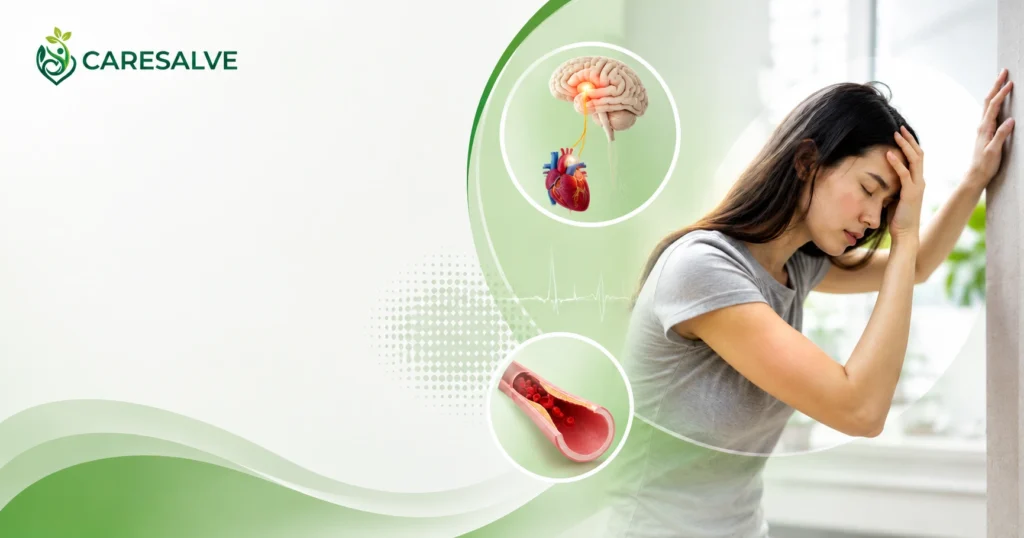

Fainting can be a frightening experience, both for the person who passes out and for anyone watching it happen. In most cases, the culprit is vasovagal syncope, the most common cause of fainting in otherwise healthy people. At CareSalve, we want to help you understand what vasovagal syncope actually is, why it happens, what the warning signs look like, and how you can manage and prevent future episodes.
Overview of Vasovagal Syncope
What Is Vasovagal Syncope?
Vasovagal syncope is a temporary loss of consciousness caused by a sudden drop in heart rate and blood pressure, which reduces blood flow to the brain. The vasovagal meaning essentially combines two words: vaso, referring to blood vessels, and vagal, referring to the vagus nerve, which plays a central role in triggering the response.
Syncope meaning, in general medical terms, refers to any brief loss of consciousness caused by reduced blood flow to the brain. Not all fainting is the same, but vasovagal syncope is by far the most frequent type, accounting for a large majority of fainting episodes across all age groups. It’s different from other causes of fainting because it follows a specific reflex pattern involving the nervous system and cardiovascular system working together, rather than a heart rhythm problem or structural issue.
Vasovagal Syncope vs Neurocardiogenic Syncope
Many people are surprised to learn that neurocardiogenic syncope and vasovagal syncope are essentially the same condition. Both terms describe the identical underlying process, in which nerve signals cause the heart rate and blood vessels to react in a way that lowers blood pressure and reduces blood flow to the brain. You may also see this condition referred to as reflex syncope, since it stems from an exaggerated reflex response rather than a structural heart problem. Doctors sometimes use these terms interchangeably depending on their specialty and training background.
Vasovagal Syncope Symptoms
Early Warning Signs Before Fainting
Most people experience presyncopal symptoms in the moments leading up to a vasovagal episode. These early vasovagal syncope symptoms typically include:
- Dizziness or a spinning sensation
- Lightheadedness
- Sudden sweating, often cold and clammy
- Blurred or tunnel vision
- Nausea
- Pale or gray colored skin
Recognizing these vasovagal symptoms early can give you time to sit or lie down before actually losing consciousness, which significantly reduces the risk of injury from a fall.
What Happens During a Vasovagal Episode?
During an actual vasovagal syncope episode, a person experiences a brief, temporary loss of consciousness. This is usually preceded by the warning signs above, followed by a short collapse, often lasting only a few seconds to about a minute. Once lying down, blood flow to the brain typically restores quickly, and the person begins to wake up. This process is sometimes described informally as a vasovagal pass out, and while alarming to witness, the syncopal episode itself is usually brief and self limiting.
Symptoms After Fainting
After regaining consciousness, it’s common to feel weak, fatigued, or briefly confused. Some people also experience lingering nausea. These post episode symptoms generally resolve within a short time as the body’s blood pressure and heart rate return to normal.
What Causes Vasovagal Syncope?
Emotional Triggers
Strong emotional reactions are among the most well known vasovagal causes. Fear, anxiety, sudden emotional shock, and intense stress can all activate the nervous system in a way that triggers a vasovagal response. Understanding what causes vasovagal syncope in your specific case often starts with identifying the emotional pattern behind past episodes.
Blood, Needles, and Medical Procedures
Fainting when seeing blood, or passing out at the sight of blood, is an extremely common trigger. This also applies to blood tests, blood donation, vaccinations, and other minor medical procedures. Vasovagal syncope blood draw reactions happen because the sight or anticipation of a needle can activate the same nerve pathway responsible for the broader vasovagal reflex. Many people wonder why do people faint when they see blood, and the answer lies in this heightened nervous system reaction rather than any actual blood loss.
Pain Induced Vasovagal Reactions
Fainting from pain is another well documented trigger. Whether from a sudden injury or a painful medical emergency, the question can you faint from pain has a clear answer: yes. Pain and fainting are closely linked because intense pain signals can overstimulate the vagus nerve, and pain causing fainting is a recognized clinical pattern, especially with sudden, sharp pain.
Digestive and Bathroom Triggers
Vomiting, diarrhea, and straining during bowel movements can all trigger a vasovagal response bowel movement pattern known specifically as defecation syncope. Passing out on toilet may sound unusual, but fainting during bowel movement episodes happen because straining increases pressure in the chest and abdomen, which can briefly reduce blood flow back to the heart and brain.
Standing Too Long and Heat Exposure
Long periods of standing, especially in crowded environments or hot weather, are classic triggers. Heat causes blood vessels to widen, and combined with prolonged standing, blood can pool in the legs, reducing the amount returning to the heart and brain.
How Does a Vasovagal Response Cause Fainting?
The vagus nerve vasovagal reaction is the central mechanism behind this condition. When triggered, this vagal response causes the heart rate to slow down and blood vessels, particularly in the legs, to widen suddenly. This combination leads to a sudden drop in blood pressure. As a result, reduced blood flow to the brain occurs, and consciousness is briefly lost. This entire chain of events, often called the vasovagal reflex, happens within seconds and explains the rapid onset of symptoms that many people describe.
Risk Factors for Vasovagal Syncope
Age and Genetics
Vasovagal syndrome can affect people of any age but is particularly common in teenagers and young adults. A family history of fainting also appears to increase the likelihood of developing this vasovagal condition.
Dehydration
Low fluid levels reduce overall blood volume, making it easier for blood pressure to drop suddenly during a triggering event.
Stress and Anxiety
Ongoing psychological stress can lower the threshold needed to trigger a vasovagal episode, making recurrent fainting more likely in people under chronic stress.
Certain Medications
Some blood pressure medications, diuretics, and other drugs that affect blood vessel tone can increase susceptibility to fainting episodes.
Existing Medical Conditions
Conditions affecting the autonomic nervous system or cardiovascular system can make a person more prone to vasovagal syndrome overall.
Is Vasovagal Syncope Dangerous?
Potential Complications
While the fainting episode itself is typically brief, complications can arise from the fall associated with it. These include physical injuries from falls, head injuries if the person strikes a hard surface, and serious accidents if fainting occurs while driving or operating machinery.
Can You Die From Vasovagal Syncope?
Many people ask, can you die from vasovagal syncope, and the reassuring answer is that it is usually harmless on its own. Is vasovagal syncope dangerous in the broader sense? Generally not, since the condition resolves on its own once the person is lying down and blood flow to the brain is restored. However, can vasovagal syncope cause death becomes a more serious question in rare situations, particularly if fainting leads to a severe fall injury or occurs in a hazardous setting like driving, swimming, or operating heavy equipment. Emergency care is needed if fainting is accompanied by chest pain, prolonged unconsciousness, injury, or if it occurs during physical exertion.
How Doctors Diagnose Vasovagal Syncope
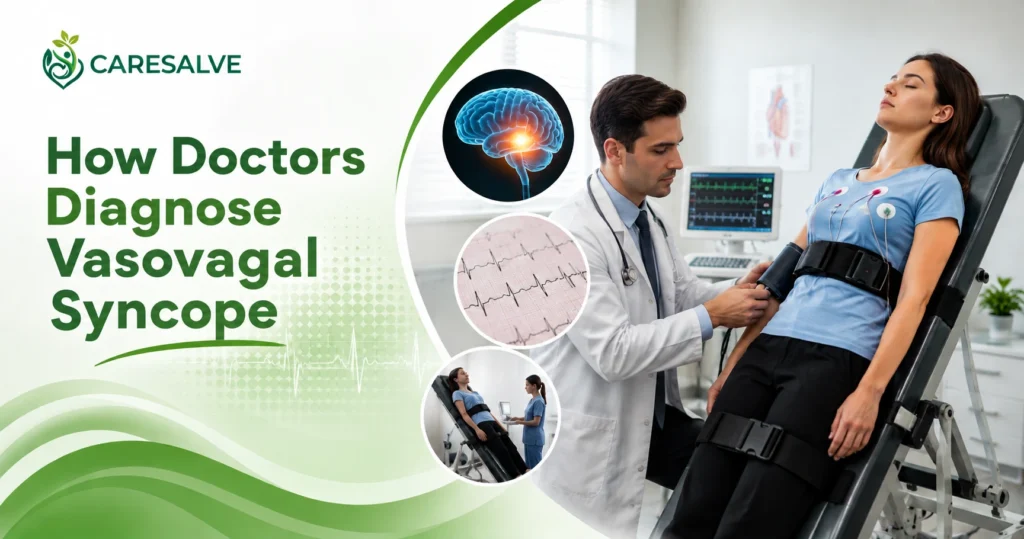
A proper vasovagal syncope diagnosis usually involves several steps to rule out more serious causes of fainting.
- Medical history and symptom review: Doctors ask detailed questions about triggers, warning signs, and the pattern of episodes.
- Physical examination: A general checkup to assess overall health and rule out obvious physical causes.
- Electrocardiogram (ECG): Records the heart’s electrical activity to check for rhythm abnormalities.
- Tilt table test: Monitors blood pressure and heart rate while the body position changes, helping confirm a neurocardiogenic syncope diagnosis.
- Blood pressure monitoring: Tracks how blood pressure responds to different positions and situations.
- Additional tests: Blood work or extended heart monitoring may be used if the diagnosis remains unclear or if heart related causes need to be excluded.
Treatment Options for Vasovagal Syncope
Immediate First Aid During an Episode
If someone feels faint or has already fainted, the first step is to lie down and elevate the legs above heart level. This helps improve blood flow back to the brain and often shortens the episode significantly.
Lifestyle Changes
Simple daily habits can reduce how often episodes occur, including increasing fluid intake, avoiding known personal triggers, and improving overall sleep quality, since fatigue can lower resistance to triggering events.
Physical Counter Pressure Maneuvers
When early warning signs appear, certain physical techniques can help stop an episode before it progresses, including crossing the legs firmly, gripping the hands tightly, and tensing the muscles in the arms and legs. These counter pressure maneuvers work by temporarily increasing blood pressure and slowing the drop that leads to fainting.
Medications
For people with frequent or severe episodes, medication may be recommended to help regulate blood pressure or heart rate. This is generally considered only after lifestyle changes and counter pressure techniques haven’t provided enough relief.
Advanced Treatments for Severe Cases
In rare, severe cases where fainting episodes are frequent and significantly affect quality of life, doctors may explore more advanced vasovagal attack treatment options as part of a broader vasovagal syncope management plan, tailored to the individual’s specific triggers and health history.
How to Prevent Vasovagal Syncope
- Stay hydrated: Adequate fluid intake helps maintain healthy blood volume and pressure.
- Identify and avoid triggers: Recognizing your personal vasovagal triggers is one of the most effective ways to reduce future episodes.
- Manage stress: Techniques like deep breathing, regular exercise, and adequate rest can lower overall nervous system reactivity.
- Avoid standing for long periods: Shifting weight, moving your legs, or sitting down periodically can prevent blood from pooling.
- Recognize warning signs early: Learning to notice presyncopal symptoms gives you time to sit or lie down before fainting occurs.
Understanding what triggers vasovagal syncope for you personally, and practicing consistent avoidance of triggers, is one of the most powerful long term prevention strategies available.
Vasovagal Syncope vs Other Conditions
Vasovagal Syncope vs Orthostatic Hypotension
Orthostatic hypotension happens when blood pressure drops due to a sudden change in position, such as standing up too quickly, without necessarily involving the vagus nerve reflex. While vasovagal syncope vs orthostatic hypotension can look similar, the underlying mechanisms differ, and orthostatic vs vasovagal syncope often requires different diagnostic testing to tell apart.
Vasovagal Syncope vs Seizures
Occasionally, a fainting episode can involve brief jerking movements, sometimes called convulsive syncope, which can be mistaken for a seizure. However, true seizures typically involve longer duration, distinct electrical brain activity patterns, and a different recovery process compared to vasovagal fainting.
Vasovagal Syncope vs Heart Related Syncope
Heart related syncope stems from structural heart problems or abnormal heart rhythms, which can be far more serious than vasovagal syncope. This is why doctors often use tests like an ECG to rule out cardiac causes before confirming a vasovagal diagnosis.
When Should You See a Doctor?
While vasovagal syncope is usually not dangerous, certain situations call for prompt medical evaluation:
- A first time fainting episode with no clear explanation
- Frequent or recurring fainting episodes
- Chest pain before, during, or after fainting
- A personal or family history of heart disease
- Injury sustained as a result of fainting
- Fainting that occurs during physical exercise or exertion
Frequently Asked Questions
1. What is vasovagal syncope?
Vasovagal syncope is a temporary loss of consciousness caused by a sudden drop in heart rate and blood pressure, triggered by an overactive vagus nerve reflex.
2. What causes vasovagal syncope?
Common causes include emotional stress, the sight of blood or needles, sudden pain, prolonged standing, heat exposure, and straining during bowel movements.
3. What are the symptoms of vasovagal syncope?
Typical symptoms include dizziness, lightheadedness, sweating, blurred vision, nausea, and pale skin, followed by a brief loss of consciousness.
4. Is vasovagal syncope dangerous?
It’s usually harmless, though injuries from falling during an episode are the main concern, especially if fainting occurs in a hazardous location.
5. Can vasovagal syncope be prevented?
Yes, staying hydrated, identifying personal triggers, managing stress, and recognizing early warning signs can all significantly reduce how often episodes occur.
Key Takeaways
- Vasovagal syncope is the most common cause of fainting and results from an exaggerated nerve reflex that lowers heart rate and blood pressure.
- Common triggers include emotional stress, blood or needles, pain, prolonged standing, heat, and straining.
- Early warning signs like dizziness and sweating often appear before an episode, offering a chance to prevent a fall.
- The condition is generally not dangerous on its own, though injuries from falls are the main risk to watch for.
- Proper diagnosis rules out more serious heart related causes, and most people manage the condition well with lifestyle changes and trigger avoidance.
At CareSalve, our goal is to help you understand what your body is telling you and when it’s time to seek professional care. If fainting episodes become frequent, unexplained, or come with warning signs like chest pain, don’t wait, speak with a healthcare provider for a full evaluation.
References
- Ballantyne BA, Letourneau Shesaf S, Raj SR. Management of vasovagal syncope. Auton Neurosci. 2021 Dec;236:102904.
- Goldberger ZD, Ruzieh M, Grubb P. Diagnosis and Management of Syncope. In: Fuster V, Narula J, Vaishnava P, Leon MB, Callans DJ, Rumsfeld JS, Poppas A, Fuster and Hurst’s The Heart. 15th ed. McGraw Hill Education; 2022.
- Jeanmonod R, Sahni D, Silberman M. Vasovagal Episode. 2023 Jul 17. In: StatPearls [Internet]. Treasure Island (FL): StatPearls Publishing; 2025 Jan.
- Neurocardiogenic Syncope. In: Crawford MH, Aras M, Sanchez JM, Quick Dx & Rx: Cardiology. McGraw Hill Education; 2018.
- Seizures & Syncope. In: Greenberg DA, Aminoff MJ, Simon RP, Clinical Neurology. 11th ed. McGraw Hill Education; 2021.
