

Introduction
Yes, you can drink distilled water, and for most healthy people, properly produced drinking grade distilled water is safe to consume. That said, distilled water is different from the tap or bottled water most people are used to, and those differences raise a lot of reasonable questions.
Distillation is a purification process that removes many dissolved minerals and impurities from water, leaving behind a very pure form of H2O. Because of this, people often wonder whether distilled water is safe, whether it is actually healthy, whether it contains any minerals at all, whether it is fine to drink every day, and what happens to the body if someone relies on it exclusively.
At CareSalve, we want to walk through these questions one at a time so you can make an informed decision about whether distilled water fits your needs.
What Is Distilled Water?
Distilled water is water that has gone through a purification process called distillation. In simple terms, water is heated until it turns into vapor. As it evaporates, dissolved minerals, salts, and many other impurities are left behind, since they do not turn into vapor at the same temperature as water. The vapor is then cooled and condensed back into liquid form, resulting in water that is largely free of dissolved solids.
This process is different from ordinary drinking water, which typically still contains a range of naturally occurring minerals such as calcium, magnesium, and potassium, along with trace amounts of other substances depending on the source.
You may also see terms like steam distilled water, vapor distilled water, or DI water, which stands for deionized water. Steam distilled and vapor distilled water generally refer to the same basic distillation process. Deionized water is produced differently, using an ion exchange process rather than heat and condensation, though the end result is also water with very low mineral content.
A helpful way to measure purity is total dissolved solids, often shortened to TDS. Distilled water typically has extremely low TDS readings compared to tap or mineral water, which reflects how thoroughly the distillation process removes dissolved substances.
Can You Drink Distilled Water?
The short answer is yes, distilled water that is specifically produced and labeled for drinking can be consumed safely by most people. However, it is important to understand that not every product labeled distilled water is necessarily intended for human consumption.
Distilled water is used in several different contexts, including drinking water, water for medical or laboratory equipment, and water for household appliances such as humidifiers or steam irons. Water sold for these non drinking purposes may not be held to the same purity and safety standards as bottled drinking water, so it is worth checking the label before assuming any distilled water product is meant to be consumed.
Is Distilled Water Safe to Drink?
When it comes from a reputable source, is properly produced, and has been stored correctly, distilled water is generally considered safe to drink. Safety depends less on the fact that it is distilled and more on standard water safety factors such as where it came from, how it was packaged, and how it has been stored since opening.
Distilled water is not inherently dangerous. In fact, because the distillation process removes many contaminants, some people choose it specifically because they want to minimize exposure to certain substances that might otherwise be present in their water source.
Is Distilled Water Good for You?
This is a slightly different question than whether it is safe. Distilled water is not automatically healthier than every other type of drinking water, and it is not automatically worse either. The main distinguishing factor is that it lacks many of the dissolved minerals found in tap water, mineral water, or spring water.
For most people who eat a varied diet, this mineral difference is unlikely to matter much, since the majority of essential minerals in a typical diet come from food rather than water. Distilled water can be a reasonable option within a balanced routine, but it should not be viewed as a special health upgrade compared to other safe drinking water sources.
What Happens When You Drink Distilled Water?
When you drink distilled water, your body treats it much like any other water. It gets absorbed and used to support hydration, circulation, digestion, and other everyday functions. Your body has well established systems for regulating fluid balance and electrolyte levels, and these systems are not disrupted by occasionally drinking distilled water.
The key distinction is between occasional consumption and relying on distilled water as your only source of fluids over a long period of time.
What Happens If You Drink Distilled Water Only?
If someone were to rely exclusively on distilled water for an extended period, without getting minerals from a varied diet, that could potentially become a concern over time, primarily because of overall reduced mineral intake rather than something dangerous about distilled water itself. It is a myth that distilled water actively pulls minerals out of your body or your cells. The more accurate concern is simply that distilled water does not contribute dietary minerals the way some other water sources do.
For most people who eat a normal, varied diet, occasionally or even routinely drinking distilled water alongside food is not something to be concerned about. The exception would be very specific circumstances, such as certain medical conditions or unusual dietary restrictions, where a healthcare provider’s guidance would be helpful.
Does Distilled Water Have Minerals?
No, or at least very few. The distillation process is specifically designed to remove dissolved minerals along with other impurities. This means distilled water contains essentially none of the calcium, magnesium, potassium, or other minerals that are naturally present in many other types of drinking water.
This does not mean distilled water is unsafe or nutritionally harmful. Drinking water is generally not the primary source of essential minerals for most people. Instead, minerals mainly come from a well rounded diet that includes fruits, vegetables, dairy products, proteins, and other whole foods.
If you are specifically looking for water that contributes meaningful mineral content, mineral water or certain spring waters would be a better fit than distilled water.
Is Drinking Distilled Water Healthy?
It helps to separate two different ideas here: being safe to drink and being nutritionally beneficial. Distilled water is generally safe to drink when produced and stored properly, but it does not provide the same mineral contribution as some other water types.
Many people choose distilled water for practical reasons rather than for a specific health benefit, such as wanting a very pure, consistent water source for drinking or for use with appliances.
Benefits of Drinking Distilled Water
Some practical advantages associated with distilled water include:
- Removal of many dissolved contaminants during the distillation process
- Very consistent composition from batch to batch
- A useful option when someone wants to minimize mineral content or certain dissolved substances
- Suitability for specific applications, such as certain medical devices or lab equipment that require low mineral water
It is worth being clear that distilled water is not a detox product and does not cure any condition. Claims suggesting that distilled water flushes toxins from the body or provides dramatic health transformations are not supported by solid evidence.
Are There Side Effects of Drinking Distilled Water?
For most healthy people, drinking distilled water in normal amounts does not cause significant side effects. Still, there are a few points worth understanding.
Potential Concerns With Drinking Distilled Water
Some considerations include:
- Very low mineral content compared with tap or mineral water
- A flatter or different taste that some people find less appealing
- The importance of getting essential minerals from food rather than expecting water to provide them
- Questions around relying exclusively on low mineral water for long periods
- Special considerations for people with certain medical conditions or specific nutritional needs, who should check with a healthcare provider about their water choice
Can Distilled Water Dehydrate You?
This is a common misconception, but distilled water is not inherently dehydrating. Hydration primarily depends on the total amount of fluid you consume relative to what your body loses, not on whether that water contains dissolved minerals. Drinking distilled water still counts toward your daily fluid intake in the same basic way other water does.
Distilled Water vs Other Types of Water
Distilled Water vs Tap Water
Tap water usually contains naturally occurring minerals and undergoes treatment processes such as filtration and disinfection, which can vary by location. Distilled water, by contrast, has gone through a more intensive purification process that removes most dissolved minerals along with many potential contaminants. Tap water often has a fuller taste due to its mineral content, while distilled water tends to taste flatter. Tap water is typically used for everyday drinking and cooking, while distilled water is sometimes chosen for specific uses where low mineral content matters.
Distilled Water vs Filtered Water
Filtered water usually passes through a filtration system, such as a carbon filter, that reduces certain contaminants while typically leaving most minerals intact. Distilled water removes a much broader range of dissolved substances, including minerals, because of the heating and condensation process. Filtered water is commonly used for everyday drinking, while distilled water is often chosen when a very low mineral, highly purified water is specifically needed.
Distilled Water vs Purified Water
Purified water is a broader category that refers to water treated to remove contaminants, and distillation is simply one method used to achieve this. Other purification methods include reverse osmosis, deionization, and various filtration techniques. This means distilled water can technically be considered a type of purified water, though not all purified water is distilled. Reading product labels can help clarify which specific method was used.
Distilled Water vs Mineral Water
Mineral water naturally contains dissolved minerals from its source, which often gives it a distinct taste and, in some cases, is associated with specific mineral content on the label. Distilled water contains essentially no minerals due to the distillation process. The two serve different purposes, with mineral water often chosen for its taste and mineral content, and distilled water chosen for its purity and consistency.
Vapor Distilled Water vs Distilled Water
These terms generally refer to substantially similar processes. Vapor distilled water simply emphasizes that the water was turned into vapor and then condensed, which is the standard distillation method. In most cases, product labeling using either term describes essentially the same purification process.
What Is Distilled Water Used For?
Distilled Water for Drinking
Some people choose distilled water as their everyday drinking water because of its purity and consistency, particularly when they prefer to avoid certain dissolved substances found in their local tap water.
Distilled Water for Cooking
Yes, you can cook with distilled water. It can be used for boiling, steaming, or preparing most recipes. Some people notice a slight difference in taste, particularly in dishes where water flavor is more noticeable, but distilled water is generally considered functionally suitable for most cooking needs.
Distilled Water for Appliances
Distilled water is commonly recommended for certain household appliances, including humidifiers, steam irons, and some coffee makers. Because it lacks minerals, it helps reduce mineral buildup and scale inside these devices, which can extend their lifespan and improve performance.
Distilled Water for Medical and Laboratory Uses
Certain medical and laboratory applications require water that meets specific purity standards, and distillation is one method used to help achieve this. It is important to understand that ordinary bottled distilled water sold at a grocery store is not automatically the same as sterile medical grade water used in clinical settings. Medical and laboratory water often goes through additional purification and sterilization steps beyond standard distillation.
Can You Drink Distilled Water Every Day?
For most healthy individuals who eat a varied diet, drinking distilled water every day is not considered harmful. The main factor to keep in mind is that distilled water does not contribute meaningful amounts of dietary minerals, so it is helpful to make sure your overall diet includes a good range of nutrient rich foods.
People with certain health conditions, particular electrolyte concerns, or specific dietary restrictions should talk with a healthcare professional about whether distilled water is a suitable everyday choice for their individual situation.
How Much Distilled Water Can You Drink?
There is no single, universal amount that applies to everyone, since hydration needs vary widely from person to person. Factors that influence how much fluid someone needs include:
- Body size
- Activity level
- Climate and temperature
- Overall diet
- Individual health conditions
It is also worth noting that drinking excessive amounts of any type of water, including distilled water, can be dangerous and lead to a condition called water intoxication in extreme cases. Moderation and attention to your body’s signals are generally more important than the specific type of water you choose.
Can You Drink Steam Distilled or Vapor Distilled Water?
Yes, when a product is specifically labeled as drinking water, steam distilled or vapor distilled water can be consumed safely. These terms describe the method used to purify the water rather than indicating a different or unsafe product. As always, checking product labeling helps confirm that the specific water you are using is intended for drinking rather than for appliance or industrial use.
Does Distilled Water Go Bad?
Distilled water itself does not really expire in the way perishable food does, since it is essentially pure water. However, once a container is opened, it can become exposed to airborne particles, dust, or bacteria over time, which can affect its purity.
Unopened, properly sealed distilled water can typically be stored for a long time. Once opened, it is best to follow the manufacturer’s guidance on the label regarding how long the water should be used, and to use good judgment about cleanliness and storage conditions.
How to Store Distilled Water
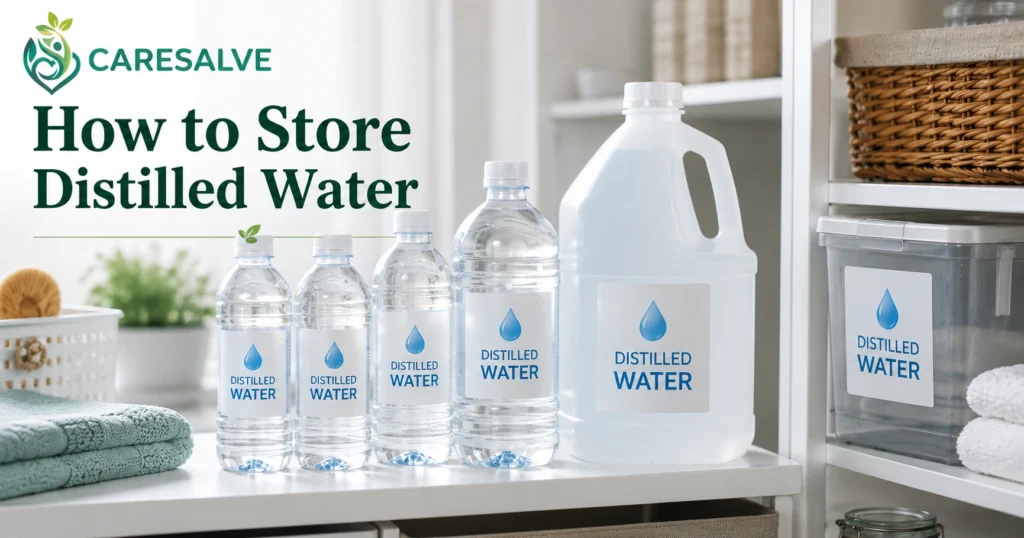
To help maintain the purity of distilled water:
- Keep containers sealed until ready to use
- Follow any storage instructions provided on the product label
- Keep opened containers clean and avoid introducing contaminants
- Store away from direct sunlight and excessive heat
- Avoid leaving opened containers exposed for extended periods
Proper storage matters most after a container has been opened, since that is when contamination becomes more likely.
How Is Distilled Water Made?
How Does Water Distillation Work?
The basic distillation process generally follows these steps:
- Water is heated until it reaches its boiling point.
- As the water heats, it evaporates and turns into vapor.
- Many dissolved minerals, salts, and other substances remain behind because they do not evaporate at the same rate as water.
- The vapor travels through a cooling system.
- As it cools, the vapor condenses back into liquid water, which is collected as the finished distilled water.
Can You Make Distilled Water at Home?
In theory, distillation can be replicated at home using appropriate equipment, and some people do this for various purposes. However, homemade distillation setups may not achieve the same level of purity or meet the same safety standards as commercially produced drinking water. Proper equipment, cleanliness, and technique all matter significantly.
If you are considering making distilled water at home for drinking purposes, it is worth researching reliable methods carefully and understanding that improvised setups are not guaranteed to produce water that is as safe or pure as commercially available options.
Frequently Asked Questions
1. Can you drink distilled water?
Yes, properly produced and labeled drinking grade distilled water is generally safe for most healthy people to consume.
2. Is distilled water safe to drink?
Yes, when it comes from a reliable source and has been stored properly, distilled water is considered safe to drink.
3. Is distilled water good for you?
It is generally safe, though it does not offer the same mineral content as some other types of water. It is not automatically healthier or unhealthier than other safe drinking water.
4. Can you drink distilled water every day?
For most healthy people with a varied diet, daily consumption is generally not a concern, though individuals with specific health conditions should check with a healthcare provider.
5. What happens if you drink distilled water?
Your body absorbs and uses it much like any other water, supporting normal hydration and bodily functions.
6. Does distilled water have minerals?
No, the distillation process removes most dissolved minerals, resulting in water with very low mineral content.
7. Why do people drink distilled water?
Reasons vary, and often include wanting a very pure, consistent water source, or personal preference regarding taste and mineral content.
8. Is vapor distilled water safe to drink?
Yes, when labeled for drinking, vapor distilled water refers to essentially the same purification process as standard distillation and is considered safe to drink.
Takeaway
Distilled water is water that has been purified through a distillation process, which removes most dissolved minerals and many other impurities. Properly produced, drinking grade distilled water is generally safe for most healthy people to consume, whether occasionally or as part of a daily routine.
It contains very little mineral content compared with tap, filtered, or mineral water, but this is not inherently a problem for people who eat a varied diet, since most essential minerals come from food rather than water. Distilled water is not automatically better or worse than other safe drinking water options. It simply serves a different purpose, often chosen for its purity, consistency, and suitability for specific uses such as appliances or certain medical and laboratory applications.
As with any water source, product labeling, proper storage, and your own individual health circumstances all matter. If you have specific medical or nutritional concerns, it is always a good idea to talk with a healthcare professional about whether distilled water is the right choice for you. At CareSalve, we believe informed choices lead to better everyday wellness, and understanding exactly what you are drinking is a simple but meaningful part of that.
