
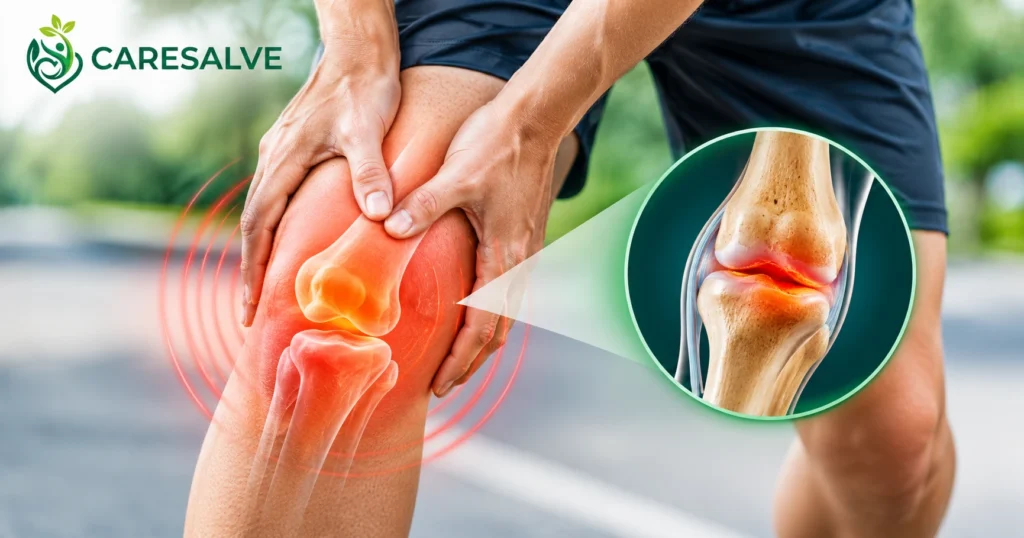

Knee pain is something almost everyone experiences at some point in life. Whether it’s a dull ache after a long walk or a sharp twinge that stops you mid step, knee joint pain can affect people of every age group, from active teenagers to older adults. Sometimes it follows an obvious injury. Other times, it shows up with no clear cause at all.
At CareSalve, we understand how frustrating and worrying unexplained pain in the knee can be. In this guide, we’ll walk through why does my knee hurt, what the different symptoms mean, how the location of your pain can point to a specific cause, and what treatment and prevention options actually work. By the end, you’ll have a clear understanding of what’s happening inside your knee joint and what steps to take next.
What Is Knee Pain?
The knee is the largest and one of the most heavily used joints in the human body. It connects the thigh bone (femur) to the shin bone (tibia) and is supported by cartilage, ligaments, tendons, and muscles that all work together to allow smooth, stable movement.
Knee pain refers to any discomfort in knee joint tissue, whether that’s the bone, cartilage, ligament, tendon, or the surrounding soft tissue. It can range from mild discomfort that fades after rest to severe pain that makes walking or standing nearly impossible.
Doctors typically separate knee pain into two broad categories:
- Temporary or acute knee pain: Comes on suddenly, usually tied to a specific injury or overuse episode, and often improves within days to weeks.
- Chronic knee pain: Persists for months or longer, often linked to arthritis, joint degeneration, or an underlying medical condition.
Why Does My Knee Hurt? Understanding the Most Common Causes
Knee Injuries
Injuries are among the most frequent causes of sudden pain in the knee, especially in athletes and physically active people.
- ACL tears: A torn anterior cruciate ligament often happens during sudden stops, pivots, or direction changes, and is a classic example of knee injury symptoms like swelling and instability.
- MCL injuries: Caused by a direct blow to the outside of the knee, straining the inner ligament.
- Meniscus tears: Twisting the knee while the foot stays planted can tear the cartilage cushion between the femur and tibia.
- Fractures: High impact trauma such as falls, accidents, or sports collisions can fracture the kneecap or nearby bone.
- Sports injuries: Repeated jumping, pivoting, and running place cumulative stress on knee structures, increasing injury risk over time.
Arthritis and Joint Diseases
Many knee diseases develop gradually and cause chronic knee joint pain rather than a sudden injury.
- Osteoarthritis: The most common form, caused by gradual cartilage breakdown from age or repetitive stress.
- Rheumatoid arthritis: An autoimmune condition that triggers ongoing knee inflammation and pain in multiple joints.
- Gout: Sudden, intense pain caused by a buildup of uric acid crystals in the joint.
- Septic arthritis: A serious joint infection that requires urgent medical treatment, often accompanied by fever and severe swelling.
Mechanical Problems
Sometimes knee problems come from structural or alignment issues rather than injury or disease.
- Dislocated kneecap: When the patella slips out of its normal groove, causing pain and visible deformity.
- IT band syndrome: Overuse of the iliotibial band, common among runners and cyclists, leading to pain on the outer side of the knee.
- Loose cartilage: Fragments of bone or cartilage floating in the joint space can cause locking or catching sensations.
- Patellar tracking issues: When the kneecap doesn’t move smoothly within its groove, it can create friction and discomfort.
Other Medical Conditions
Several additional conditions are common causes for knee pain that don’t fall neatly into the categories above.
- Bursitis: Inflammation of the small fluid filled sacs that cushion the joint.
- Tendinitis: Irritation of the tendons surrounding the knee, often from repetitive movement.
- Baker’s cyst: A fluid filled swelling behind the knee, frequently linked to an underlying joint problem.
Knee Pain Symptoms
Knee pain symptoms vary widely depending on the underlying cause. Recognizing the type of pain and accompanying signs can help you and your doctor narrow down what’s going on.
Common symptoms of a knee injury or condition include a dull, persistent ache; sharp, stabbing pain during movement; throbbing pain that worsens at night; visible swelling; redness around the joint; general weakness; and limited range of motion when bending or straightening the leg.
Pain and Tenderness
A knee that is sore to touch or painful when pressed often indicates localized inflammation, ligament strain, or tendon irritation near the surface of the joint.
Swelling and Inflammation
An inflamed knee that appears puffy or feels warm usually signals fluid buildup, which can result from injury, arthritis, or infection. Persistent knee inflammation and pain should not be ignored.
Weakness and Instability
A weak knee joint that feels like it might buckle or give way is often a sign of ligament damage or significant muscle weakness surrounding the joint, and it increases the risk of falls.
What Does the Location of Your Knee Pain Mean?
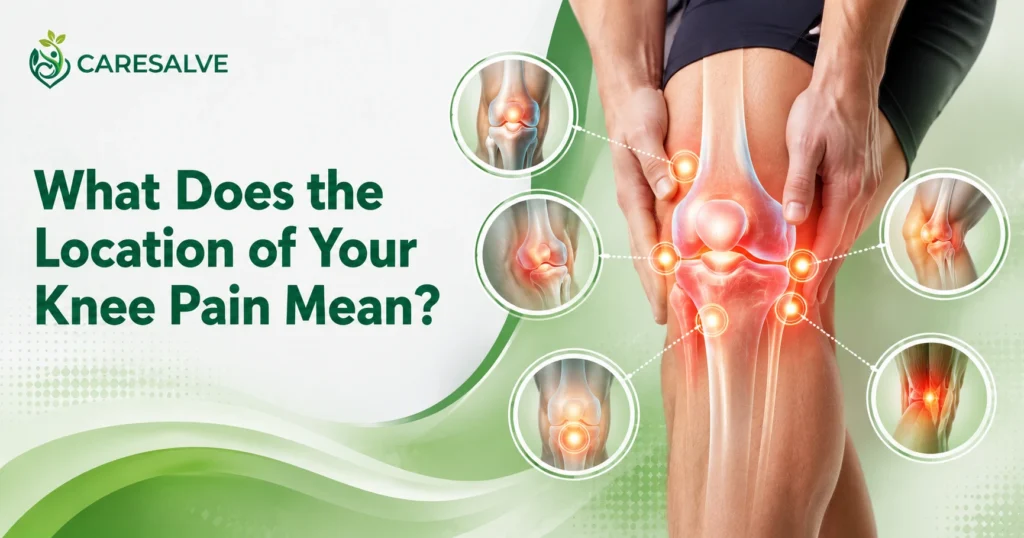
Where exactly you feel pain in the knee joint offers valuable clues about the underlying cause.
Front of the Knee Pain
Pain felt when your kneecap is aching, especially around or behind the patella, is often linked to patellofemoral pain syndrome, commonly known as runner’s knee. It tends to worsen with squatting, kneeling, or climbing stairs.
Pain on the Inside of the Knee
Inner knee pain, or an ache inside the knee, is frequently associated with an MCL injury or a medial meniscus tear, particularly after a twisting motion or direct impact to the outer knee.
Pain on the Outside of the Knee
Exterior knee pain, or pain on the side of the knee, is a hallmark symptom of IT band syndrome, especially common in runners and cyclists who log high mileage.
Pain Behind the Knee
An ache in the back of the knee can point to a Baker’s cyst or a hamstring injury. If the back of your knee hurts along with swelling in the calf, it’s important to seek medical evaluation promptly to rule out more serious vascular issues.
Left Knee Pain vs Right Knee Pain
Many people wonder why pain in the left knee feels different or more intense than pain in the right knee, or vice versa. This usually comes down to asymmetry in activity levels, a previous injury on one side, uneven gait, or differences in leg length and biomechanics. One sided knee pain doesn’t necessarily mean something more serious, but it’s worth monitoring if it persists.
Why Does Knee Pain Get Worse When Walking?
Knee pain when walking is one of the most common complaints, and it typically comes down to a few key factors: weight bearing pressure on damaged cartilage, ligament strain during movement, arthritis related joint inflammation, and irritation of the tendons surrounding the knee. When your knee hurts when walking, the discomfort often reflects how much load the joint is absorbing with each step.
Pain While Climbing Stairs
Stairs place significantly more pressure behind the kneecap than flat walking, which is why stair climbing frequently triggers or worsens pain, especially in people with patellofemoral issues or early arthritis.
Pain During Running
Repetitive impact during running can aggravate existing cartilage wear, tendon inflammation, or IT band irritation, making pain more noticeable after a run rather than during the first few minutes.
Pain While Kneeling
Kneeling painful sensations, or pain in the knee when kneeling, usually stem from bursitis, direct pressure on an already irritated joint, or tendinitis near the front of the knee.
Pain When Putting Weight on the Knee
If your knee hurts when weight bearing, or you find you can’t put weight on the knee at all, this can signal a more serious injury such as a ligament tear, fracture, or significant joint instability that needs prompt medical attention.
Why Do Some People Get Knee Pain Without an Injury?
Sudden knee pain without injury, or unexplained knee pain that seems to appear out of nowhere, is more common than many people realize. Random knee joint pain without a clear trigger is often caused by a combination of the following factors:
- Aging: Cartilage naturally thins over time, increasing friction within the joint.
- Obesity: Extra body weight places continuous added stress on the knee with every step.
- Weak muscles: Insufficient quadriceps and hamstring strength reduces support around the joint.
- Arthritis: Inflammatory or degenerative joint disease can develop gradually, causing pain that seems to come from nowhere.
- Poor posture: Misalignment in standing or walking patterns can place uneven, chronic stress on the knee.
Risk Factors for Knee Pain
Certain groups face a higher likelihood of developing knee joint pain over time.
- Age: Old age knee joint pain is common due to natural cartilage degeneration and years of cumulative wear.
- Weight: Carrying excess body weight significantly increases pressure on the joint surfaces.
- Sports participation: High impact or pivoting sports raise the risk of acute injury.
- Previous injuries: A history of knee trauma increases vulnerability to future problems.
- Occupation: Jobs requiring frequent kneeling, squatting, or heavy lifting add repetitive strain.
- Gender differences: Knee pain in ladies is often reported at higher rates than in men, partly due to hormonal factors, wider hip to knee alignment, and higher rates of certain conditions like patellofemoral pain syndrome. Knee issues in women can also be influenced by pregnancy related weight changes and joint laxity.
How Doctors Diagnose Knee Pain
Getting an accurate knee diagnosis usually involves a combination of hands on evaluation and imaging.
- Physical exam: The doctor checks for swelling, tenderness, range of motion, and joint stability through targeted movement tests.
- Medical history: Understanding when symptoms started and what activities make them worse helps narrow down the likely cause.
- X rays: Comparing a normal vs abnormal knee x ray can reveal fractures, bone spurs, or narrowing of the joint space associated with arthritis.
- MRI: Offers detailed imaging of soft tissue structures like ligaments, tendons, and cartilage.
- Ultrasound: Useful for identifying fluid buildup, cysts, or tendon inflammation in real time.
- Blood tests: Can help detect infection, gout, or markers of autoimmune inflammatory arthritis.
How to Relieve Knee Pain
Home Remedies
For mild to moderate discomfort, several home remedies for knee pain can offer meaningful relief:
- RICE method: Rest, ice, compression, and elevation remain the standard first response to reduce swelling and pain after a minor injury.
- Heat therapy: Applying warmth can help relax stiff muscles and improve blood flow to the area, which is often what helps painful knees tied to chronic stiffness.
Exercises for Aching Knees
Gentle, targeted exercises for aching knees can build strength and flexibility without overloading the joint:
- Quad stretches: Improve flexibility in the muscles supporting the front of the knee.
- Hamstring stretches: Reduce tension along the back of the leg that can pull on the knee joint.
- Low impact exercises: Activities like swimming or cycling maintain fitness while minimizing joint stress.
Medications
Over the counter NSAIDs and general pain relievers are commonly used to manage inflammation and discomfort. Always follow the product label and speak with a healthcare provider before starting any new medication, particularly if you have existing health conditions.
Physical Therapy
A structured physical therapy program can address muscle imbalances, improve joint mechanics, and support long term recovery for many knee conditions.
Injections
For persistent inflammation or cartilage related pain, doctors may recommend corticosteroid injections, hyaluronic acid injections, or platelet rich plasma therapy to manage symptoms.
Surgery
When conservative treatment isn’t enough, surgical options for knee pain management may include:
- Arthroscopy: A minimally invasive procedure to repair or remove damaged tissue.
- Knee replacement: Partial or total replacement of the joint surface, typically reserved for advanced arthritis or severe joint damage where other treatments have failed.
How Can You Prevent Knee Pain?
Learning how to prevent knee joint pain often comes down to consistent, manageable habits:
- Maintain a healthy weight: Reducing excess weight lowers the daily load placed on the joint.
- Wear proper footwear: Supportive shoes help maintain healthy leg alignment and absorb impact.
- Strength training: Building strong quadriceps, hamstrings, and hip muscles improves overall joint support.
- Warm up and cool down: Preparing your muscles before activity and stretching afterward reduces injury risk.
- Avoid overuse: Giving your body adequate recovery time between intense activities helps prevent repetitive strain injuries.
When Should You See a Doctor?
While many cases of mild knee discomfort improve with rest and home care, certain symptoms call for prompt medical attention:
- Severe knee pain or extreme knee pain that doesn’t ease with rest
- Sudden, significant swelling
- Fever accompanying joint symptoms, which may indicate infection
- Inability to walk or bear weight on the leg
- Visible deformity of the knee
- Constant knee pain or persistent symptoms lasting several weeks
Frequently Asked Questions
1. Why does my knee hurt when I walk?
Walking related pain is often caused by cartilage wear, muscle imbalance, or early arthritis, particularly if discomfort increases with distance or incline.
2. What causes knee pain without injury?
Common non injury causes include aging, obesity, muscle weakness, poor posture, and gradual joint degeneration from arthritis.
3. Why does my left knee hurt?
Left knee pain can result from uneven activity levels, a prior injury on that side, or biomechanical differences affecting how weight is distributed while walking or standing.
4. Why does my right knee hurt?
Similarly, right knee pain often stems from repetitive strain, previous injury, or alignment issues specific to that side of the body.
5. Can knee pain go away on its own?
Mild pain from minor strain frequently improves with rest, ice, and reduced activity within a few days to weeks. However, pain that persists, worsens, or comes with swelling should be evaluated by a healthcare provider.
6. What is the fastest way to relieve knee pain?
For acute pain, the RICE method combined with an appropriate over the counter pain reliever typically offers the quickest relief, though the best long term approach depends on identifying and addressing the underlying cause.
At CareSalve, our goal is to help you understand exactly what your body is telling you. If your knee pain persists, worsens, or comes with warning signs like swelling, fever, or an inability to bear weight, don’t wait, consult a healthcare professional for proper diagnosis and a personalized treatment plan.
References
- Mayo Clinic. Knee pain.
- Nicolini AP, de Carvalho RT, Matsuda MM, Sayum JF, Cohen M. Common injuries in athletes’ knee: experience of a specialized center. Acta Ortop Bras. 2014;22(3):127 131. doi: 10.1590/1413 78522014220300475.
- American Society of Anesthesiologists. Knee pain.
