


At Caresalve, one topic that comes up often in questions from our readers is Ureaplasma. Many people are surprised to learn they have tested positive for it, since it is not widely discussed the way other infections are. This guide from Caresalve covers what Ureaplasma actually is, its main types, how it spreads, common symptoms, how it is diagnosed, and what treatment usually looks like.
What Is Ureaplasma?
Ureaplasma is a type of bacteria that naturally lives in the urinary and genital tract of many people. Cleveland Clinic describes Ureaplasma as a bacterium that lives in the urinary or genital tract and is usually harmless, though in rare cases it may lead to infection.
Ureaplasma belongs to a group of bacteria known as Mollicutes, which lack a typical cell wall. This unusual structure is part of why Ureaplasma is harder to detect using standard bacterial culture methods and why testing usually relies on more specialized techniques.
It is important to understand the difference between simply carrying the bacteria and having an active infection:
- Colonization means the bacteria is present in the body without causing any symptoms or problems
- Infection refers to a situation where the bacteria is associated with actual symptoms or tissue inflammation
Research summarized by Evvy notes that Ureaplasma is a common member of the vaginal microbiome, found in a large proportion of people who have no symptoms at all. This means a positive test result on its own does not automatically mean something is wrong.
Types of Ureaplasma
Ureaplasma urealyticum
Ureaplasma urealyticum is one of the two main species identified in humans. It has been studied in connection with several genitourinary conditions. Mayo Clinic Laboratories notes that Ureaplasma urealyticum and Ureaplasma parvum have been associated with urethritis and epididymitis, and may occasionally be linked to upper urinary tract infections.
Ureaplasma parvum
Ureaplasma parvum is generally considered the more commonly detected of the two species in the vaginal microbiome. According to Evvy, Ureaplasma parvum is frequently found in the vaginal microbiomes of people who have no symptoms whatsoever, and its presence by itself is not considered a cause for concern.
It is worth clarifying that Ureaplasma species are distinct from Mycoplasma genitalium, even though the two are often discussed together because they belong to a related family of bacteria and are sometimes tested for using similar panels. They are not the same organism and should not be treated interchangeably in conversation or in testing interpretation.
What Causes Ureaplasma Infection?
Since Ureaplasma is often already present in the body as part of the normal genital flora, the bacteria itself is not usually something a person suddenly catches out of nowhere the way they might catch a cold. Instead, an infection tends to develop when the balance of bacteria shifts or when the immune system is less able to keep the bacteria in check.
Factors that may be associated with symptomatic infection include:
- A weakened or suppressed immune system
- Disruption to the normal vaginal or urinary microbiome
- Coexistence with other infections or disruptive bacteria
- Certain medical procedures involving the urinary or reproductive tract
Cleveland Clinic notes that people with weakened immune systems may be more likely to develop a symptomatic Ureaplasma infection compared to those with typical immune function.
How Is Ureaplasma Transmitted?
This is one of the more misunderstood aspects of Ureaplasma. While the bacteria can be passed between partners through sexual contact, labeling it simply as a sexually transmitted infection oversimplifies the picture. A Blavity health article on the topic notes that even though Ureaplasma is not technically classified as an STD, it is sexually transmissible.
A few important points to understand about transmission:
- Ureaplasma colonization is extremely common and can be present without ever being transmitted through sexual contact in the traditional sense, since it is part of many people’s normal microbiome
- Detection of Ureaplasma on a test does not automatically prove that a sexually transmitted infection or disease is present
- It can potentially be passed from a birthing parent to a newborn during delivery
- Because it is so commonly found in people without symptoms, testing is not usually part of routine STI screening
Ureaplasma Symptoms
Most people who carry Ureaplasma never notice any symptoms at all. Evvy explains that most people have no symptoms, and when symptoms do occur, they can include unusual vaginal discharge, a burning sensation when urinating, pelvic pain, and vaginal irritation, all of which overlap significantly with other common conditions such as bacterial vaginosis or urinary tract infections.
Symptoms in Women
When symptoms do appear in women, they may include:
- Unusual or increased vaginal discharge
- A burning feeling during urination
- Vaginal irritation or discomfort
- Mild pelvic discomfort
Symptoms in Men
Cleveland Clinic notes that some studies link an overgrowth of Ureaplasma to urethritis, or inflammation of the urethra, which can cause symptoms such as itchiness and pain or burning during urination. In men, possible symptoms include:
- Burning or discomfort while urinating
- Unusual discharge from the urethra
- General genital discomfort
It is important to remember that symptoms alone cannot confirm a Ureaplasma infection, since these same signs overlap with many other conditions. Proper testing and a healthcare provider’s evaluation are needed for an accurate diagnosis.
Ureaplasma and Other Infections: Is It the Same as Mycoplasma?
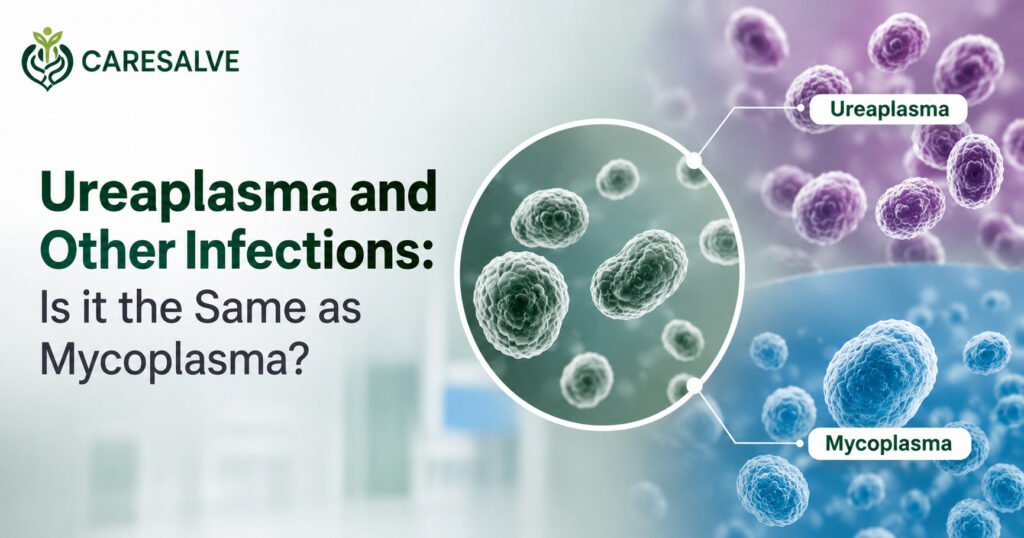
Ureaplasma and Mycoplasma are frequently mentioned together because they belong to the same broader class of cell wall deficient bacteria and are sometimes evaluated using the same diagnostic panels. However, they are not identical organisms. Mycoplasma genitalium in particular is generally treated as a distinct, clinically significant organism with its own testing and treatment considerations, and it is regarded by many clinicians as a true sexually transmitted infection, unlike Ureaplasma, which is more often considered part of the normal flora.
A helpful way to think about it:
- Mycoplasma and Ureaplasma belong to the same family of bacteria and share some structural features
- They are frequently tested together in combined genital pathogen panels
- Ureaplasma species and Mycoplasma genitalium are not the same organism and should not be used as interchangeable terms
How Is Ureaplasma Diagnosed?
Because Ureaplasma lacks a standard cell wall, it does not grow well using conventional bacterial culture techniques, so more specialized testing methods are typically used.
Common diagnostic approaches include:
- Urine testing
- A vaginal, cervical, or urethral swab depending on the person’s anatomy and symptoms
- Polymerase chain reaction testing, commonly referred to as PCR, which detects the genetic material of the bacteria
Mayo Clinic Laboratories explains that a positive PCR result targeting the Ureaplasma ureC gene indicates the presence of Ureaplasma urealyticum or Ureaplasma parvum, but the same source is careful to note that the clinical significance of these organisms is not always clear, since they are frequently part of the normal genital microbiota. This is why a positive test result should always be interpreted alongside a person’s symptoms and overall clinical picture rather than treated as a diagnosis on its own.
Ureaplasma Treatment
Antibiotics for Ureaplasma
When treatment is recommended, it usually involves antibiotics that work differently from common options like amoxicillin, since Ureaplasma lacks a cell wall and does not respond to antibiotics that target that structure. Commonly used options include:
- Doxycycline, often used as a first line option for nonpregnant adults
- Azithromycin, which may be used as a single dose or an extended course
- Fluoroquinolones such as levofloxacin or moxifloxacin, which are sometimes used when the first line options are not suitable or effective
According to information summarized by STD Center NY, for nonpregnant adults and adolescents with genital Ureaplasma, doxycycline taken twice a day for about a week is a commonly used treatment approach, though the exact regimen depends on individual factors and a healthcare provider’s judgment.
Can Ureaplasma Be Cured?
Antibiotic treatment can often clear a symptomatic Ureaplasma infection, though success rates are not perfect and some cases may need a longer course or a different antibiotic if the first treatment does not fully resolve symptoms. It is essential not to assume that a positive test automatically means antibiotics are required. Treatment decisions should always be based on a full clinical picture, including whether symptoms are present, whether other causes have been ruled out, and guidance from a qualified healthcare provider, rather than the test result in isolation.
Ureaplasma in Men and Women
While both men and women can carry and be affected by Ureaplasma, the way it is evaluated can differ slightly. In women, testing often involves a vaginal or cervical swab, and symptoms when present tend to center around discharge and pelvic discomfort. In men, urine testing or a urethral swab is more common, and symptoms typically involve urethral irritation or discharge. In both cases, the bacteria can be present without ever causing noticeable symptoms, which is why diagnosis relies on a combination of testing and clinical evaluation rather than symptoms alone.
Ureaplasma During Pregnancy
Ureaplasma has been studied in relation to pregnancy outcomes, and a positive test during pregnancy can understandably cause concern. It is important to discuss any positive result with a healthcare provider who understands the full context of the pregnancy, since treatment decisions in this situation need to be individualized. Certain antibiotics that are commonly used to treat Ureaplasma outside of pregnancy, such as doxycycline, are generally avoided during pregnancy, and alternatives like azithromycin may be preferred instead. This is exactly the kind of decision that should be guided by a qualified obstetric provider rather than made independently.
Can Ureaplasma Cause Other Health Problems?
Some research has explored potential associations between Ureaplasma and other conditions, though the evidence in many areas is still developing and not fully conclusive. Ureaplasma may be associated with conditions such as:
- Vaginitis or irritation of the vaginal tissue
- Symptoms that overlap with bacterial vaginosis
- Urethritis in men
- In rare and specific circumstances, more invasive infections in people with weakened immune systems
It is important to describe these connections carefully. Rather than stating that Ureaplasma directly causes these conditions, the more accurate framing, supported by current research, is that Ureaplasma may be associated with certain conditions in some individuals, and further studies continue to clarify the extent of these relationships.
How Can Ureaplasma Be Prevented?
Since Ureaplasma is often already present as part of normal flora, complete prevention is not always realistic or necessary. Still, a few general practices can help reduce risk and support overall genital health:
- Practicing safer sex, including consistent condom use
- Getting tested when there is a clinical reason to do so, rather than routinely testing without symptoms
- Discussing results with a partner when a healthcare provider advises it
- Avoiding unnecessary antibiotic use for a positive test that is not accompanied by symptoms, since this can contribute to antibiotic resistance without providing a real benefit
When Should You See a Healthcare Provider?
You should consider reaching out to a healthcare provider if you experience:
- Persistent urinary or genital symptoms that do not resolve on their own
- Unusual vaginal or urethral discharge
- Ongoing pelvic pain
- Symptoms that keep returning after previous treatment
- Any Ureaplasma related questions or concerns during pregnancy
Frequently Asked Questions About Ureaplasma
1. What is Ureaplasma?
Ureaplasma is a type of bacteria that commonly lives in the urinary and genital tract and is often present without causing any problems.
2. Is Ureaplasma an STI?
It is not typically classified as a traditional sexually transmitted infection, though it can be passed between partners through sexual contact, which makes it sexually transmissible without meeting the strict clinical definition of an STI.
3. How do you get Ureaplasma?
Many people already carry the bacteria as part of their normal genital microbiome. It can also be passed between sexual partners, and in some cases from a birthing parent to a newborn during delivery.
4. What are the symptoms of Ureaplasma?
Most people have no symptoms. When they do occur, they can include burning during urination, unusual discharge, and pelvic or genital discomfort.
5. Does Ureaplasma cause itching?
Itching has been reported in some cases, particularly when Ureaplasma is associated with urethritis, though itching alone is not a reliable way to diagnose it.
6. Can Ureaplasma be cured?
Antibiotic treatment can often clear a symptomatic infection, though outcomes vary and a healthcare provider should guide the treatment plan.
7. What antibiotics treat Ureaplasma?
Doxycycline and azithromycin are commonly used, with fluoroquinolones sometimes considered as alternatives when needed.
8. What is Ureaplasma urealyticum?
It is one of the two main Ureaplasma species found in humans and has been studied in connection with certain genitourinary conditions.
9. What is Ureaplasma parvum?
It is the more commonly detected Ureaplasma species in the vaginal microbiome and is frequently found in people without any symptoms.
10. Can you have Ureaplasma without symptoms?
Yes. Carrying Ureaplasma without any symptoms is extremely common, and a positive test alone does not necessarily indicate an infection that requires treatment.
At Caresalve, we believe understanding your body starts with clear, accurate information. This article is intended for general educational purposes only and is not a substitute for professional medical advice, diagnosis, or treatment. If you have concerns about Ureaplasma or any related symptoms, please consult a licensed healthcare provider.
References
- Cleveland Clinic. Ureaplasma: Infection, Causes, Symptoms and Treatment. https://my.clevelandclinic.org/health/articles/ureaplasma
- Evvy. Ureaplasma: Symptoms, Testing and Treatment (including Parvum). https://www.evvy.com/blog/ureaplasma-symptoms
- Mayo Clinic Laboratories. Ureaplasma species, Molecular Detection, PCR. https://microbiology.testcatalog.org/show/URRP
- STD Center NY. Ureaplasma (urealyticum and parvum) Treatment. https://stdcenterny.com/ureaplasma/treatment.html
- Walk In GYN Care. Mycoplasma and Ureaplasma: The Big Conundrum. https://walkingyn.com/2019/06/20/mycoplasma-and-ureaplasma-the-big-conundrum/
