


Costochondritis is a condition that causes pain where the ribs connect to the breastbone, and it can be alarming the first time you feel it, since chest pain understandably makes people worry about the heart. At CareSalve, we want to walk you through what costochondritis actually is, what it tends to feel like, where the pain usually shows up, what may cause it, and how it’s typically treated. We’ll also cover how it differs from other causes of chest pain, since costochondritis can sometimes feel similar to more serious conditions.
Before going further, an important note: sudden, severe, or unexplained chest pain should never be assumed to be costochondritis without proper evaluation. If you experience chest pain along with symptoms like trouble breathing, sweating, fainting, or pain spreading to your arm, jaw, or back, seek emergency medical care right away. With that said, let’s look at what costochondritis is for people whose symptoms have already been evaluated or who are trying to understand this condition better.
What Is Costochondritis?
Costochondritis is inflammation of the cartilage that connects the ribs to the breastbone, also called the sternum. This connecting cartilage is sometimes referred to as costal cartilage, and when it becomes irritated or inflamed, it can cause noticeable chest wall pain. The term itself combines “costo,” referring to the ribs, and “chondritis,” meaning inflammation of cartilage.
What Is the Costal Cartilage?
The costal cartilage is the flexible tissue that attaches each rib to the sternum, allowing the rib cage to expand and contract as you breathe. This cartilage acts almost like a set of hinges, giving the chest wall its flexibility. When this rib cartilage becomes inflamed, movement, pressure, or even breathing can become uncomfortable.
Where Is the Sternum and Breastbone?
The sternum, also called the breastbone, is the flat bone located in the center of the chest. It connects to the collarbones and, through cartilage, to most of the ribs. The upper part of the sternum is called the manubrium. Because the sternum sits right in the middle of the chest, pain in this region is often described simply as chest pain, even when the actual source is the surrounding cartilage rather than the heart or lungs.
What Happens During Costochondritis?
During costochondritis, the cartilage connecting the ribs to the sternum becomes inflamed, leading to a tender, sore, or achy feeling in the chest wall. This inflammation can make the area sensitive to touch, movement, and even deep breaths, which is why costochondritis pain often worsens with certain activities and improves with rest.
What Does Costochondritis Feel Like?
Costochondritis symptoms can vary from person to person, but the pain is typically centered around the breastbone and tends to worsen with movement, pressure, or breathing. Understanding what costochondritis actually feels like can help you recognize it and describe it accurately to a healthcare provider.
Common Costochondritis Symptoms
People with costochondritis often describe their symptoms as chest wall pain, a sore or aching breastbone, and general chest wall discomfort. It’s common for the area to feel tender when touched, and some people notice the pain seems to shift slightly depending on posture or activity. Unlike some other causes of chest discomfort, costochondritis pain is usually reproducible, meaning you can often recreate the sensation by pressing on the affected area.
Pain or Tenderness Around the Sternum
Many people with costochondritis notice sternum pain or a general soreness around the breastbone. This tenderness can range from mild discomfort to a more noticeable ache, and the area often feels sore to the touch.
Pain When Pressing the Breastbone
One of the more recognizable costochondritis symptoms is pain when pressing on the sternum or the cartilage where the ribs meet the breastbone. If pressing on the chest wall reproduces or worsens your pain, this is a common characteristic of costochondritis, though it should still be evaluated by a healthcare provider rather than self diagnosed.
Pain With Movement, Breathing, Coughing or Sneezing
Because the affected cartilage is directly involved in the mechanics of breathing and chest movement, many people notice their sternum pain worsens when breathing deeply, coughing, sneezing, twisting, or bending over. This happens because these actions stretch or move the inflamed cartilage.
Costochondritis Pain Locations
Costochondritis pain locations can vary depending on which cartilage segments are affected, and understanding where the pain typically shows up can help you recognize the pattern.
Pain in the Center of the Chest
Since the sternum sits in the middle of the chest, costochondritis pain is frequently felt as pain in the center or middle of the chest bone. This central location is one of the more classic presentations of the condition.
Pain Between the Breasts
Some people, particularly women, describe costochondritis as pain between the breasts or discomfort in the center of the chest near the breastbone. This can sometimes feel sharp or achy and may be mistaken for other causes of chest discomfort, which is part of why proper evaluation matters.
Pain Under or Around the Breast
Costochondritis can also cause pain under the left breast or along the rib cage near the breast, since several rib cartilage attachments sit in this general area. Pain under the breast and along the ribs is a pattern some people notice, especially when specific cartilage segments lower on the sternum are involved.
Upper, Middle and Lower Sternum Pain
Costochondritis can affect the upper sternum near the collarbones, the middle portion of the breastbone, or the lower sternum closer to the bottom of the rib cage. The exact location often depends on which rib cartilage segments are inflamed, and pain can sometimes be felt at the top, middle, or base of the sternum.
What Causes Costochondritis?
The exact cause of costochondritis isn’t always identified, but several factors are commonly associated with it.
Common Causes and Triggers
Costochondritis has been associated with things like persistent coughing, respiratory illness, repetitive upper body movement, heavy lifting, physical strain, and minor chest wall injury. Inflammation of the chest wall cartilage can develop from repeated stress on the area, though in many cases, no single clear trigger is found.
Can Exercise or Physical Strain Cause It?
Physical strain, especially from activities involving repetitive arm or chest movement, heavy lifting, or an intense upper body workout, can sometimes lead to sternum pain and costochondritis symptoms. If you’ve noticed sternum discomfort after a strenuous workout or new exercise routine, strained chest wall cartilage may be a contributing factor.
Can Sleeping Position Cause Sternum Pain?
Some people notice sternum soreness after sleeping, particularly if they sleep on their stomach or in a position that puts pressure on the chest. While sleeping position alone isn’t a well established cause of costochondritis, it may aggravate existing inflammation in the chest wall cartilage.
Who Is More Likely to Develop Costochondritis?
Costochondritis can affect anyone, though it’s often reported more frequently in certain groups. Breastbone pain in women is commonly discussed, and some research suggests costochondritis may be more frequently diagnosed in women, though it certainly isn’t exclusive to any one group. It can occur as an acute, short term issue or as chronic costochondritis, where symptoms persist or return over a longer period.
Costochondritis vs Other Causes of Chest Pain
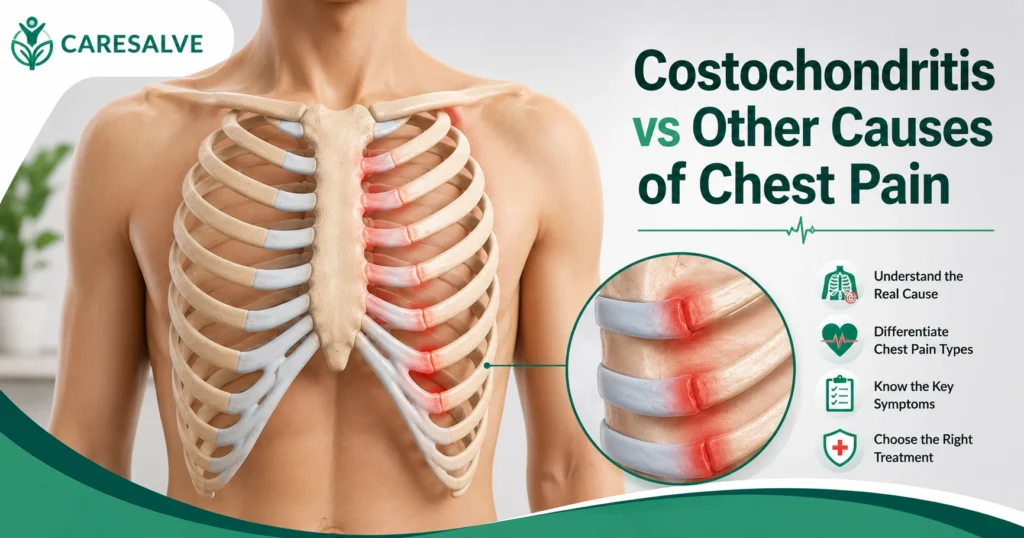
Because chest pain can stem from many different sources, it helps to understand how costochondritis compares to a few related conditions.
Costochondritis vs Tietze Syndrome
Tietze syndrome is a related but distinct condition that also involves inflammation of the rib cartilage, but it typically includes visible swelling at the affected joint, which costochondritis usually does not. If you’re comparing costochondritis or Tietze syndrome, the presence of noticeable swelling is one of the key distinguishing features, though a healthcare provider is best positioned to make that distinction.
Costochondritis vs Muscle Strain
A strained chest or sternum muscle can cause similar discomfort to costochondritis, but muscle strain pain is often linked more directly to specific movements or exertion and may respond differently to rest and stretching compared to cartilage inflammation.
Costochondritis vs Other Causes of Sternum Pain
Sternum pain can have many causes beyond costochondritis, including muscle strain, injury, digestive issues, or other underlying conditions. Because the reasons your sternum might hurt are so varied, persistent or unexplained sternum pain deserves a proper evaluation rather than an assumption that it’s costochondritis.
Is Costochondritis Dangerous?
Costochondritis itself is generally not considered dangerous or life threatening. It’s typically a self limited condition that improves with time and conservative care. That said, chest pain should never be automatically assumed to be costochondritis, since chest pain can also be a symptom of more serious conditions that require prompt medical attention. If you’re uncertain about the source of your chest pain, it’s always safer to get it checked out.
How Is Costochondritis Diagnosed?
There isn’t one single definitive test for costochondritis, so diagnosis is generally based on a combination of your symptoms, medical history, and a physical examination.
Physical Examination
During an exam, a healthcare provider will typically ask about the location of your pain, when it started, what makes it better or worse, and whether it’s affected by breathing or movement. They will often gently press on the chest wall to check for tenderness, since reproducible pain with palpation is a common feature of costochondritis.
Tests Your Doctor May Consider
While there’s no specific costochondritis x ray finding that confirms the condition, imaging or other tests may be used to rule out other causes of chest pain, such as heart, lung, or bone related issues, particularly if your symptoms are unusual or concerning in other ways.
Costochondritis Treatment: How to Relieve the Pain
Costochondritis treatment generally focuses on reducing inflammation and allowing the cartilage to heal, rather than a single quick fix.
Rest and Activity Modification
Avoiding activities that worsen your symptoms, such as heavy lifting or repetitive upper body movement, can give the inflamed cartilage time to settle down.
Heat or Cold
Applying heat or a cold pack to the affected area may help ease discomfort for some people, depending on personal preference and what feels most soothing.
Pain Relief Medicines
Over the counter pain relief options are sometimes used to help manage costochondritis discomfort, but it’s important to use any medication as directed and to check with a healthcare provider or pharmacist about what’s appropriate for you, especially if you have other health conditions or take other medications.
Gentle Stretching and Physical Therapy
Once acute pain has settled, gentle stretching or guided physical therapy may help with mobility and reduce the likelihood of recurring discomfort, particularly if posture or muscle tension is contributing to symptoms.
What to Avoid During a Flare
During a flare of costochondritis symptoms, it generally helps to avoid movements that reproduce the pain, such as certain stretches, bending forward with strain, or activities that involve repetitive pressure on the chest wall.
How Long Does Costochondritis Last?
Costochondritis is often an acute condition that improves within a few weeks with rest and conservative care. However, some people experience chronic costochondritis, where symptoms persist longer or return periodically. If your pain continues well beyond what feels like a typical recovery timeline, it’s worth having it reassessed rather than assuming it will resolve on its own indefinitely.
Can You Prevent Costochondritis?
While costochondritis isn’t always preventable, especially since a clear cause isn’t found in every case, a few habits may help reduce your risk. These include avoiding sudden overexertion, gradually increasing the intensity of new exercise routines, being mindful of repetitive upper body activity, addressing a persistent cough promptly, and using proper technique when lifting heavy objects.
When Should You See a Doctor for Sternum or Rib Pain?
It’s a good idea to see a doctor if your sternum or rib pain is new, persistent, worsening, or simply unexplained. This is especially true if the pain doesn’t seem to be improving with rest, if it’s interfering with daily activities, or if you’re unsure whether it’s related to costochondritis or something else. A healthcare provider can help identify the cause and rule out other conditions that might need different treatment.
When Is Chest Pain an Emergency?
Chest pain, including pain in the center of the chest or behind the breastbone, should be treated as a possible emergency if it’s severe, sudden, or accompanied by other concerning symptoms. Seek emergency medical care immediately if chest pain occurs along with trouble breathing, fainting, sweating, nausea, sudden weakness, or pain that spreads to the arm, jaw, shoulder, or back. Costochondritis should never be assumed based on pain location alone, since these symptoms can also point to more serious conditions that require urgent attention.
Frequently Asked Questions
1. What Does Costochondritis Feel Like?
Costochondritis typically feels like a sore, tender, or achy sensation around the breastbone that often worsens with movement, deep breathing, coughing, or pressing on the area.
2. Why Does My Sternum Hurt?
Sternum pain can be caused by several things, including costochondritis, muscle strain, injury, or other underlying conditions. Because the causes vary so widely, persistent sternum pain is worth having evaluated rather than assumed.
3. Can Costochondritis Cause Pain Under the Left Breast?
Yes, costochondritis can cause pain along the rib cage near or under the left breast, depending on which cartilage segments are affected. This pattern is something some people, particularly women, commonly report.
4. Can Costochondritis Cause Pain When Breathing?
Yes, since the affected cartilage plays a role in chest wall movement, many people with costochondritis notice their pain increases with deep breaths, coughing, or sneezing.
5. How Can I Get Rid of Costochondritis Fast?
There’s no guaranteed fast fix, but resting the area, avoiding activities that worsen symptoms, and following guidance from a healthcare provider on appropriate pain relief can support a quicker, more comfortable recovery.
6. What Is the Difference Between Costochondritis and Tietze Syndrome?
The main difference is that Tietze syndrome typically involves visible swelling at the affected rib cartilage joint, while costochondritis usually does not, even though both conditions involve inflammation of similar tissue.
7. Can Costochondritis Come Back?
Yes, costochondritis can recur, and some people experience chronic or repeated episodes over time, particularly if underlying triggers like repetitive strain or persistent coughing continue.
Key Takeaways
Costochondritis is inflammation of the cartilage connecting the ribs to the breastbone, and it commonly causes chest wall pain that worsens with pressure, movement, or breathing. Symptoms and pain locations can vary, often centering around the sternum, between the breasts, or along nearby ribs. While costochondritis is generally not dangerous, chest pain should always be evaluated properly rather than self diagnosed, since other conditions can feel similar. Treatment typically involves rest, activity modification, and appropriate pain relief, with most cases improving over time. If pain is severe, persistent, or accompanied by other concerning symptoms, seek medical care promptly. At CareSalve, our goal is to help you understand conditions like costochondritis clearly, so you feel informed and know when it’s time to reach out to a healthcare provider.
