
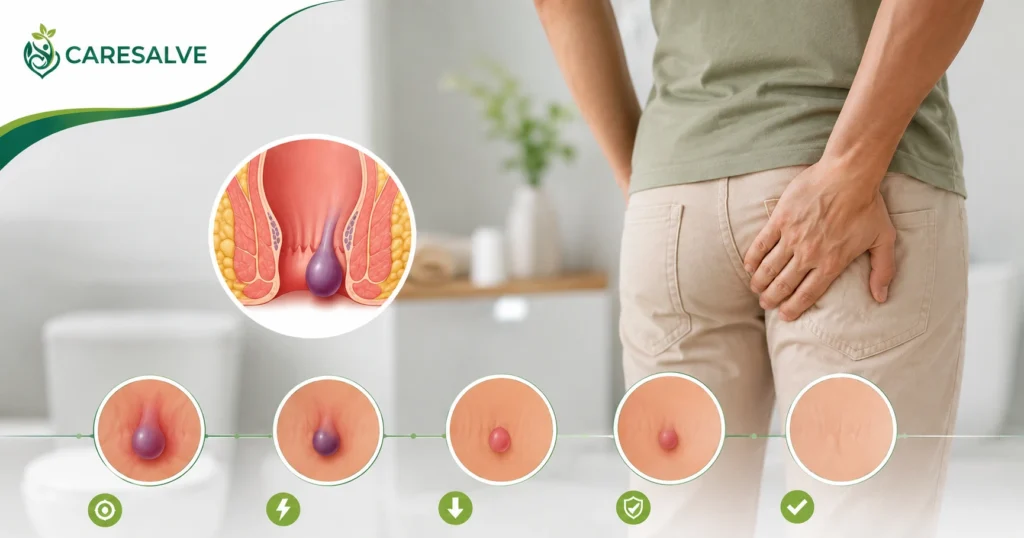

External hemorrhoids are swollen veins that develop under the skin around the anus, and they are extremely common, affecting a large share of adults at some point in their lives. It is easy to understand why people become concerned when they notice a new lump, swelling, pain, or itching in this area. One of the most common questions that follows is simple: how can you tell whether an external hemorrhoid is actually getting better? It is worth being upfront that appearance alone cannot reliably confirm what a lump is, since several other conditions can cause similar symptoms. This CareSalve guide walks through the signs of healing, what external hemorrhoids typically look and feel like, how recovery unfolds, what can help the process along, thrombosed hemorrhoids, prevention, and when it is time to see a doctor.
How Can You Tell an External Hemorrhoid Is Healing?
Healing tends to happen gradually rather than all at once, and there are a few everyday signs that often accompany improvement.
Pain and Tenderness Start to Decrease
One of the earliest and most noticeable signs of healing is a gradual reduction in pain or tenderness around the affected area. Many people report that sharp or throbbing discomfort begins to ease within the first several days, even if some soreness lingers a bit longer.
Swelling Gradually Becomes Smaller
As healing progresses, the lump itself often becomes less prominent. Swelling that was firm or pronounced in the early days tends to soften and shrink over time, though this can take longer than the reduction in pain.
Itching and Irritation Improve
Itching and general irritation around the anus commonly ease up as inflammation calms down. Persistent or worsening itching, on the other hand, can be a sign that irritation is continuing rather than resolving.
Sitting and Bowel Movements Become Easier
Everyday activities that were uncomfortable, such as sitting for extended periods or having a bowel movement, typically become easier as healing continues. This kind of practical, day to day improvement is often one of the clearest signs that things are moving in the right direction.
Why Do External Hemorrhoids Change in Appearance?
An external hemorrhoid’s appearance can shift quite a bit depending on the stage of swelling, irritation, and healing it is going through. Active swelling can make the area look larger and more inflamed, while skin changes and irritation from friction or moisture can affect color and texture. If a blood clot has formed inside the hemorrhoid, a condition known as thrombosis, the area may appear notably darker, sometimes described as blue, black, or purple, and often feels firmer to the touch. As swelling goes down and any clot begins to resolve, the hemorrhoid generally becomes smaller and less discolored.
What Do External Hemorrhoids Usually Look and Feel Like?
Common Appearance
Non thrombosed external hemorrhoids are usually close to the color of the surrounding skin and tend to feel soft rather than firm. It is important not to rely purely on visual comparison to self diagnose, since several other conditions can look similar.
Common Sensations
External hemorrhoids can cause a range of sensations, including tenderness, swelling, itching, general discomfort, and pain, particularly during bowel movements or extended sitting.
What Can a Thrombosed Hemorrhoid Feel Like?
When a blood clot forms inside an external hemorrhoid, it typically becomes firmer and noticeably more painful than a standard external hemorrhoid. Many people describe this as a sudden, sharp increase in pain along with a hard lump that is tender to the touch.
How Long Does an External Hemorrhoid Take to Improve?
Recovery time varies quite a bit from person to person. Milder cases may start feeling better within just a few days, while more severe or thrombosed hemorrhoids can take several weeks to fully settle. Ongoing constipation or straining during bowel movements can prolong irritation and slow the healing process. Thrombosed hemorrhoids in particular tend to follow their own pattern, since the body needs time to gradually reabsorb the clot, and pain often improves noticeably in the first several days even though the lump itself may remain for longer. Because so many individual factors are involved, there isn’t one single, exact recovery timeline that applies to everyone.
How Can You Help an External Hemorrhoid Heal?
Keep Bowel Movements Soft
Eating enough fiber and drinking adequate fluids throughout the day can help keep stools soft, which reduces the strain placed on the affected area during bowel movements.
Avoid Straining
Excessive pushing or straining increases pressure on the veins around the anus, which can aggravate symptoms and slow healing.
Avoid Prolonged Toilet Sitting
Spending long periods sitting on the toilet can add unnecessary pressure to the area. Keeping bathroom visits brief when possible may help reduce irritation.
Keep the Area Gently Clean
Gentle cleaning, without excessive rubbing or harsh products, can help minimize additional irritation to already sensitive skin.
Use Appropriate Treatments as Directed
A variety of over the counter options exist for symptom relief, and these should be used according to their labeled directions. Anyone unsure which option is appropriate for their situation should check with a pharmacist or healthcare provider rather than guessing.
Why Do External Hemorrhoids Become Painful or Swollen?
Several everyday factors can contribute to the development or worsening of external hemorrhoids, including constipation, straining during bowel movements, prolonged sitting, and general increased pressure in the pelvic area. Pregnancy is another common contributing factor, since it places extra pressure on the pelvic veins. Repeated irritation from any of these factors can lead to swelling and inflammation over time.
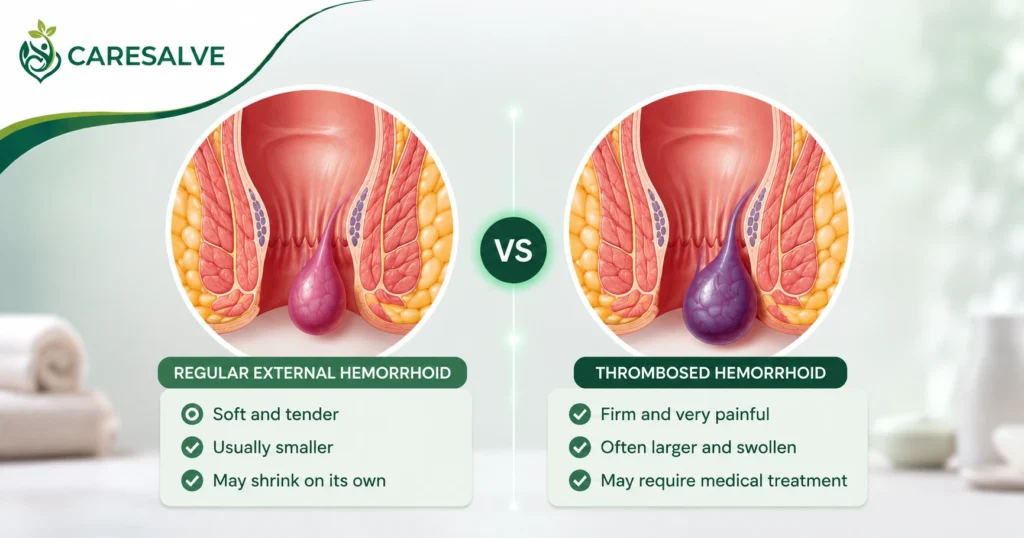
What Is the Difference Between a Regular External Hemorrhoid and a Thrombosed Hemorrhoid?
What Is an External Hemorrhoid?
An external hemorrhoid is a swollen vein located under the skin around the anus. It can cause discomfort, itching, and mild swelling, but it is typically soft and not usually associated with sudden, severe pain.
What Is a Thrombosed External Hemorrhoid?
A thrombosed external hemorrhoid develops when a blood clot forms inside the swollen vein. This can partially or fully block blood flow, leading to a firm, often bluish or purple lump that tends to be significantly more painful than a standard hemorrhoid.
How Can Symptoms Differ?
Thrombosed hemorrhoids often come on suddenly and cause sharp, intense pain, while regular external hemorrhoids tend to cause milder, more gradual discomfort. That said, symptoms can overlap, so it is not always possible to tell the two apart without a proper evaluation.
Why Appearance Alone Isn’t Enough
Other conditions, including skin tags, abscesses, and in rare cases more serious issues, can cause lumps or bleeding in this area. Because of this overlap, appearance alone is not a reliable way to confirm a diagnosis.
Can You Push an External Hemorrhoid Back In?
External hemorrhoids form outside the anus and are different from prolapsed internal hemorrhoids, which develop inside the rectum and can sometimes bulge outward. Because external hemorrhoids are located under the skin rather than protruding from inside the rectum, they are not something that should be manually pushed back in. Attempting to manipulate a painful or swollen lump can cause further irritation or injury. If a lump feels unusual, is very painful, or does not resolve, a professional assessment is the safer path forward.
Are External Hemorrhoids Dangerous?
External hemorrhoids are extremely common and, in most cases, are not dangerous, even though they can be quite uncomfortable. Symptoms can range from mild irritation to significant pain, particularly with thrombosed hemorrhoids. It is worth remembering that not every lump or instance of rectal bleeding is necessarily caused by a hemorrhoid, so persistent, severe, or unusual symptoms deserve proper medical evaluation rather than assumption.
When Should You See a Doctor About an External Hemorrhoid?
It is a good idea to seek medical care for significant or persistent bleeding, severe or worsening pain, symptoms that are not improving over a reasonable period, symptoms that keep coming back, any unusual changes in the area, or general uncertainty about what is actually causing the symptoms. Rectal bleeding should never be automatically assumed to be caused by hemorrhoids, since other conditions can present similarly and may need a different type of evaluation.
How Can You Prevent External Hemorrhoids From Coming Back?
Eat Enough Fiber
A fiber rich diet helps keep stools soft and easier to pass, reducing unnecessary strain.
Drink Adequate Fluids
Staying well hydrated supports regular, comfortable bowel movements.
Avoid Straining
Minimizing straining during bowel movements helps reduce pressure on the veins around the anus.
Don’t Delay Bowel Movements
Putting off the urge to go can contribute to harder stools and increased straining later on.
Stay Physically Active
Regular movement supports healthy digestion and can help reduce the prolonged sitting that sometimes contributes to hemorrhoid development.
Frequently Asked Questions
1. How Do You Know If an External Hemorrhoid Is Healing?
Common signs of healing include decreasing pain and tenderness, a gradual reduction in swelling, improving itching or irritation, and everyday activities like sitting or having a bowel movement becoming more comfortable over time.
2. Do External Hemorrhoids Go Away on Their Own?
Many external hemorrhoids improve on their own with basic self care, especially milder cases, though more severe or thrombosed hemorrhoids sometimes require additional treatment from a healthcare provider.
3. How Long Does an External Hemorrhoid Take to Go Away?
Recovery time varies, with milder cases often improving within days and more significant or thrombosed hemorrhoids sometimes taking several weeks to fully resolve.
4. What Does an External Hemorrhoid Feel Like?
External hemorrhoids commonly feel like a tender, sometimes itchy lump near the anus, which may be soft in milder cases or firm and significantly more painful if a blood clot has formed.
5. When Should You Seek Medical Attention for Hemorrhoids?
Medical attention is appropriate for significant bleeding, severe or worsening pain, symptoms that don’t improve or keep returning, or any uncertainty about whether symptoms are actually caused by a hemorrhoid.
Final Takeaway
Decreasing pain, shrinking swelling, easing itching, and more comfortable daily activities are all encouraging signs that an external hemorrhoid is on its way to healing. Avoiding constipation and straining, along with gentle care of the area, can support that process. At the same time, it is important to remember that appearance alone isn’t enough to confirm what a lump actually is. Anyone dealing with significant bleeding, severe pain, symptoms that persist or worsen, or general uncertainty about their symptoms should reach out to a healthcare professional for proper evaluation and peace of mind.
References
- Cleveland Clinic, “Hemorrhoids: Symptoms, Causes & Treatment,” https://my.clevelandclinic.org/health/diseases/15120-hemorrhoids
- Cleveland Clinic, “Thrombosed Hemorrhoids: Symptoms, Causes & Treatment,” https://my.clevelandclinic.org/health/diseases/thrombosed-hemorrhoids
- Cleveland Clinic, “Prolapsed Hemorrhoids: Symptoms, Surgery & Treatment,” https://my.clevelandclinic.org/health/diseases/prolapsed-hemorrhoids
- Osmosis, “Thrombosed Hemorrhoid: What Is It, Causes, Diagnosis, Treatment,” https://www.osmosis.org/answers/thrombosed-hemorrhoid
