
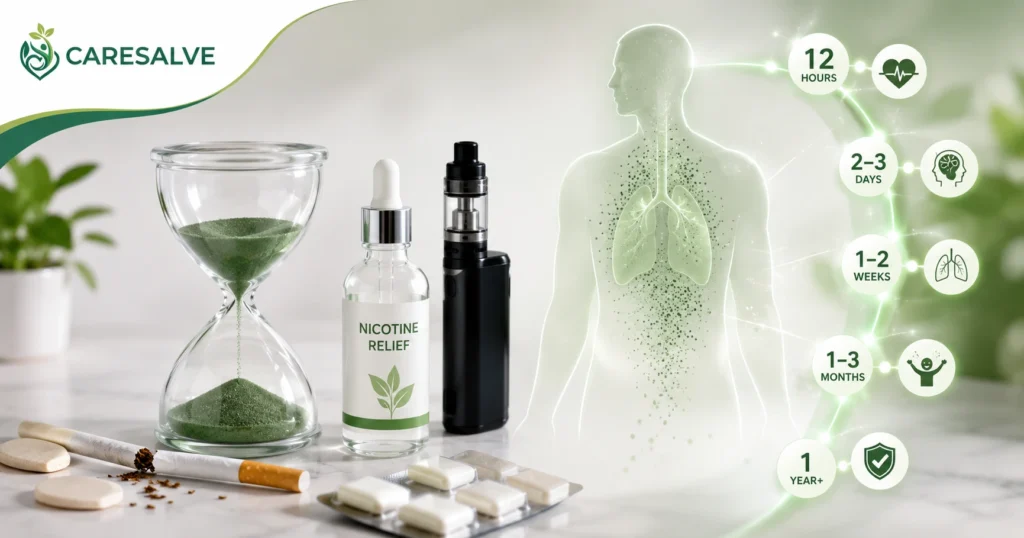

Nicotine itself clears from the body fairly quickly, but its main breakdown product, cotinine, can remain detectable for much longer. The exact timeframe depends on how someone uses nicotine, their individual metabolism, and the type of test being used. Smoking, vaping, nicotine gum, patches, and pouches can all introduce nicotine into the body in different ways. It is also worth understanding early on that nicotine leaving the body and testing negative for nicotine exposure are not always the same thing, since sensitive tests can pick up even small amounts of its metabolites long after the nicotine itself is gone. This CareSalve guide breaks down the full timeline across blood, urine, saliva, and hair, along with what actually affects clearance and how to approach quitting safely.
How Long Does Nicotine Take to Leave Your Body?
Once nicotine enters the bloodstream, it travels to the liver, where enzymes break it down into several byproducts, the most important of which is cotinine. Nicotine itself has a notably short half life, generally estimated at around two hours, meaning the body clears roughly half of it every couple of hours after use. This is part of why cravings can return so quickly after smoking or vaping. Cotinine, on the other hand, has a much longer half life, commonly cited at somewhere between 15 and 20 hours depending on the source, which is why it remains the preferred marker labs use to confirm nicotine exposure. Because individual metabolism, frequency of use, and testing method all vary, there is no single universal timeline that applies to everyone.
Nicotine Half Life Explained
A half life is simply the amount of time it takes for half of a substance to leave the body. With nicotine’s short half life of about two hours, the substance itself is largely gone from the bloodstream within about a day for most people. This rapid clearance is one reason nicotine tests typically focus on cotinine instead of nicotine directly.
Nicotine vs Cotinine
It helps to think of this as a simple sequence: nicotine enters the body, gets metabolized primarily in the liver, and becomes cotinine, which is then gradually eliminated over the following days. Because cotinine sticks around far longer than nicotine, it offers a more reliable window for confirming recent tobacco or nicotine product use.
How Long Does Nicotine Stay in Your Blood?
Blood testing generally reflects more recent nicotine exposure. Nicotine itself is typically detectable in blood for about one to three days after use, while cotinine can remain measurable in blood for up to around ten days in many people. Blood tests are considered a reliable way to confirm nicotine exposure, though they are more invasive than urine or saliva testing, so they tend to be reserved for clinical or specific medical situations. Detection windows can differ between someone who vapes or smokes occasionally versus someone who uses nicotine products daily, since regular use allows cotinine levels to build up more consistently in the bloodstream.
How Long Does Nicotine Stay in Your Urine?
Urine testing is one of the most common methods for detecting nicotine exposure, largely because it is noninvasive and because cotinine concentrations in urine tend to run several times higher than in blood or saliva. For most people, nicotine and cotinine are detectable in urine anywhere from about three to four days after last use, though heavier or more frequent users can test positive for up to three weeks, and in some research, cotinine has been detected in urine for as long as eight weeks under certain conditions. This is why urine testing is frequently used in workplace screenings, insurance medical exams, and smoking cessation programs.
Vaping nicotine produces the same basic detection pattern in urine as smoking does, since the nicotine absorbed from a vape is processed by the body in essentially the same way. Someone who vapes regularly can expect a similar detection window to someone who smokes a comparable amount of nicotine.
How Long Does Nicotine Stay in Your Saliva?
Saliva testing is another noninvasive option, often used because samples are quick and easy to collect. Nicotine itself is usually detectable in saliva for roughly one to four days, while cotinine can sometimes be measurable in saliva for up to about a week in regular users. Saliva testing tends to reflect a slightly shorter detection window than urine testing, but like the other methods, results are affected by how often and how much a person uses nicotine.
How Long Can Nicotine Be Detected in Hair?
Hair testing works differently from blood, urine, and saliva testing. Rather than reflecting a short recent window, hair analysis can reveal a longer term pattern of nicotine exposure, sometimes reaching back as far as three months. It is important to understand that this does not mean nicotine remains biologically active in the body for that entire period. Instead, trace amounts of nicotine and its metabolites become incorporated into the hair as it grows, and testing a longer hair sample can reflect exposure over the corresponding growth period. Hair growth rate and the specific testing methodology used can both influence the results.
How Long Does Vaping Nicotine Stay in Your System?
Nicotine absorbed through vaping is processed by the liver in much the same way as nicotine from cigarettes or other tobacco products. Whether someone is using a nicotine containing vape or a nicotine free vape product matters quite a bit here, since only nicotine containing products will trigger a positive result on nicotine or cotinine testing. Frequency of vaping plays a major role in how long detection windows last, with occasional vapers generally clearing nicotine and cotinine faster than daily users.
How Long Does Nicotine Stay in Your System After Vaping?
The detection windows after vaping generally mirror those described above for blood, urine, and saliva testing, since the body does not meaningfully distinguish between nicotine absorbed from a vape versus a cigarette. What matters most for testing purposes is the amount of nicotine absorbed and how frequently it was used.
How Long Does a Vape Stay in Your System?
It is worth clarifying that vapor itself does not simply linger in the body the way this phrase might suggest. What actually matters for testing is the nicotine that was absorbed from the vaping product and the metabolites, mainly cotinine, that result from it. Once nicotine is absorbed, the same general clearance timelines described throughout this article apply.
How Long Does Tobacco Stay in Your System?
Tobacco and nicotine are related but not identical concepts. Tobacco products contain nicotine along with numerous other compounds, and nicotine exposure testing specifically measures nicotine and cotinine rather than tobacco smoke as a whole. Because of this distinction, tobacco smoke exposure and nicotine exposure often overlap but are not always assessed by the same tests.
How Long Does One Cigarette Stay in Your System?
Even a single cigarette can introduce enough nicotine to produce a positive result on a sensitive urine or saliva test for a few days afterward, since testing thresholds for cotinine can be quite low.
How Long Does Hookah Stay in Your System?
Hookah smoking also delivers nicotine, and depending on the length and frequency of a session, it can result in a similar detection window to cigarette smoking, since the same liver metabolism and cotinine formation process applies.
How Long Do Nicotine Products Stay in Your System?
Nicotine Patches
Nicotine absorbed through a patch is processed the same way as nicotine from smoking or vaping, so the general detection windows described above apply, though total exposure depends on the patch’s strength and how long it was worn.
Nicotine Gum
Nicotine gum delivers a controlled dose of nicotine through the lining of the mouth, and it follows the same basic metabolism and clearance pattern once absorbed.
Nicotine Pouches
Modern nicotine pouches work similarly, delivering nicotine that is absorbed and metabolized into cotinine just like other nicotine products. Regardless of the specific brand or delivery method, testing generally relates to nicotine and its metabolites rather than to any particular product itself.
What Factors Affect How Quickly Nicotine Leaves Your Body?
How Frequently You Use Nicotine
Someone who uses nicotine only occasionally will typically clear it faster than someone who uses it multiple times per day, since regular use allows cotinine to accumulate.
How Much Nicotine You Use
Higher doses or more frequent exposure generally lead to higher metabolite levels, which can extend the detection window somewhat.
Your Metabolism
Individual differences in liver enzyme activity, including genetic variation, can affect how quickly a person converts nicotine into cotinine and then eliminates it.
Age and Overall Health
General health status can play a role in how efficiently the body processes and eliminates substances like nicotine, though this varies from person to person and is best discussed with a healthcare provider for anyone with specific health concerns.
Liver and Kidney Function
Since the liver is primarily responsible for metabolizing nicotine into cotinine, and the kidneys help eliminate cotinine through urine, impaired liver or kidney function can potentially slow this process.
Type of Nicotine Product
Smoking, vaping, gum, patches, and pouches can all produce somewhat different absorption and exposure patterns, which can influence how long nicotine and cotinine remain detectable.
How Is Nicotine Detected in the Body?
Urine Testing
Urine testing is the most commonly used method, largely due to its noninvasive nature and relatively long detection window for cotinine.
Blood Testing
Blood testing is more invasive but is considered a reliable way to confirm recent nicotine exposure, and it is often used in clinical settings.
Saliva Testing
Saliva testing is quick, noninvasive, and commonly used in settings that need a fast turnaround.
Hair Testing
Hair testing offers insight into longer term use patterns rather than recent exposure.
Why Do Tests Look for Cotinine?
Because nicotine itself clears from the body so quickly, cotinine serves as a more dependable marker for confirming nicotine exposure. Its longer half life gives testers a wider and more reliable detection window, which is why most nicotine and tobacco use tests are technically cotinine tests.
How to Get Nicotine Out of Your System
Stop Using Nicotine
The single most important step in clearing nicotine and cotinine from the body is simply to stop using nicotine products. There is no substitute for this, and continued use will keep replenishing nicotine levels regardless of anything else someone tries.
Stay Normally Hydrated
Staying adequately hydrated supports normal kidney function, which plays a role in eliminating cotinine through urine. That said, drinking water does not instantly flush nicotine from the body, and normal hydration habits are what matter here, not excessive intake.
Eat a Balanced Diet
A generally balanced, nutritious diet supports overall liver and metabolic function. No specific food has been shown to magically remove nicotine from the body faster.
Stay Physically Active
Regular physical activity supports overall health and can be a helpful part of a broader quitting plan, though it should not be viewed as a guaranteed way to speed up nicotine clearance.
Get Enough Sleep
Adequate sleep supports the body’s normal recovery processes and can also help manage some of the irritability and mood changes that often accompany nicotine withdrawal.
Can You Flush Nicotine Out of Your System Fast?
There is no proven method to instantly flush nicotine or cotinine out of the body. Time, along with stopping nicotine exposure, remains the main factor in clearance. Drinking excessive amounts of water in an attempt to speed up the process can actually be harmful and, in extreme cases, dangerous. So called nicotine detox drinks or cleanses marketed online should not be treated as guaranteed solutions, since there is little credible evidence supporting dramatic claims of rapid clearance. Attempting to manipulate a medical or workplace test is also unreliable and can carry its own risks, so the safest and most effective approach is simply stopping nicotine use and allowing the body’s normal processes to run their course.
What Happens After You Stop Using Nicotine?

Once someone stops using nicotine, blood and saliva nicotine levels typically decline within a day or two, and cotinine levels follow with a somewhat longer decline over the following days to weeks depending on prior use. It is important to understand that cravings and withdrawal symptoms can persist even after nicotine and cotinine levels have dropped substantially, since withdrawal and detection are separate processes driven by different biological mechanisms.
Common Nicotine Withdrawal Symptoms
People quitting nicotine often experience cravings, irritability, restlessness, difficulty concentrating, changes in sleep patterns, increased appetite, and shifts in mood.
How Long Does Nicotine Withdrawal Last?
Withdrawal symptoms often peak within the first few days after quitting and gradually improve over the following weeks, though the exact timeline varies from person to person. Some people notice lingering cravings for longer periods, especially in situations that were previously associated with nicotine use.
When Should You Get Help Quitting Nicotine?
If quitting independently feels difficult, if cravings are strong or persistent, if previous attempts to quit have not been successful, or if withdrawal symptoms are interfering with daily life, it is worth talking with a healthcare professional. Evidence based cessation support, including counseling and nicotine replacement therapy when appropriate, can significantly improve the chances of quitting successfully and staying nicotine free.
Frequently Asked Questions About Nicotine Clearance
1. How Long Does Nicotine Stay in Your System After You Quit?
Nicotine itself typically clears within a day or two due to its short half life, while cotinine can remain detectable for anywhere from several days to a few weeks, depending on prior usage patterns and the type of test used.
2. How Long Does Cotinine Stay in Your System?
Cotinine generally has a half life of around 15 to 20 hours and can remain detectable in urine for several days to a few weeks in regular users, with some research showing detection possible for longer periods in certain cases.
3. How Long Does Nicotine Stay in Your Urine After Vaping?
Detection after vaping generally follows the same pattern as smoking, with nicotine and cotinine typically detectable in urine for three to four days in occasional users and up to a few weeks in regular users.
4. Can You Flush Nicotine Out of Your System Faster?
There is no reliable way to instantly flush nicotine or cotinine from the body. Stopping nicotine use and allowing normal time to pass remains the only genuinely effective approach.
5. Will Nicotine Show Up on a Drug Test?
Standard drug tests do not typically screen for nicotine, but dedicated nicotine or cotinine tests, which are separate from general drug panels, can detect nicotine exposure from smoking, vaping, or other nicotine products.
The Bottom Line
Nicotine itself is processed and cleared from the body relatively quickly, generally within a day or so, while its main metabolite, cotinine, remains detectable for a noticeably longer stretch, often several days to a few weeks depending on the person and the type of test. Detection windows vary across blood, urine, saliva, and hair testing, and both smoking and vaping can result in similar nicotine and cotinine detection patterns. Individual factors such as frequency of use, metabolism, and overall health all influence how long these substances remain measurable. Importantly, there is no reliable instant nicotine detox, and stopping nicotine use remains the single most important step toward both clearance and long term recovery. Anyone struggling to quit is encouraged to reach out to a healthcare professional for support and guidance tailored to their situation.
References
- The Healthy, “How Long Does Nicotine Stay in Your System? A Full Breakdown by Test Type,” https://www.thehealthy.com/addiction/smoking/how-long-nicotine-stays-in-system/
- MD Spiro, “How Long Does Nicotine Stay in Your System?” https://mdspiro.com/how-long-does-nicotine-stay-in-your-system/
- Testing.com, “Nicotine and Cotinine Test: How It Detects Tobacco Use,” https://www.testing.com/tests/nicotine-and-cotinine/
- Recovered.org, “How Long Does Nicotine Stay in Your System?” https://recovered.org/stimulants/nicotine/how-long-does-nicotine-stay-in-your-system
- DrugRehab.com, “How Long Does Nicotine Stay in Your System?” https://www.drugrehab.com/addiction/drugs/nicotine/nicotine-in-system/
