
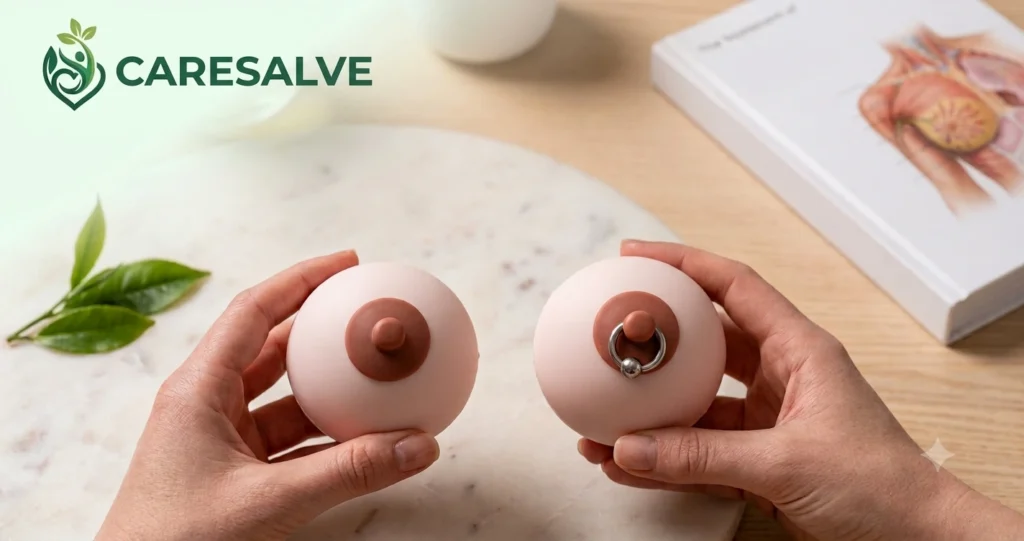

Introduction
A nipple piercing is a form of body piercing placed through the nipple, chosen by many people for self expression, aesthetics, or personal confidence. Like any piercing, it comes with considerations around pain, healing, and proper care. In this guide from caresalve, we will walk through everything you need to know, including what the procedure involves, how much it hurts, how long it takes to heal, proper aftercare, potential risks, and answers to the most common questions people search for.
What Is a Nipple Piercing?
A nipple piercing typically passes horizontally through the base of the nipple, though vertical and other placements exist as well. It can be done on one or both nipples, and both men and women commonly get them. When performed by a licensed and experienced piercer using sterile equipment, it is generally considered safe, though it does require diligent aftercare during healing.
Types of Nipple Piercing Jewelry
Straight Barbells
A straight bar with balls on each end, one of the most common choices for initial piercings.
Circular Barbells
Curved jewelry that some people prefer for comfort or style.
Captive Bead Rings
A circular ring with a removable bead, offering a classic look.
Gold Nipple Jewelry
Available in various karats, often chosen for a premium appearance once the piercing is fully healed.
Surgical Steel and Titanium Jewelry
These materials are widely recommended for initial piercings because they are hypoallergenic and reduce the risk of irritation. The Association of Professional Piercers provides detailed guidance on selecting safe jewelry materials.
What Happens During a Nipple Piercing Procedure?
The process generally begins with a consultation where the piercer discusses placement, jewelry options, and aftercare. The area is then cleaned and sterilized, and the piercer marks the exact spot for accuracy. Using a sterile needle, the piercing is placed and jewelry is inserted immediately afterward. Before leaving, the piercer will provide detailed aftercare instructions to support proper healing.
Do Nipple Piercings Hurt?
Pain Level
Nipple piercings are often described as moderately to significantly painful due to the sensitivity of the area, though pain tolerance varies from person to person.
How Long Does the Pain Last?
Sharp pain typically fades within a few minutes, while soreness and tenderness can last for several days to a couple of weeks.
Tips to Reduce Discomfort
Staying relaxed, choosing an experienced piercer, and following aftercare instructions closely can help minimize discomfort during healing.
How Much Does a Nipple Piercing Cost?
Studio prices vary widely depending on location and piercer experience, generally ranging from around forty to one hundred dollars per piercing, not including jewelry. Higher quality jewelry, such as titanium or gold, can add to the overall cost. Aftercare products like saline solution are usually an additional but affordable expense. Always choose quality and safety over the cheapest option available.
Nipple Piercing Healing Time
Healing Stages
Healing generally progresses through an initial inflammation stage, followed by a longer tissue repair stage, and finally full maturation of the piercing channel.
Normal Healing Timeline
Most nipple piercings take anywhere from six months to a full year to heal completely, according to guidance from the Association of Professional Piercers.
What Delays Healing?
Friction from clothing, touching the piercing with unwashed hands, using harsh products, and removing jewelry too early can all slow down healing significantly.
Nipple Piercing Aftercare
Daily Cleaning Routine
Clean the piercing with a saline solution once or twice daily, avoiding over cleaning which can irritate the tissue.
Saline Solution
A sterile saline solution, either purchased or made with proper proportions of salt and distilled water, is the gold standard for piercing aftercare.
What to Avoid
Avoid alcohol, hydrogen peroxide, harsh soaps, and ointments, as these can damage healing tissue and slow recovery.
Sleeping Tips
Sleeping on your back or using a supportive garment can help prevent unnecessary pressure or friction on the piercing while it heals.
Clothing During Healing
Loose, breathable fabrics and supportive but non restrictive bras help reduce irritation during the healing period.
How to Clean a Nipple Piercing Properly
Soak the area in saline solution for several minutes, allowing any crust to soften naturally rather than picking at it. Pat the area dry gently with a clean paper towel afterward, since cloth towels can harbor bacteria. Clean no more than twice daily, as excessive cleaning can actually irritate the piercing rather than help it heal.
Is Crusting Around a Nipple Piercing Normal?
White Crust
Often simply dried lymph fluid, a normal part of the healing process.
Yellow Crust
Can also be normal, though persistent yellow discharge with odor should be monitored closely.
Dried Lymph Fluid
This is your body’s natural healing response and is expected during the early weeks.
When to Be Concerned
If crust is accompanied by intense redness, swelling, warmth, or pain, it may indicate infection rather than normal healing.
Signs of an Infected Nipple Piercing
Common Symptoms
Redness that spreads, significant swelling, warmth around the site, persistent pain, and foul smelling discharge can all indicate infection.
Infection versus Normal Healing
Normal healing involves mild redness and some discharge that improves over time, while infection tends to worsen rather than improve.
When to Visit a Doctor
If you notice fever, spreading redness, severe pain, or thick discolored discharge, seek medical attention promptly. The Mayo Clinic offers guidance on recognizing piercing infections.
How to Treat an Infected Nipple Piercing
Continue gentle saline cleaning even if you suspect infection, since removing jewelry too early can trap infection inside. A warm saline compress applied a few times daily can help reduce swelling. If symptoms persist or worsen, consult a doctor who may prescribe antibiotics. Avoid removing the jewelry yourself unless specifically advised by a medical professional.
Common Nipple Piercing Problems
Swelling
Mild swelling is common in the early healing period and typically subsides within a few weeks.
Itching
A natural part of healing as tissue regenerates, though excessive itching paired with irritation should be monitored.
White Discharge
Often normal lymph fluid, but should be evaluated if accompanied by odor or pain.
Lump Around the Piercing
Can indicate a minor irritation bump or, in some cases, scar tissue formation.
Scar Tissue
May develop from irritation or trauma to the piercing site over time.
Rejection
Occurs when the body pushes the jewelry out through the skin, often signaled by the jewelry appearing closer to the surface or visible thinning skin above it.
Risks and Side Effects of Nipple Piercings
Potential risks include infection, allergic reactions to certain metals, bleeding, jewelry migration, rejection, and permanent scarring. Choosing a reputable, licensed piercer and following proper aftercare significantly reduces these risks.
Can You Breastfeed After a Nipple Piercing?
Breastfeeding after a healed nipple piercing is often possible, though jewelry is typically removed during feeding for safety. It is generally recommended to allow full healing before pregnancy or breastfeeding begins. Some individuals experience changes in milk flow due to scar tissue, so consulting a lactation specialist is advisable for anyone planning to breastfeed with pierced nipples.
When Can You Change Your Nipple Jewelry?
Jewelry should only be changed once the piercing has fully healed, generally after six months to a year. Signs of readiness include absence of pain, swelling, or discharge. If you are unsure, it is best to have a professional piercer perform the first jewelry change.
Will a Nipple Piercing Close Up?
Fresh Piercings
Fresh, unhealed piercings can begin closing within hours if jewelry is removed.
Healed Piercings
Fully healed piercings tend to close more slowly but can still shrink or close over weeks to months without jewelry.
How Quickly They Close
Closure time varies by individual, but nipple piercings are known for closing relatively quickly compared to some other piercing types.
How to Choose a Safe Piercing Studio
Look for a studio with proper licensing, visible sterilization practices, single use needles, and experienced piercers. Reading reviews and asking about the piercer’s specific experience with nipple piercings can help ensure a safer experience.
Tips for Faster Healing
Eating a balanced, nutrient rich diet supports tissue repair. Avoid touching the piercing unnecessarily, wear supportive and breathable clothing, avoid swimming in pools or open water during healing, and resist the urge to change jewelry before the piercing is fully healed.
Key Takeaways
Nipple piercings are generally safe when performed by a professional using sterile technique. Proper aftercare, including regular saline cleaning, plays a major role in successful healing. Full healing can take anywhere from six months to a year. Signs of infection should never be ignored, and medical advice should be sought if severe symptoms develop.
Frequently Asked Questions
1. Do nipple piercings hurt?
Yes, they are typically more painful than many other piercings due to nerve sensitivity, though pain fades relatively quickly.
2. How long does a nipple piercing take to heal?
Full healing generally takes between six months and a year.
3. How do I clean a nipple piercing?
Use a saline solution once or twice daily and avoid harsh products like alcohol or peroxide.
4. Is crusting normal after a nipple piercing?
Yes, mild white or yellow crusting from dried lymph fluid is a normal part of healing.
5. What are the signs of an infected nipple piercing?
Spreading redness, warmth, significant swelling, foul odor, and thick discolored discharge are warning signs.
6. Can I breastfeed after getting my nipples pierced?
Often yes, once fully healed, though jewelry is typically removed during feeding and a lactation specialist can offer personalized guidance.
7. When can I change my nipple jewelry?
Only after the piercing has fully healed, generally six months to a year later.
8. Will my nipple piercing close if I remove the jewelry?
Yes, nipple piercings can close relatively quickly, especially if jewelry is removed before full healing.
9. How much does a nipple piercing cost?
Prices generally range from around forty to one hundred dollars, depending on location and jewelry choice.
10. Are nipple piercings safe?
Yes, when performed by a licensed professional and cared for properly during healing.
