

Glycolic acid has become one of the most talked about ingredients in modern skincare, showing up in everything from gentle toners to professional strength peels. At CareSalve, we get a lot of questions about what this ingredient actually does, how to use it safely, and who should be more cautious with it. In this guide, we will cover what glycolic acid is, how it works, its real benefits, how to add it to your routine, who should be careful, and the possible side effects you should know about.
What Is Glycolic Acid?
Glycolic acid is an alpha hydroxy acid, commonly shortened to AHA, that is widely used as a chemical exfoliant in skincare products. It is naturally derived from sugar cane, and it is considered the smallest AHA molecule, which allows it to penetrate the skin more easily than several other acids in the same family.
Unlike physical exfoliants, which rely on scrubbing granules or textured tools to manually buff away dead skin, glycolic acid works chemically. It loosens the bonds holding dead skin cells together so they can be shed more easily, without the friction and potential micro tearing that physical scrubs can sometimes cause on sensitive skin.
How Does Glycolic Acid Work on the Skin?
Glycolic acid works by weakening the bonds between cells in the outer layer of skin, allowing dead cells to detach and fall away more efficiently. As this process continues with consistent use, the skin surface becomes smoother and more even, and dull looking cells are replaced by fresher ones underneath.
Because it clears away built up dead skin, glycolic acid can also help other skincare products, such as serums and moisturizers, absorb more effectively into the skin rather than sitting on top of a rough or congested surface.
Benefits of Glycolic Acid for Skin
Removes Dead Skin Cells and Exfoliates
As a chemical exfoliant, glycolic acid helps clear away the buildup of dead skin cells on the surface. Over time, this can leave the skin looking noticeably smoother.
Improves Skin Texture and Tone
Uneven texture and a dull looking complexion are common concerns, and regular exfoliation with glycolic acid can help address both by encouraging fresher skin to surface more consistently.
Helps Reduce Dark Spots and Hyperpigmentation
Many people turn to glycolic acid to help fade the appearance of dark spots and discoloration. It is worth setting realistic expectations here, since improvements in pigmentation typically take consistent use over weeks or months rather than happening quickly.
May Help Brighten Dull Skin
By clearing away the outer layer of dead cells, glycolic acid can reveal a more radiant looking complexion underneath. It is important to note that this is a brightening effect from exfoliation rather than a bleaching or skin lightening action.
Helps Reduce the Appearance of Fine Lines
Regular exfoliation supports skin renewal, and over time this can soften the visible appearance of fine lines. This is a gradual, long term skincare benefit rather than an instant fix.
Supports Smoother, Younger Looking Skin
Some research suggests that consistent use of glycolic acid may support collagen related processes in the skin, which can contribute to a firmer, more supple look. That said, it is best to view this as one supportive part of a broader skincare routine rather than a guarantee of dramatic anti aging results.
May Help With Breakouts and Clogged Pores
Because glycolic acid helps clear away dead skin cell buildup, it can also assist in reducing clogged pores that contribute to breakouts. It is not a standalone acne treatment, and people dealing with active acne may need to combine it with other targeted products or professional guidance.
How to Use Glycolic Acid in Your Skincare Routine
Start With a Low Strength Product
If you are new to glycolic acid, begin with a lower concentration product and always follow the instructions on the packaging. Jumping straight to a strong formula can increase the risk of irritation.
Apply Glycolic Acid at Night
Glycolic acid is generally best introduced into an evening routine. Cleanse your face first, apply the glycolic acid product as directed, and follow up with a moisturizer to help support the skin barrier, especially since exfoliating acids can be drying when you first start using them.
How Often Should You Use Glycolic Acid?
Beginners should avoid overusing glycolic acid products. A common approach is to start with just a couple of applications per week and gradually increase frequency only if your skin tolerates it well. Daily use is not appropriate for everyone, and going too fast can lead to irritation.
Should You Use Glycolic Acid Every Day?
For some people, daily use of glycolic acid can eventually work well once their skin has built up tolerance, but for many others, daily application causes redness, dryness, or sensitivity. Always follow the specific directions for the product you are using rather than assuming more frequent use is automatically better.
What Skincare Ingredients Should You Avoid Mixing With Glycolic Acid?
It is generally best to avoid stacking too many potentially irritating active ingredients at once. Be especially cautious when combining glycolic acid with other exfoliating acids or with retinoids, since layering these actives together can increase the risk of irritation and sensitivity. If you want to introduce a new active ingredient alongside glycolic acid, do it gradually and watch how your skin responds. Because exfoliation can make skin more sensitive to the sun, daily sunscreen use is essential whenever glycolic acid is part of your routine.
Who Should Be Careful With Glycolic Acid?
Sensitive Skin
People with sensitive skin may experience irritation more easily. Patch testing a new glycolic acid product on a small area before applying it to the full face is a smart precaution.
Dry Skin
Those with dry skin should start with less frequent applications and pair glycolic acid with a good moisturizer to help offset any additional dryness.
Rosacea Prone Skin
Glycolic acid may be more irritating for people prone to rosacea. It is worth discussing use with a dermatologist or other skincare professional before adding it to a routine.
Eczema Prone or Irritated Skin
Glycolic acid should not be applied to skin that is actively irritated, inflamed, or affected by conditions such as eczema, since it can worsen existing irritation.
Skin Infections or Open Wounds
Exfoliating acids like glycolic acid should never be applied to compromised skin, including areas with infections, cuts, or open wounds.
Glycolic Acid During Pregnancy and Breastfeeding
It is common for people to have questions about which active skincare ingredients are appropriate during pregnancy or while breastfeeding. Because individual circumstances vary, and because some glycolic acid products come in higher strength formulations, it is best to discuss use with a healthcare professional during this time, particularly before using stronger treatments.
Glycolic Acid at Home vs Professional Treatments
At Home Glycolic Acid Products
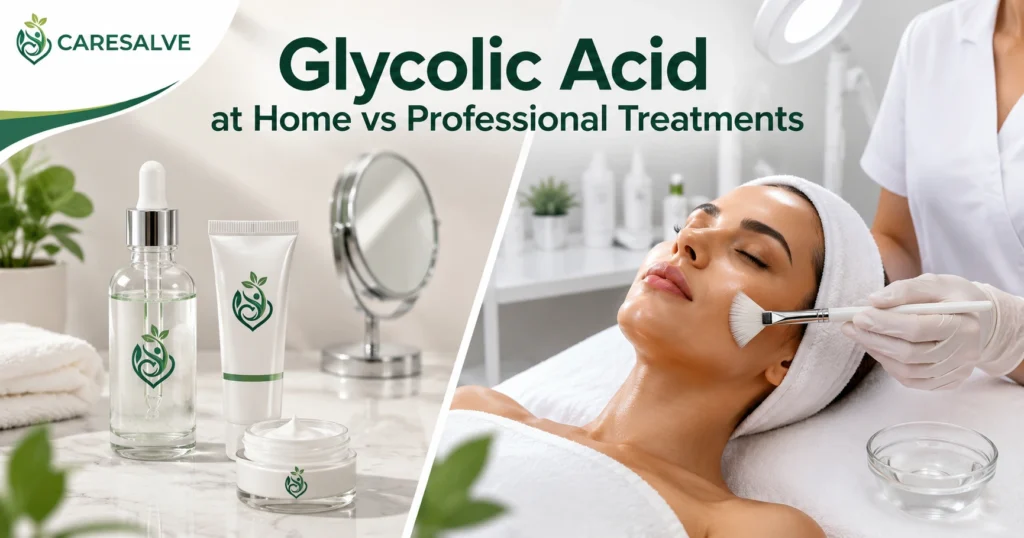
Glycolic acid is available in many everyday skincare formats, including serums, toners, cleansers, and other leave on or rinse off products designed for regular home use at lower concentrations.
Professional Glycolic Acid Treatments
Dermatologists and licensed skincare professionals also offer glycolic acid chemical peels at higher concentrations than what is typically available over the counter. Because stronger formulations carry a greater risk of irritation or burns if used incorrectly, these treatments should always be performed by a trained professional.
When Can You Expect to See Results From Glycolic Acid?
Results depend on several factors, including the product’s concentration, how often it is used, and individual skin type. Improvements in texture often become noticeable before changes in pigmentation, and visible results for concerns like dark spots or acne related marks typically require consistent use over a period of weeks or months, as supported by dermatology sources noting that meaningful improvement can take a couple of months of steady use. It is best to avoid expecting dramatic overnight transformations and instead focus on steady, consistent application over time.
Possible Side Effects of Glycolic Acid
Common side effects associated with glycolic acid include redness, stinging or a burning sensation, dryness, peeling, general irritation, and increased skin sensitivity, particularly to sunlight. If irritation becomes severe, persistent, or does not improve after reducing frequency, it is a good idea to stop using the product and consult a dermatologist or other qualified healthcare professional.
Frequently Asked Questions About Glycolic Acid
1. What does glycolic acid do for your skin?
Glycolic acid works as a chemical exfoliant that loosens and removes dead skin cells, which can improve texture, tone, and overall radiance with consistent use.
2. Is glycolic acid good for skin?
For most people, glycolic acid can be a beneficial addition to a skincare routine when introduced gradually and used at an appropriate strength and frequency for their skin type.
3. Can glycolic acid help with hyperpigmentation?
Glycolic acid may help fade the appearance of dark spots and uneven pigmentation over time through consistent exfoliation, though visible improvement typically requires patience and regular use.
4. Can you use glycolic acid every day?
Some people can eventually use glycolic acid daily once their skin builds tolerance, but many should start with just a few applications per week and follow the specific product instructions.
5. Is glycolic acid good for acne?
Glycolic acid can help by clearing away dead skin buildup that contributes to clogged pores, but it generally works best as part of a broader acne care routine rather than as a standalone treatment.
The Bottom Line
Glycolic acid is a well studied alpha hydroxy acid that supports exfoliation, smoother texture, brighter looking skin, and a more even tone with consistent, appropriate use. It is not an instant fix, and people with sensitive, dry, rosacea prone, or compromised skin should approach it carefully or seek professional advice first. Starting slow, using sunscreen daily, and avoiding harsh ingredient combinations will help most people get the benefits of glycolic acid while minimizing the risk of irritation. As always, CareSalve recommends speaking with a dermatologist if you have specific skin concerns or underlying conditions before starting a new active ingredient.
References
- Cleveland Clinic, “Glycolic Acid: Benefits for Skin and How To Use,” https://health.clevelandclinic.org/glycolic-acid
- Healthline, “Alpha Hydroxy Acid: 8 Skincare Benefits and How to Use It,” https://www.healthline.com/health/beauty-skin-care/alpha-hydroxy-acid
- WebMD, “Glycolic Acid: Overview, Uses, Side Effects, Precautions, Interactions, Dosing and Reviews,” https://www.webmd.com/vitamins-supplements/glycolic-acid
- Van Scott EJ, Yu RJ, “Cosmetic use of alpha hydroxy acids,” Cleveland Clinic Journal of Medicine, https://www.ccjm.org/content/ccjom/64/6/327.full.pdf
- MDPI, “Topical AHA in Dermatology: Formulations, Mechanisms of Action, Efficacy, and Future Perspectives,” https://www.mdpi.com/2079-9284/10/5/131
