
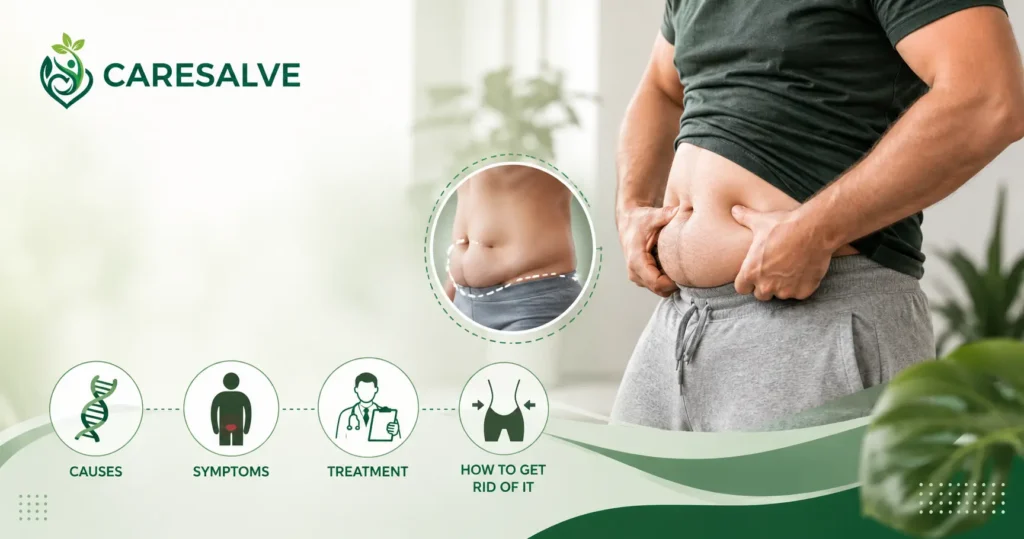

A FUPA is one of those terms that gets searched constantly but rarely explained clearly. If you have ever wondered what the word actually means, why this area of the body holds extra fat, whether it is normal, or what can actually be done about it, this guide covers everything in one place. At caresalve, our goal is to give you clear, medically grounded information without the confusion or shame that often surrounds this topic.
In this article you will learn what FUPA means, why it develops, whether it is something to worry about, and the full range of options for reducing it, from lifestyle changes to exercise to medical and surgical procedures.
What Is a FUPA?
FUPA Meaning
FUPA stands for Fat Upper Pubic Area. It refers to a pad of fat that sits above the pubic bone, just below the lower abdomen. It is sometimes also written as fatty upper pubic area.
What Does FUPA Stand For?
The acronym itself breaks down simply: Fat, Upper, Pubic, Area. It describes the location rather than a specific medical condition.
Is FUPA a Medical Term?
Not officially. It is a popular or slang term rather than a diagnosis you would find in a clinical textbook. Doctors are more likely to refer to this area using anatomical terms such as the mons pubis or suprapubic fat pad, referenced in resources like MedlinePlus.
Where Is the FUPA Located?
It sits directly above the pubic bone and below the belly button, in the lower part of the abdomen and upper pubic region.
What Does a FUPA Look Like?
It typically appears as a soft, rounded bulge above the pubic area, which can be more noticeable in fitted clothing or swimwear. It may look different depending on posture, body composition, and skin elasticity.
Other Names, Spellings, and Common Misconceptions
Because FUPA is an informal term, it shows up online in a lot of different spellings and phrasings, including foopa, foopah, fuppa, fulpa, flupa, fumpa, fuba, and fufa. These are simply variations of the same acronym, not separate conditions.
People also search using different, sometimes less accurate, descriptions of the same area, such as pubic mound, mons pubis, suprapubic fat pad, pubic fat pad, fat pad above the pubic bone, area above the crotch, or fatty groin area.
Is it vaginal fat? This is a common point of confusion. The vagina itself is an internal organ and does not store fat. What people are usually referring to when they search terms like this is the mons pubis, which is the soft, fatty tissue that sits externally over the pubic bone. So while phrases like fat on the pubic area are anatomically accurate, the vagina itself is not involved.
Male terms: In men, this area is sometimes referred to using terms like male gunt, pubic fat pad, or fat above the penis, and it is discussed less often even though it is just as common as in women.
Other related searches: People also look for information under terms like sacral fat pad, apron belly vs FUPA, gunt vs FUPA, mom pooch, and mommy belly pooch, which usually refer to the same or a very closely related area of lower abdominal and pubic fat.
FUPA vs Belly Fat vs Pannus
These three terms are often confused, but they refer to different things.
FUPA vs Gut: A gut usually refers to fat around the entire abdomen, while a FUPA is localized specifically to the lower pubic region.
FUPA vs Apron Belly: An apron belly is a larger fold of skin and fat that hangs down over the abdomen, often after significant weight loss or multiple pregnancies. A FUPA is generally smaller and does not hang as an apron does.
FUPA vs Panniculus: A panniculus is a medical term for an apron of excess skin and fat, often used interchangeably with apron belly. It tends to be more pronounced than a typical FUPA.
Lower Belly Fat vs Mons Pubis Fat: Lower belly fat sits above the navel area, while mons pubis fat is concentrated right above the pubic bone.
| Term | Location | Typical Cause |
| FUPA | Above pubic bone | Fat storage, genetics |
| Gut | Whole abdomen | General weight gain |
| Apron belly / Panniculus | Hangs over abdomen | Major weight loss, pregnancy |
| Lower belly fat | Above navel | Diet, hormones |
What Causes a FUPA?
Weight Gain
Excess calories stored as fat commonly accumulate in the lower abdominal and pubic region, especially in people prone to storing fat in that area.
Genetics
Where your body stores fat is largely determined by genetics. Some people naturally carry more fat in the pubic area regardless of overall body weight.
Pregnancy and Childbirth
Pregnancy stretches the abdominal skin and muscles, and postpartum hormonal shifts can lead to fat retention in the lower abdomen and pubic area.
Aging
As metabolism slows and skin loses elasticity with age, fat can redistribute toward the lower abdomen.
Hormonal Changes
Estrogen and other hormonal fluctuations, including those from menopause or hormonal birth control, can influence fat storage patterns.
Previous Weight Loss
After significant weight loss, loose skin in the pubic area can make a FUPA more visible even if fat levels are low.
Loose Skin
Skin that has lost elasticity, whether from weight changes, pregnancy, or age, can contribute to the appearance of a FUPA even without much underlying fat.
Cesarean Delivery
A C section can sometimes lead to a shelf like bulge just above the incision site due to scar tissue and skin changes.
Body Fat Distribution
Everyone stores fat differently. Some people store more in the hips and thighs, others in the abdomen and pubic region.
Can Men Have a FUPA?
Yes. A male FUPA is common and often referred to as pubic fat or fat above the penis. It can make the penis appear smaller than it actually is, a concern sometimes called groin fat or a buried penis in more severe cases. This happens due to weight gain, aging, or genetics, the same underlying causes seen in women.
Is Having a FUPA Normal?
Yes, having a FUPA is a very common body variation and is not inherently dangerous or abnormal. Many people, regardless of body weight, notice some fullness in this area.
That said, it is understandable if it affects self image or confidence, particularly when it interferes with how clothing fits. If it causes ongoing physical discomfort, skin problems, or significant distress, it is reasonable to speak with a healthcare provider about options.
Signs and Symptoms of a FUPA
- A visible bulge or fullness above the pubic bone
- Difficulty finding clothing that fits comfortably in the lower abdomen
- Skin irritation or chafing in the area, especially during exercise
- Hygiene challenges due to skin folds
- Reduced confidence in swimwear or fitted clothing
How to Get Rid of a FUPA Naturally
Can Weight Loss Reduce a FUPA?
In many cases, yes. Reducing overall body fat through a calorie deficit can shrink the fat pad in this area, although the exact results vary by individual and genetics.
Healthy Calorie Deficit
Consuming fewer calories than you burn, done gradually and sustainably, is the foundation of fat loss anywhere on the body, including the pubic area.
Protein Rich Diet
Adequate protein supports muscle retention during weight loss and helps you feel fuller for longer, which can support a calorie deficit.
Cardio Exercises
Regular cardiovascular activity such as walking, cycling, or swimming supports overall fat loss, which can help reduce the size of a FUPA over time.
Strength Training
Building muscle raises resting metabolic rate and improves body composition, supporting long term fat loss.
Core Exercises
While core exercises will not spot reduce fat, they strengthen the muscles beneath the area and can improve posture and tone.
Patience and Consistency
Fat loss in any specific area takes time. Consistent habits over months, rather than quick fixes, tend to produce the most lasting results.
Best Exercises for FUPA Fat
While no exercise can target fat loss in one specific spot, these movements strengthen the surrounding muscles and support overall fat reduction when combined with a healthy diet.
Forearm Plank
Builds core stability and strengthens the deep abdominal muscles.
Bicycle Crunches
Engages the obliques and lower abdominal region.
Leg Raises
Targets the lower abdominal muscles close to the pubic area.
Reverse Crunches
Focuses on the lower abs with a controlled, low impact movement.
Bridge Pose
Strengthens the glutes, hamstrings, and lower core.
Burpees
A full body, high intensity movement that burns significant calories.
Mountain Climbers
Combines cardio and core work for calorie burning and abdominal engagement.
Dead Bugs
A controlled core exercise that improves stability without straining the lower back.
Superman
Strengthens the lower back and supports overall core balance.
Walking and Running
Simple, accessible cardio that supports fat loss across the whole body over time.
Exercise Tips: Aim for a mix of cardio and strength training several times per week, focus on consistency rather than intensity alone, and pair exercise with proper nutrition for the best results.
Lifestyle Changes That Help Reduce Pubic Fat

- Better nutrition: Focus on whole foods, vegetables, lean protein, and fiber.
- Reduce sugar: Excess sugar intake is closely linked to fat storage.
- Sleep: Poor sleep disrupts hormones that regulate appetite and fat storage.
- Stress management: Chronic stress raises cortisol, which can promote abdominal fat storage.
- Hydration: Adequate water intake supports metabolism and digestion.
- Daily activity: Simple movement throughout the day, not just formal workouts, supports fat loss.
Medical Treatments for FUPA
CoolSculpting
A non surgical fat freezing treatment that destroys fat cells in a targeted area over several weeks.
Radiofrequency Fat Reduction
Uses heat energy to break down fat cells and can also tighten skin slightly.
Laser Fat Reduction
Low level laser treatments target fat cells and are typically used for smaller, localized areas.
Injectable Treatments
Certain injectable treatments can dissolve small pockets of fat, though they are used cautiously in sensitive areas.
Who qualifies? These treatments generally suit people who are close to their goal weight but have a stubborn, localized area of fat. A consultation with a licensed provider, information available through resources like the American Society of Plastic Surgeons, is the best way to determine candidacy.
Surgical Options for FUPA Removal
Liposuction
Removes excess fat directly through a minimally invasive procedure.
Benefits: Immediate, noticeable fat reduction in the targeted area. Recovery: Typically one to two weeks for initial healing, with full results visible over a few months. Risks: Swelling, bruising, and in rare cases infection or contour irregularities.
Monsplasty (Pubic Lift)
A procedure specifically designed to remove excess fat and skin from the pubic area.
Benefits: Directly addresses both fat and loose skin in the pubic region. Recovery: Usually two to four weeks. Candidates: Best suited for people with significant loose skin, often after major weight loss.
Abdominoplasty (Tummy Tuck)
Removes excess skin and fat from the abdomen and can be combined with pubic area contouring.
Panniculectomy
Removes an overhanging apron of skin and fat, typically for people with significant excess tissue rather than a purely cosmetic concern.
Combination Procedures
Many surgeons combine liposuction, monsplasty, or abdominoplasty in a single procedure depending on individual anatomy and goals.
Recovery After FUPA Surgery
| Procedure | Typical Recovery |
| Liposuction | One to two weeks initial, full results in a few months |
| Monsplasty | Two to four weeks |
| Tummy Tuck | Four to six weeks |
| Panniculectomy | Four to six weeks, sometimes longer |
Recovery generally involves rest, limited physical activity, compression garments, and follow up visits with your surgeon to monitor healing.
Before and After Results
What to expect: Visible reduction in the treated area, though final results often take weeks to months to fully appear as swelling subsides.
Realistic expectations: Results vary based on skin elasticity, age, and overall health. Surgery addresses existing fat and skin but does not prevent future changes.
Maintaining results: A stable weight and healthy lifestyle after any procedure helps preserve results long term.
Can a FUPA Return?
Yes, in certain circumstances.
- Weight regain: Gaining weight after treatment can bring fat back to the area.
- Pregnancy: Future pregnancies can stretch skin and add fat again.
- Aging: Continued skin laxity over time can change the area’s appearance.
- Lifestyle factors: Diet, activity level, and sleep continue to influence fat storage after any treatment.
When Should You See a Doctor?
While a FUPA on its own is usually not a medical concern, seek medical advice if you experience:
- Persistent pain in the pubic area
- Sudden swelling
- Skin infections or open sores in skin folds
- Buried penis affecting urination
- Rapid, unexplained enlargement of the area
- Ongoing difficulty maintaining hygiene despite good care
Tips to Prevent Excess Pubic Fat
- Maintain a healthy, stable weight over time
- Stay consistent with regular exercise
- Follow a balanced, whole food diet
- Include strength training to support metabolism
- Avoid crash dieting, which often leads to loose skin and weight cycling
Common Myths About FUPA
Myth: Spot reduction works. You cannot choose exactly where your body loses fat first through targeted exercises alone.
Myth: Only overweight people have a FUPA. People at a healthy weight can also have a noticeable FUPA due to genetics or skin laxity.
Myth: Surgery is the only solution. Diet, exercise, and non surgical treatments can meaningfully reduce a FUPA for many people.
Myth: Men cannot have a FUPA. Men experience this just as commonly as women, though it is discussed less often.
Frequently Asked Questions
1. What is a FUPA?
It is a common term for fat that accumulates above the pubic bone.
2. What does FUPA stand for?
Fat Upper Pubic Area.
3. What does a FUPA look like?
A soft, rounded bulge above the pubic bone, more noticeable in fitted clothing.
4. Is FUPA normal?
Yes, it is a common and generally harmless body variation.
5. Can skinny people have a FUPA?
Yes, genetics and skin elasticity play a large role regardless of overall weight..
Conclusion
A FUPA is a common and normal part of human body variation that affects both women and men. Weight loss, regular exercise, and healthy daily habits can meaningfully reduce excess fat in this area, although spot reduction is not possible. For those seeking faster or more dramatic results, non surgical treatments and surgical options such as liposuction or monsplasty are available for suitable candidates. If the area causes pain, hygiene issues, or significant functional concerns, it is worth consulting a healthcare professional, and resources such as Mayo Clinic and MedlinePlus are good starting points for further reading.
