


If your nose feels fine during the day but turns into a stuffy, throbbing mess the moment you lie down, you are not imagining things. Many people notice that sinus pressure, congestion, and pain seem to intensify in the evening or right after they get into bed. This raises a common question: are sinus infections actually getting worse at night, or does it just feel that way?
The truth is a mix of both. Body position, mucus drainage patterns, inflammation, allergens in the bedroom, and even the air quality in your room can all play a role in why nighttime symptoms feel more intense. In this article, we will walk through the main reasons sinus problems seem to flare up after dark, explain what is happening in your body when you lie down, and share practical ways to breathe easier and sleep more comfortably. We will also cover when nighttime sinus symptoms are a sign that you should see a healthcare professional.
Why Do My Sinuses Get Worse at Night?
There is no single reason sinus symptoms feel worse in the evening. Instead, several factors tend to combine at once. During the day, you are upright, moving around, swallowing more often, and generally distracted by daily activities. At night, your body position changes, your environment changes, and your attention naturally shifts toward how you feel physically. All of this can make sinus pressure, congestion, and drainage more noticeable.
Lying Down Can Affect Sinus Drainage
When you are upright, gravity helps mucus drain naturally toward the back of the throat, where it is swallowed without much notice. Once you lie flat, that natural drainage path changes. Mucus can pool in the sinus passages instead of draining as easily, which may lead to a feeling of fullness, pressure, or blockage. This is a big part of why sinus pressure when lying down feels so different from sinus pressure during the day.
Nasal Congestion and Swelling May Increase at Night
Blood flow to the nasal passages naturally shifts when you recline, and this can cause the tissue inside your nose to swell slightly. For someone who already has some degree of inflammation from allergies, a cold, or sinusitis, this added swelling can make breathing through the nose noticeably harder once the lights go out. Congestion that felt mild during the day can suddenly feel much more restrictive.
Sinus Drainage May Become More Noticeable
Post nasal drip, the sensation of mucus running down the back of the throat, tends to stand out more at night. During the day, you swallow frequently without thinking about it. At night, when you are still and quiet, that same drainage can trigger a tickle in the throat, a cough, or a feeling of needing to clear your throat repeatedly. This is often what people mean when they ask why their sinuses seem to drain more once they lie down.
Bedroom Allergens Can Trigger Sinus Symptoms
Your bedroom may be harboring triggers you do not notice during the day. Dust mites in pillows and mattresses, pet dander on bedding, mold in humid corners, and general poor air circulation can all contribute to sinus issues at night. If your symptoms consistently worsen once you are in your bedroom specifically, allergens in that environment are worth investigating.
Dry Air Can Irritate the Nasal Passages
Heating and air conditioning systems tend to reduce humidity indoors, especially overnight when systems run continuously. Dry air can irritate the delicate lining of the nasal passages, thicken mucus, and make it harder for your sinuses to drain properly. This dryness is a common and often overlooked contributor to sinus problems at night.
Does a Sinus Infection Actually Get Worse at Night?
It helps to separate two ideas: symptoms feeling worse at night, and an infection becoming biologically more severe simply because it is nighttime. In most cases, the infection itself is not changing hour by hour. What changes is how your body responds to lying down, how congestion and drainage behave in that position, and how much attention you are able to give the discomfort once distractions fade away.
During the day, you may be busy with work, conversations, and movement, all of which can distract from mild to moderate symptoms. At night, with fewer distractions and a body position that affects drainage, the same level of inflammation can feel far more intense. Poor sleep itself can also make any physical discomfort harder to tolerate, creating a cycle where nighttime symptoms feel amplified even if the underlying sinus infection has not changed much since the afternoon.
Why Is Sinus Pressure Worse at Night?
Sinus pressure worse at night is one of the most common complaints associated with sinusitis and seasonal allergies alike. Several overlapping factors are usually responsible.
Sinus Pressure When Lying Down
As mentioned earlier, lying flat changes how mucus drains and how blood flow behaves in the nasal tissue. Does lying down make sinus pressure worse? For many people, yes. Reduced drainage combined with mild swelling in the nasal passages can create a buildup that feels like pressure across the forehead, cheeks, or around the eyes.
Why Sinus Headaches May Feel Worse at Night
Sinus headaches at night often stem from the same pressure buildup described above. When mucus cannot drain properly and the sinus cavities become congested, the resulting pressure can radiate into a headache. Because lying down can worsen this pressure, many people notice their sinus headache intensifies specifically when they try to rest.
Why Does Sinus Pain Get Worse at Night?
Sinus pain at night typically results from the combination of inflammation, pressure, and poor drainage discussed throughout this article. When mucus builds up in the sinus cavities instead of draining normally, the surrounding tissue can become more sensitive and painful. Lying down adds to this effect, and the quiet stillness of nighttime can make the pain feel more prominent simply because there is less to distract from it. If sinus pain worsens specifically when reclining, this is a strong sign that positional drainage issues are contributing.
Why Are My Sinuses Worse in the Morning?
It is common to wake up with significant sinus pressure even if the evening before felt manageable. Several things happen overnight that can explain this.
Mucus accumulates over several hours of sleep, especially if drainage was already sluggish due to your sleeping position. Mouth breathing, which many people do unintentionally during sleep, can dry out the throat and nasal passages, making congestion feel worse upon waking. Dry indoor air overnight and exposure to bedroom allergens for a full night’s sleep can also compound the effect. Once you get up, move around, and become upright again, gravity assists drainage and symptoms often start to ease as the day goes on.
Can a Sinus Infection Cause Coughing at Night?
Yes, a nighttime cough is a frequent companion to sinus infections and post nasal drip. When mucus drains down the back of the throat while you are lying flat, it can irritate the throat lining and trigger a cough reflex. This tends to be more noticeable at night because lying down encourages that drainage path and because you are more aware of physical sensations while trying to fall asleep. That said, if a cough persists, worsens, or is accompanied by other concerning symptoms, it is worth considering whether another cause, such as asthma, acid reflux, or a lower respiratory infection, might be involved.
How to Sleep With a Sinus Infection
Getting comfortable rest during a sinus infection can feel difficult, but a few adjustments may help.
Elevate Your Head While Sleeping
Propping yourself up with an extra pillow or a wedge pillow can help reduce the pooling of mucus and may ease pressure compared to lying completely flat.
Keep Your Bedroom Air Comfortable
Maintaining a moderate humidity level, a comfortable temperature, and good air circulation can reduce irritation to the nasal passages. Avoiding smoke and other airborne irritants in the bedroom is also helpful.
Reduce Bedroom Allergens
Washing bedding regularly in hot water, controlling household dust, managing pet dander if pets sleep in the room, and checking for hidden mold can all reduce allergen exposure overnight.
Stay Hydrated
Drinking enough fluids throughout the day supports thinner, more manageable mucus, which can make drainage easier and reduce the sensation of blockage.
Follow Appropriate Sinus Treatment
Following the guidance of a healthcare professional regarding medication, nasal sprays, or other treatments is important. Avoid overusing decongestant sprays, since extended use can sometimes worsen congestion over time.
How to Sleep With a Sinus Headache
A sinus headache at night can make falling asleep especially frustrating. Elevating your head, finding a comfortable sleeping position that avoids added facial pressure, and managing overall congestion through the steps above can all help. Addressing the underlying cause of the sinus inflammation, whether that is a lingering infection or an allergy trigger, is often the most effective long term solution. If headache symptoms are severe, unusual, or do not improve, medical evaluation is recommended.
What Can You Do to Relieve Sinus Symptoms at Night?
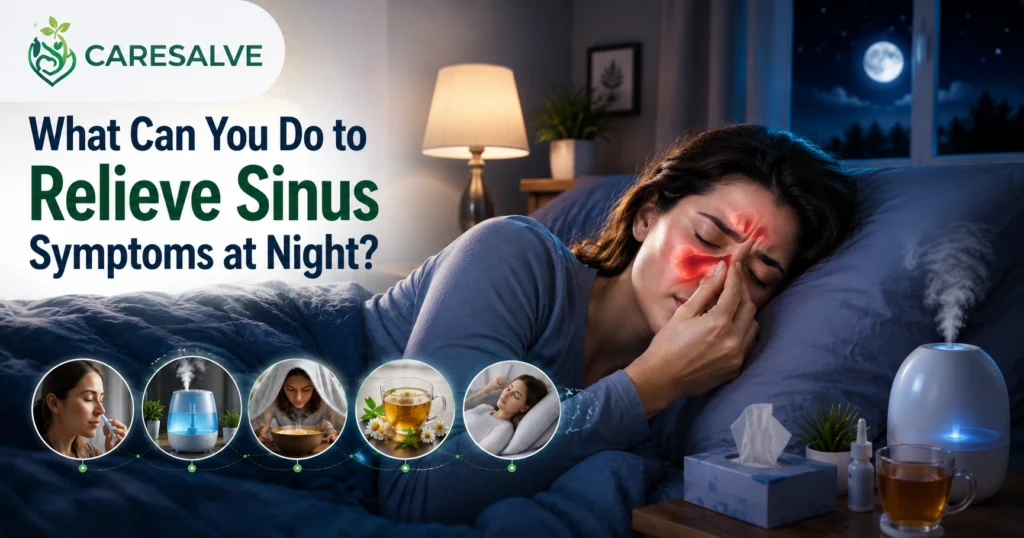
Beyond sleep positioning, there are several everyday habits that may help ease sinus congestion, pressure, and pain once evening arrives.
Try Saline Nasal Rinses or Sprays
Saline solutions can help clear mucus and irritants from the nasal passages. Using a clean device and following proper technique is important for both effectiveness and hygiene.
Keep the Air From Becoming Too Dry
A humidifier, particularly during dry seasons or when heating or cooling systems run frequently, can help maintain moisture in the air and reduce irritation to nasal tissue.
Avoid Known Allergens and Irritants
Reducing exposure to smoke, excess dust, strong fragrances, pet allergens, and any other personal triggers before bedtime can lessen the likelihood of a nighttime flare up.
Sleep With Your Head Elevated
As covered earlier, elevation supports better drainage and can reduce the buildup of pressure that tends to happen once you lie flat.
Stay Consistent With Recommended Treatment
If a healthcare provider has recommended a specific treatment plan for sinusitis or allergies, sticking with it consistently, even on nights when symptoms feel mild, can prevent flare ups from becoming more severe.
When Should You See a Doctor for Sinus Symptoms?
While many nighttime sinus symptoms are manageable at home, certain signs suggest it is time to seek medical attention. These include symptoms that are persistent or steadily worsening, severe facial pain, a persistent or significant fever, noticeable swelling around the face or eyes, changes in vision, a severe headache unlike your usual pattern, symptoms that seem to improve and then suddenly return more intensely, or any difficulty breathing.
Recurrent nighttime sinus symptoms that keep coming back may also warrant an evaluation for underlying allergies, chronic sinusitis, or another contributing condition that has not yet been identified.
Could Nighttime Sinus Symptoms Be Caused by Something Other Than a Sinus Infection?
Not every case of nighttime congestion or pressure means you have an active sinus infection. Several other conditions can produce similar symptoms.
Allergies
Seasonal or year round allergies can cause inflammation and congestion that mimics sinusitis, particularly when exposure to allergens is concentrated in the bedroom.
Chronic Sinusitis
Some people experience ongoing, long term sinus inflammation that flares periodically rather than a single acute infection.
Environmental Irritants
Smoke, strong chemical odors, or pollution can irritate the nasal passages and produce symptoms similar to a sinus infection.
Dry Indoor Air
As discussed earlier, dry air alone, without any infection present, can cause enough irritation to mimic sinus symptoms.
Nasal Structural Problems
Issues such as a deviated septum or nasal polyps can contribute to chronic congestion and pressure that has nothing to do with an active infection.
Because nighttime congestion or pressure alone does not automatically indicate a sinus infection, a proper evaluation is often needed to identify the true underlying cause, especially if symptoms are frequent or long lasting.
Frequently Asked Questions
1. Why do my sinuses get worse at night?
Sinus symptoms often feel worse at night due to a combination of factors, including reduced mucus drainage while lying down, increased nasal swelling, more noticeable post nasal drip, bedroom allergens, and dry indoor air. These factors combine to make congestion and pressure feel more intense once you are in bed.
2. Are sinus infections worse at night?
Symptoms can certainly feel more severe at night, but this does not necessarily mean the infection itself is becoming biologically worse simply because it is nighttime. Positional changes, drainage patterns, and reduced daytime distractions all contribute to the perception that symptoms are worsening after dark.
3. Why does sinus pressure get worse when I lie down?
Lying flat changes how mucus drains and can increase blood flow to the nasal tissue, leading to mild swelling. Together, these effects can cause a buildup of pressure in the sinus cavities that feels more pronounced than it did while sitting or standing.
4. How should I sleep with a sinus infection?
Elevating your head, keeping bedroom air comfortable and appropriately humid, reducing allergens in your bedding and environment, staying hydrated, and following any treatment recommended by a healthcare professional can all help improve sleep quality during a sinus infection.
5. Why do my sinuses hurt when I wake up?
Overnight mucus accumulation, mouth breathing during sleep, dry indoor air, and prolonged exposure to bedroom allergens can all contribute to waking up with sinus pressure or pain. Symptoms often ease somewhat once you become upright and start moving around for the day.
Final Takeaway
Sinus symptoms can feel more intense at night for several interconnected reasons. Lying down affects how mucus drains and can increase nasal swelling, while bedroom allergens and dry indoor air add further irritation. It is important to remember that nighttime symptoms do not automatically mean a sinus infection is becoming more severe, since much of what you feel is tied to position, environment, and reduced daytime distraction.
Simple changes such as elevating your head while sleeping, keeping indoor air at a comfortable humidity, controlling allergens in your bedroom, staying well hydrated, and following recommended treatment can make a meaningful difference in how you feel overnight. If symptoms are persistent, severe, or continue to worsen despite these steps, it is best to consult a healthcare professional for a proper evaluation. At CareSalve, we believe understanding the reasons behind your symptoms is the first step toward finding real relief and better rest.
References
1. Positional Changes, Gravity & Blood Flow (Why Sinuses Worsen When Lying Down)
- GoodRx Health – Best Sleep Positions for Sinus Drainage: Explains how lying flat affects sinus ostia drainage, increases blood flow to nasal tissues (causing turbinate swelling), and why head elevation helps.
- Sleep Foundation – Treatment for a Blocked Nose at Night: Discusses how position changes affect blood flow and nasal mucosa engorgement overnight.
2. Post-Nasal Drip & Nighttime Coughing
- Cleveland Clinic – Postnasal Drip: Causes, Symptoms & Relief: Details why excess mucus pools in the throat when lying flat, triggering throat tickles, nighttime coughing, and frequent throat clearing.
3. Bedroom Allergens & Environmental Triggers
- Asthma and Allergy Foundation of America (AAFA) – Control Indoor Allergens: Covers common bedroom triggers like dust mites, pet dander, and mold that flare up sinus inflammation overnight.
4. Dry Indoor Air & Humidity Management
- Mayo Clinic – Humidifiers: Air Moisture Eases Skin, Breathing Symptoms: Explains how low indoor humidity thickens nasal mucus and how proper humidifier use maintains healthy nasal tissue.
5. Medical Guidelines & When to See a Doctor
- Centers for Disease Control and Prevention (CDC) – Sinus Infection (Sinusitis): Outlines symptom timelines, red flag symptoms (severe pain, fever, vision changes), and medical evaluation guidelines.
