

If you have ever felt puffy after a long flight, noticed swelling after surgery, or simply heard the term “lymphatic drainage massage” trending online, you are probably wondering what it actually is and whether it is worth trying. This guide explains what lymphatic drainage massage means, how it works, its potential benefits, the risks you should know about, and what a typical session looks like. At CareSalve, we believe in giving readers clear, honest, and medically grounded information, not exaggerated wellness claims. By the end of this article, you will understand exactly what to expect from this gentle therapy and whether it might be right for you.
What Is Lymphatic Drainage Massage?
Lymphatic drainage massage, sometimes called manual lymphatic drainage or MLD, is a gentle, specialized massage technique designed to support the lymphatic system rather than the muscles. Your lymph system includes organs, vessels, and tissues that move a water like fluid called lymph from other parts of your body into your bloodstream. When this system works properly, fluid moves smoothly through the body. When it becomes sluggish or blocked, fluid can build up in the tissues and cause swelling.
Unlike a traditional deep tissue massage that uses firm pressure to release muscle tension, lymphatic drainage massage relies on very light, rhythmic strokes. It uses light pressure and rhythmic movements to stimulate the lymphatic system rather than deep kneading. The goal is not to relax sore muscles but to encourage the natural flow of lymph fluid toward the lymph nodes, where it can be filtered and processed by the body.
How Does Lymphatic Drainage Massage Work?
The technique behind lymphatic drainage massage depends on gentle, guided movements rather than force. A trained therapist uses light, sweeping strokes in specific directions, generally moving fluid from the furthest points of the body, such as the hands and feet, toward the nearest lymph nodes, such as those in the armpits, groin, or neck.
A massage therapist uses lymphatic drainage techniques to move lymph from the tissues to the lymph nodes, which eases the swelling. This process helps the lymphatic system do what it would normally do on its own but may be struggling to accomplish because of surgery, injury, inactivity, or an underlying health condition. Because the pressure used is so light, many people are surprised by how gentle the treatment feels compared to a typical massage.
Benefits of Lymphatic Drainage Massage
Interest in lymphatic drainage massage has grown quickly, partly because of its wellness appeal and partly because of genuine clinical uses. It is important to separate realistic benefits from exaggerated marketing claims.
May Help Manage Swelling and Fluid Buildup
One of the clearest, evidence supported uses of lymphatic drainage massage is helping the body manage excess fluid. Some studies suggest that lymphatic drainage massage may help reduce edema and improve quality of life for individuals dealing with fluid retention, particularly after surgery such as a mastectomy. This makes it a useful supportive therapy for people recovering from certain procedures where swelling is common.
May Support Lymphedema Management
Lymphedema is a condition where lymph fluid does not drain properly, leading to persistent swelling, often in the arms or legs. Lymphatic drainage massage is a gentle form of massage used to relieve inflammation related to lymphedema, which is a common side effect of many health conditions and cancer treatments, most notably breast cancer surgery. Because several lymph nodes are often removed during such surgeries, the body can struggle to drain fluid on its own, and manual lymphatic drainage can become part of an ongoing care plan.
Additional Reported Benefits
Beyond fluid management, people often report feeling calmer and more relaxed after a session. Benefits associated with lymphatic drainage massage include reduced swelling, enhanced immune function, improved circulation, relaxation, and stress relief. The slow, rhythmic nature of the strokes can activate the body’s relaxation response, which is why many clients describe the treatment as calming even though it is not a deep tissue massage.
It is worth noting that claims about lymphatic drainage massage “detoxing” the body or guaranteeing weight loss are not well supported by strong scientific evidence. The realistic benefits center around fluid balance, comfort, and relaxation rather than dramatic transformations.
What Happens During a Lymphatic Drainage Massage?
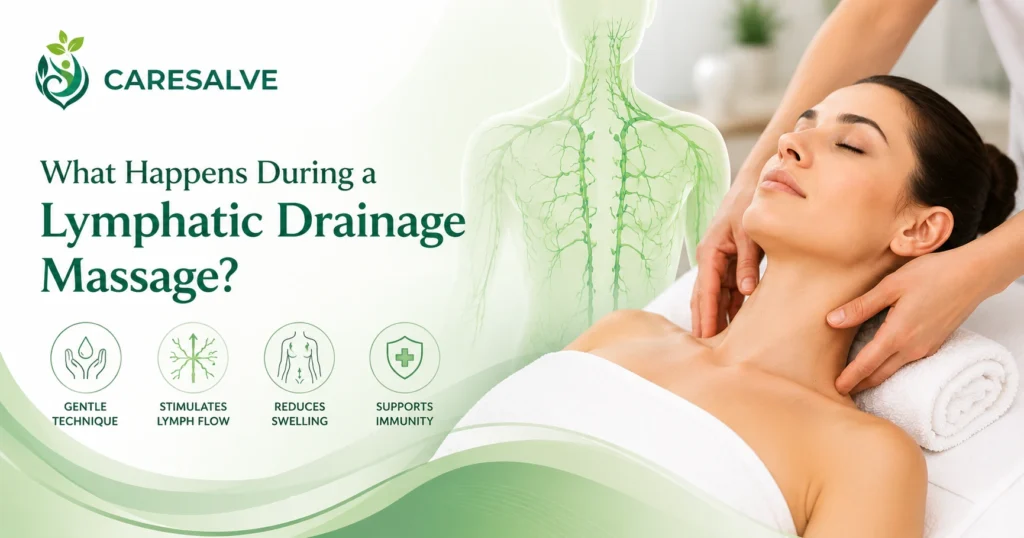
A typical session begins with a short conversation about your medical history, current symptoms, and any areas of concern. This helps the therapist understand whether the treatment is appropriate and which areas need attention.
During the massage itself, you will usually lie down comfortably while the therapist applies very light, repetitive strokes in a specific pattern. The pressure is much lighter than what most people expect from a massage, often compared to the light touch used when applying lotion. Sessions typically focus on areas near major lymph node clusters, such as the neck, underarms, and groin, before moving toward the limbs or torso depending on where swelling is present.
Unlike deep tissue massage, there is no deep muscle kneading, joint manipulation, or intense pressure. The entire treatment is designed to feel gentle and soothing rather than therapeutic in the muscular sense.
Lymphatic Drainage Massage for Different Areas
Legs
Leg swelling is one of the most common reasons people seek lymphatic drainage massage, especially after long periods of standing, travel, or surgery. Gentle upward strokes toward the groin lymph nodes are typically used to encourage fluid movement.
Stomach
Abdominal lymphatic drainage massage focuses on gentle circular motions around the midsection. This technique is sometimes used to support digestion related comfort and general fluid balance in the abdominal area.
Face and Neck
Facial and neck lymphatic massage has become popular in skincare routines because it can temporarily reduce puffiness. Light strokes along the jawline and neck encourage drainage toward the lymph nodes located near the collarbone.
Can You Do Lymphatic Drainage Massage at Home?
Many people wonder whether they can perform lymphatic drainage massage themselves rather than visiting a professional. You can do lymphatic drainage self massage at home, and it is described as a very easy technique to learn and a beneficial form of self care. People dealing with chronic congestion, headaches, or mild swelling in the abdomen, hands, and legs may find gentle self massage helpful between professional sessions.
That said, self massage should always use very light pressure. Pressing too hard can actually work against the goal, since the lymphatic vessels sit just beneath the skin and respond best to gentle stimulation rather than force. If you notice swollen lymph nodes, it is important not to massage them directly without guidance, since swollen nodes can sometimes signal infection or another underlying issue that needs medical attention first. For anyone managing lymphedema or a complex medical condition, working with a certified lymphedema therapist is generally a safer and more effective option than attempting the technique alone.
Risks and Side Effects of Lymphatic Drainage Massage
Although lymphatic drainage massage is generally considered gentle and low risk for healthy individuals, it is not appropriate for everyone. The risks are minimal for most people, but the treatment should be avoided by those with blood clots, active infections, heart disease, or kidney failure, among other conditions.
Specific concerns include the following.
Active infections: Massage therapy is generally contraindicated during fever or active infection, since it may affect the body’s normal immune response.
Blood clots: Massage pressure may dislodge a blood clot, increasing the risk of serious complications such as stroke or pulmonary embolism.
Heart or kidney conditions: Lymphatic massage increases the amount of fluid returning to the circulatory system, which can place additional strain on an already weakened heart, and similar caution applies for people with kidney failure.
Pregnancy: Although massage can offer benefits during pregnancy, lymphatic massage specifically may carry certain risks, particularly during early stages, so medical guidance is recommended before starting treatment.
When Should You Avoid Lymphatic Drainage Massage?
If you have unexplained swelling, a fever, signs of infection, or noticeable changes in your lymph nodes, it is best to see a doctor before booking a massage. These symptoms can sometimes point to conditions that need medical evaluation rather than massage therapy. When in doubt, a conversation with your healthcare provider is always the safest first step.
Does Lymphatic Drainage Massage Really Work?
The honest answer is that it depends on what you are hoping to achieve. For people dealing with lymphedema or post surgical swelling, there is reasonable evidence supporting its use as part of a broader treatment plan. If you are otherwise healthy, lymphatic drainage massage may feel relaxing, but it is not likely to dramatically improve your overall health.
Results also vary from person to person. Some people notice reduced puffiness almost immediately, while others need several sessions before seeing a meaningful difference. It is also important to understand that any visible change is typically related to temporary fluid movement, not actual fat loss. Claims that lymphatic drainage massage “melts fat” or provides a permanent detox are not supported by solid scientific evidence, so it is best to approach those promises with healthy skepticism.
What to Expect After a Lymphatic Drainage Massage
After a session, most people feel relaxed, and some notice a temporary reduction in puffiness or tightness in the treated area. It is common to feel the need to use the bathroom more frequently in the hours following treatment, since the body is processing the fluid that has been moved through the lymphatic system.
Noticeable changes in swelling often build gradually over a series of sessions rather than appearing after just one visit. Results are usually not permanent, since ongoing fluid balance depends on activity levels, hydration, and any underlying health conditions. If swelling, pain, or unusual symptoms persist or worsen after treatment, it is important to speak with a healthcare professional rather than continuing self treatment alone.
Frequently Asked Questions
1. What is lymphatic drainage massage?
It is a gentle massage technique that uses light, rhythmic strokes to encourage the natural movement of lymph fluid through the body, helping to reduce swelling and support the lymphatic system.
2. What are the benefits of lymphatic drainage massage?
Reported benefits include reduced swelling, support for lymphedema management, improved circulation, and general relaxation. It is not a proven method for detoxing the body or achieving weight loss.
3. Does lymphatic drainage massage work?
It can be genuinely helpful for people managing swelling, edema, or lymphedema, though results vary and often require multiple sessions. For healthy individuals, it mainly offers a relaxing experience rather than a major health transformation.
4. Is lymphatic drainage massage safe?
For most healthy people, yes. However, it should be avoided by anyone with active infections, blood clots, heart disease, kidney failure, or certain other medical conditions without first consulting a doctor.
5. Can you do lymphatic drainage massage at home?
Yes, gentle self massage at home is possible and can be a useful form of self care between professional sessions, as long as very light pressure is used and swollen lymph nodes are not massaged without medical guidance.
Key Takeaways
Lymphatic drainage massage is a gentle, specialized technique that supports the movement of lymph fluid through the body. It is most clinically useful for managing swelling and lymphedema, and it can also offer general relaxation for healthy individuals. While generally safe, it is not appropriate for everyone, particularly those with certain heart, kidney, or circulatory conditions. As with any therapy involving your health, speaking with a medical professional before starting treatment is always a wise step.
References
- Cleveland Clinic. Lymphatic Drainage Massage: What It Is and Benefits. https://my.clevelandclinic.org/health/treatments/21768-lymphatic-drainage-massage
- Cleveland Clinic. How To Perform a Lymphatic Drainage Self Massage. https://health.clevelandclinic.org/lymphatic-drainage-self-massage
- WebMD. Lymph Drainage Massage: Benefits and Risks. https://www.webmd.com/a-to-z-guides/what-is-lymph-drainage-massage
- Rupa Health. Lymphatic Drainage Massage: Benefits, Techniques, and Safety Tips. https://www.rupahealth.com/post/lymphatic-drainage-massage-benefits-techniques-and-safety-tips
- Cancer Rehab PT. Lymphatic Massage Dangers: When to Avoid It. https://cancerrehabpt.com/blog/lymphatic-massage-dangers/
- Docus.ai. Lymphatic Massage Dangers: What You Need to Know. https://docus.ai/symptoms-guide/lymphatic-massage-dangers
- Yahoo Lifestyle. Top Health Benefits of a Lymphatic Drainage Massage, According to Experts. https://www.yahoo.com/lifestyle/articles/heres-why-lymphatic-drainage-massage-090000768.html
