
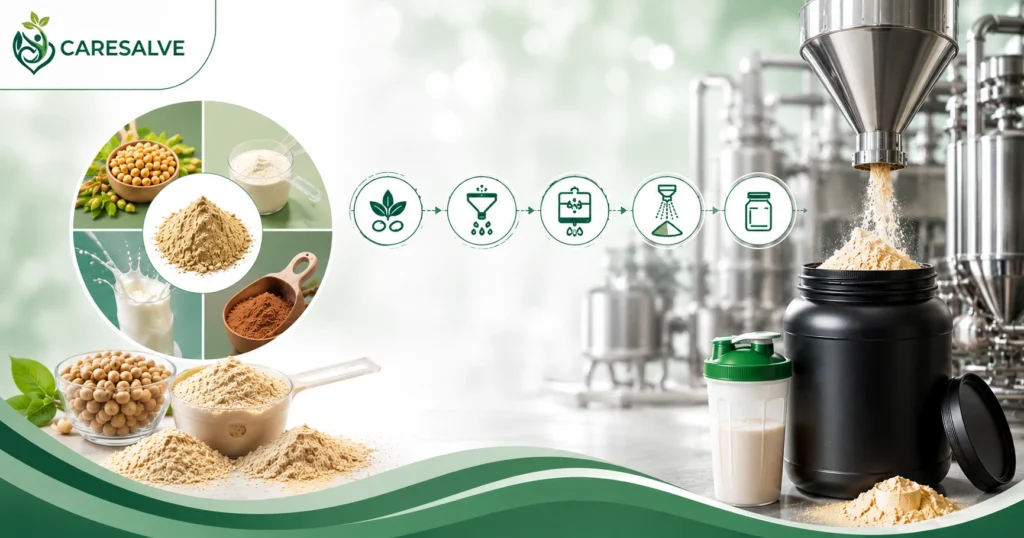

Welcome back to the CareSalve blog. If you have ever picked up a tub of protein powder and wondered how that fine powder actually gets made, you are not alone. In this article, the CareSalve team walks you through how protein powder is made, where it comes from, what ingredients go into it, and how to choose a product that fits your needs.
Introduction
Protein powder is a concentrated source of protein made from foods such as milk, eggs, soy, peas, rice, or hemp. These raw ingredients go through a series of processing steps that separate the protein from fats, carbohydrates, and other components, leaving behind a protein rich powder. Whey protein, which comes from milk, and plant based protein, which comes from sources like soy or peas, are processed in somewhat different ways, though the overall goal is the same. Depending on how much processing occurs, the final product may be labeled as a concentrate, an isolate, or a hydrolyzed protein, each with its own characteristics. Beyond the protein itself, most powders also contain added ingredients such as flavors and sweeteners, which is why checking the full ingredient list and allergen information is so important before buying.
What Is Protein Powder?
Protein powder is a dietary supplement made by extracting protein from a food source and drying it into a fine powder that can be mixed into shakes, smoothies, or recipes. It is commonly used by people who want to increase their daily protein intake, support muscle recovery after exercise, or simply add more protein to a busy lifestyle in a convenient form. There are many different types of protein powder available, and they are generally grouped into animal based options, such as whey, casein, and egg protein, and plant based options, such as soy, pea, rice, and hemp protein. The type of protein powder someone chooses often depends on dietary preferences, allergies, and personal nutrition goals.
Where Does Protein Powder Come From?
Protein powder can come from a wide range of food sources, and each one brings its own nutritional profile and processing method.
Whey and Casein Protein
Whey protein and casein protein both come from milk. During cheese production, milk separates into curds, which become cheese, and a liquid called whey, which is further processed into whey protein powder. Casein is the other major milk protein and is processed separately to create a slower digesting protein powder.
Egg Protein
Egg protein powder is made using egg whites, which are naturally rich in protein and free of the fat and cholesterol found in egg yolks. This makes egg protein a popular dairy free option for people who cannot tolerate milk based proteins.
Soy Protein
Soy protein comes from soybeans and is one of the most widely used plant based protein sources because it contains all nine essential amino acids, making it a complete protein.
Pea Protein
Pea protein is extracted from yellow split peas and has become a popular choice for plant based protein powders due to its smooth texture and relatively low allergen profile.
Brown Rice Protein
Brown rice protein is derived from rice grains and is often combined with other plant proteins, such as pea protein, to create a more complete amino acid profile.
Hemp Protein
Hemp protein comes from hemp seeds and naturally contains fiber and healthy fats along with protein, though it generally has a lower protein content per serving compared to other sources.
How Is Whey Protein Powder Made?
Whey protein powder starts its journey as ordinary milk. During the cheese making process, milk is treated with enzymes or acid, which causes it to separate into solid curds and liquid whey. This liquid whey, once considered a byproduct of cheese production, is now the starting material for whey protein powder.
The general steps involved include:
- Milk is collected and treated with enzymes or acid to begin separation
- Solid curds form and are removed to be used for cheese
- The remaining liquid whey is filtered to remove excess fat, lactose, and other components
- Further filtration concentrates the protein, determining whether the result is a concentrate, isolate, or hydrolysate
- The filtered liquid is dried, typically through spray drying, turning it into a fine powder
- Flavoring, sweeteners, and other ingredients are added before final packaging
Each of these steps plays a role in the purity, taste, and nutritional profile of the finished whey protein powder.
How Is Plant Based Protein Powder Made?
Plant based protein powder follows a similar overall concept but starts with a different raw material, such as soy, peas, rice, or hemp. The general process typically includes the following stages:
- A plant source such as soy, peas, rice, or hemp is selected as the starting material
- The raw material is cleaned and prepared for processing
- Protein is separated from the plant’s fiber, starch, and other natural components, often using water or a mild extraction process
- The protein may undergo further concentration or isolation to increase its overall protein percentage
- The protein rich material is dried into a powder form
- Flavors and other ingredients are blended in before the final product is packaged
How Pea Protein Powder Is Made
Pea protein powder is typically made by soaking and grinding yellow peas, then separating the starch and fiber from the protein through a wet processing method. The remaining protein rich liquid is dried into powder form.
How Soy and Rice Protein Powders Are Made
Soy protein powder is produced by removing the oil from soybeans and then extracting and drying the remaining protein. Brown rice protein follows a similar approach, where rice is processed to separate starch and fiber from the protein before drying.
How Are Different Types of Protein Powder Made?
One of the most important things to understand about protein powder is that the same protein source can be processed differently to create very different final products.
Protein Concentrate
Protein concentrate is made using a relatively simple filtration process that concentrates the protein while still allowing some fat, carbohydrates, and lactose to remain in the final product. Because it undergoes less processing, protein concentrate typically has a slightly lower protein percentage compared to isolate.
Protein Isolate
Protein isolate goes through additional filtration steps to remove more of the fat and carbohydrates, resulting in a powder with a higher percentage of protein per serving. This extra processing often makes isolate a suitable option for people who want a purer protein source or who are more sensitive to lactose.
Hydrolyzed Protein
Hydrolyzed protein, also called protein hydrolysate, takes processing a step further by using enzymes or controlled heat to break the protein down into smaller peptide chains. This process, known as hydrolysis, is thought to make the protein easier and faster for the body to absorb.
Protein Concentrate vs Isolate vs Hydrolyzed Protein
The table below offers a simple side by side comparison of these three processing methods.
| Type | General Processing | Key Characteristic |
| Concentrate | Less processed | Contains protein plus other components |
| Isolate | More extensive separation | Higher protein concentration |
| Hydrolyzed | Enzymatically or chemically broken down | Smaller protein peptides |
What Other Ingredients Are Added to Protein Powder?
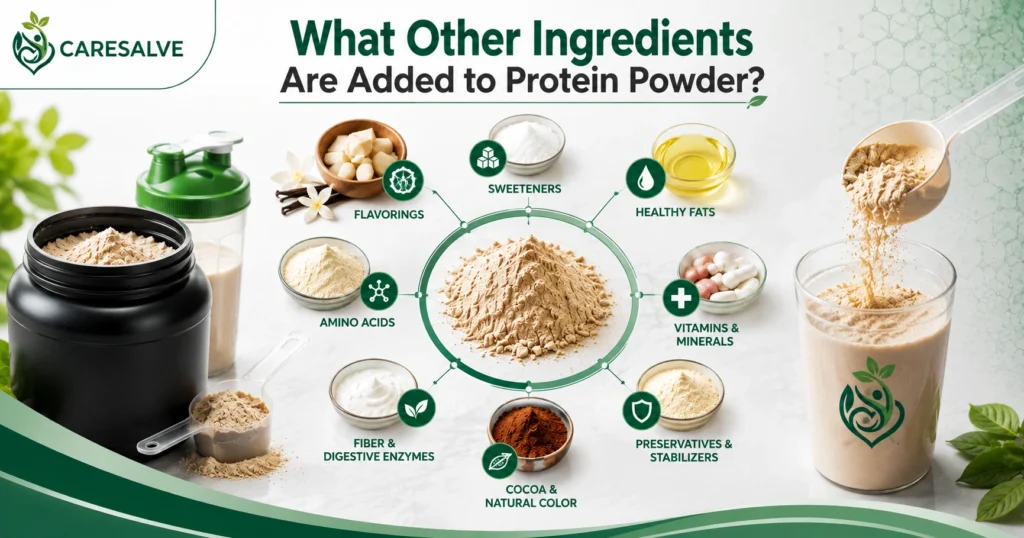
Beyond the protein itself, most protein powders contain a range of additional ingredients that affect taste, texture, and shelf life. Common additions include:
- Natural or artificial flavorings
- Sweeteners such as sugar or sugar substitutes
- Thickeners that improve texture when mixed
- Stabilizers that keep the powder consistent over time
- Emulsifiers that help ingredients blend smoothly
- Added vitamins and minerals for extra fortification
- Digestive enzymes or other functional ingredients meant to support absorption
Because these added ingredients vary so much between brands, reading the full ingredient list is the best way to know exactly what you are consuming.
Are There Allergens in Protein Powder?
Protein powder can contain allergens depending on the source of protein used and the additional ingredients included during manufacturing.
Common Protein Powder Allergens
Some of the most common allergens found in protein powder include:
- Milk, since whey and casein are milk derived proteins
- Soy, found in soy based protein powders
- Egg, found in egg white protein powders
- Other added ingredients that may trigger sensitivities in certain individuals
Because these allergens can appear in unexpected products, it is worth reviewing the label closely, even for powders marketed as plant based.
How to Check Protein Powder Labels
Checking a protein powder label for allergen warnings, “may contain” statements, and the full ingredient list is an important step for anyone with food allergies or sensitivities. Choosing products that clearly disclose their protein source and manufacturing practices can help reduce the risk of an allergic reaction.
Are There Heavy Metals in Protein Powder?
Some consumers are concerned about the presence of heavy metals, such as lead, arsenic, cadmium, or mercury, in protein powder. These metals can sometimes enter the food supply through soil, water, or environmental exposure during the growth of plant or animal source materials, rather than being intentionally added during manufacturing. This is why third party testing and quality control matter so much when choosing a protein powder brand. Reputable manufacturers regularly test their products for contaminants and may share this testing information publicly. When possible, choosing brands that publish independent lab results or hold recognized quality certifications can offer extra peace of mind.
Does One Type of Protein Powder Have Benefits Over Another?
There is no single protein powder that is universally best for everyone, since the right choice depends on individual dietary needs, preferences, and goals.
Whey vs Plant Based Protein Powder
Whey protein is a complete protein that digests relatively quickly and is popular for post workout recovery, while plant based protein powders are a suitable option for those who are lactose intolerant, vegan, or prefer to avoid animal products.
Concentrate vs Isolate
Protein concentrate may appeal to those who do not mind a slightly lower protein percentage and prefer less processing, while isolate may suit those looking for a higher protein content per serving with less lactose and fat.
Animal Based vs Plant Based Protein
Animal based proteins like whey, casein, and egg protein naturally contain all essential amino acids, while some plant based proteins may need to be combined with other sources, such as pea and rice protein together, to achieve a similarly complete amino acid profile.
What Should You Look for in Protein Powder Ingredients?
When comparing protein powders, it helps to have a simple checklist in mind:
- The protein source and whether it fits your dietary needs
- The amount of protein provided per serving
- Added sugars or artificial sweeteners
- Any additional or artificial ingredients
- Potential allergens
- Whether the product suits specific dietary requirements, such as being vegan or dairy free
- Third party testing or quality assurance information
- The recommended serving size
Going through this list before buying can help you choose a product that truly aligns with your health goals.
How to Choose the Right Protein Powder
Choosing the right protein powder often comes down to your specific needs and lifestyle.
For Dairy Free Diets
Plant based options such as soy, pea, rice, or hemp protein are generally suitable choices for those avoiding dairy.
For People Avoiding Certain Allergens
Carefully checking ingredient and allergen labels can help you avoid common triggers such as milk, soy, or egg.
For People Looking for Higher Protein Concentration
Comparing concentrate and isolate labels can help you find a product with the protein percentage that matches your goals.
For People Who Prefer Minimal Ingredients
Look for protein powders with a shorter, simpler ingredient list and fewer added fillers or artificial additives.
Frequently Asked Questions About Protein Powder
1. How Is Protein Powder Made?
Protein powder is made by extracting protein from a source such as milk, eggs, soy, or peas, then filtering, concentrating, and drying it into a powder form.
2. How Is Whey Protein Powder Made?
Whey protein powder is made from the liquid whey left over during cheese production, which is filtered, concentrated, and spray dried into powder.
3. What Is Protein Powder Made From?
Protein powder can be made from a variety of sources, including milk (whey and casein), eggs, soybeans, peas, brown rice, and hemp seeds.
4. What Is the Difference Between Protein Concentrate and Isolate?
Protein concentrate undergoes less filtration and contains a slightly lower protein percentage along with some fat and carbohydrates, while protein isolate is more heavily filtered to achieve a higher protein concentration.
5. Are There Heavy Metals in Protein Powder?
Some protein powders may contain trace amounts of heavy metals due to environmental factors during ingredient sourcing, which is why choosing brands with third party testing and transparent quality control is recommended.
The Bottom Line
Protein powder can be made from a variety of sources, including dairy, eggs, and plants, and the manufacturing process differs depending on the chosen raw material. Whether a powder is labeled as a concentrate, isolate, or hydrolyzed protein depends on how extensively it is filtered and processed. Additional ingredients such as flavors, sweeteners, and stabilizers can also affect the final product’s taste and nutritional profile. Before choosing a protein powder, it is worth checking the protein source, full ingredient list, allergen information, and any available quality or safety testing to find a product that best fits your individual needs.
References
- Colorado State University, Food Source Information. Protein Powder. https://www.chhs.colostate.edu/fsi/food-articles/dairy/protein-powder/
- Clean Label Project. Nearly Half of Top Selling Protein Powders Exceed Safety Thresholds for Heavy Metal Contamination. https://cleanlabelproject.org/protein-study/
- NPR. Consumer Reports Finds Lead in Popular Protein Powders. https://www.npr.org/2025/10/16/nx-s1-5576294/protein-powder-lead-consumer-reports
- WebMD. Your Protein Powder May Contain Harmful Metals. https://www.webmd.com/diet/news/20250110/cm/protein-powder-harmful-metals
