

A Note From CareSalve: This article is written for informational and educational purposes to support your mental wellness journey. CareSalve does not provide medical diagnoses, treatment plans, or a substitute for professional care. If you are experiencing distressing physical symptoms, please consult a licensed medical provider.
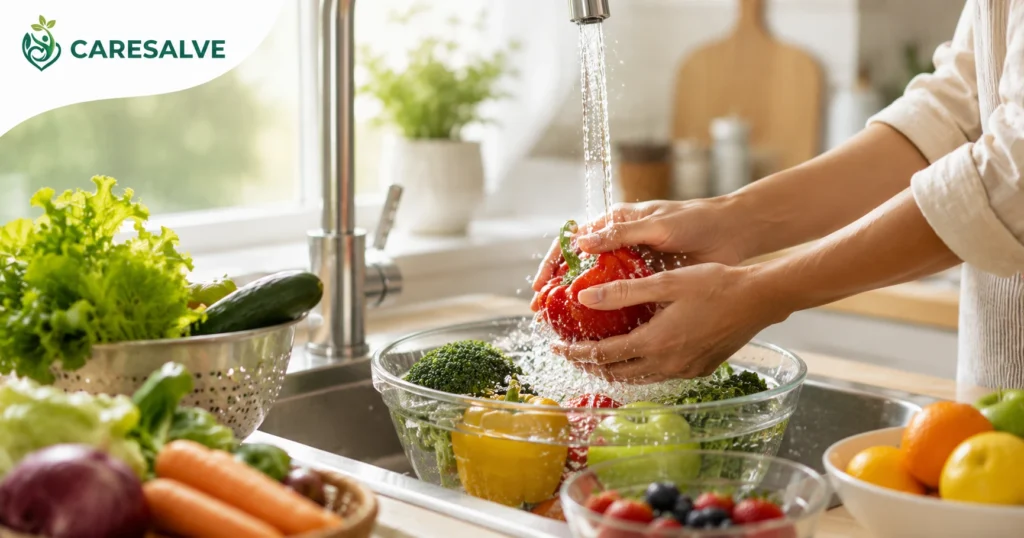
Most of us rinse an apple under the tap and call it clean, but that quick splash barely scratches the surface of what pesticide residue actually clings to. If you have wondered how to remove pesticides from fruits and vegetables at home in a way that is actually backed by evidence, this guide walks through exactly what works, what does not, and how to apply it to every type of produce in your kitchen.
Do Pesticides Stay on Produce? (Health Risks and Residues)
Understanding what you are washing off makes it much easier to choose the right method.
Pesticides in fruits and vegetables generally fall into two categories. Surface residues sit on the outer skin and can be significantly reduced through washing, soaking, or scrubbing. Systemic pesticides are absorbed into the plant as it grows, meaning they exist inside the flesh itself and cannot be fully removed by any washing method, though peeling can help for some produce. Residual pesticide levels found on grocery store produce are required to fall within legal safety limits, but many households still prefer to reduce exposure further at home, particularly for young children or anyone eating produce daily in large amounts.
So does washing fruits and vegetables remove pesticides completely? Not entirely, but it makes a meaningful difference for the residue sitting on the surface, which is where the majority of detectable pesticide traces are found.
A common question is whether organic produce needs washing too. Do organic fruits and vegetables have pesticides? Often yes, since organic farming still permits certain naturally derived pesticides, and cross contamination from nearby conventional farms is possible. As for glyphosate, testing has occasionally found trace amounts even on organic produce due to environmental drift, so organic items still benefit from a proper wash. As for what happens if you eat pesticides on fruit without washing, the answer for most people is nothing immediately noticeable, since residue levels on store bought produce are regulated, but reducing unnecessary exposure over time is still a reasonable goal for most households.
Quick Comparison: Water vs Baking Soda vs Vinegar
| Method | Time Needed | Pesticide Removal Rate | Best Used For |
| Plain Cold Water and Friction | 30 to 60 seconds | Around 70 to 80 percent of surface residue | Everyday quick rinse, firm skinned produce |
| Baking Soda Soak (Best Pesticide Cleaner) | 12 to 15 minutes | Up to 96 percent of tested surface residues | Apples, grapes, tomatoes, thicker skinned produce |
| Diluted Vinegar Wash | 5 minutes | Moderate residue reduction, strong against bacteria and mold | Berries, grapes, mold prone produce |
The 3 Most Effective Ways to Wash Produce at Home
Method 1: The Baking Soda Soak (Scientifically Most Effective)
If you are searching for the single best vegetable cleaner homemade option, this is it. Peer reviewed food science research has repeatedly found that baking soda outperforms plain water and most commercial produce washes at breaking down pesticide residue.
Ratio: 1 to 2 teaspoons of baking soda dissolved in 4 cups of cold water.
Submerge your produce fully and let it soak for 12 to 15 minutes. Does baking soda remove pesticides from fruit this effectively because it creates a mildly alkaline solution that helps break down the chemical bonds holding certain residues to the produce skin. This is also the preferred method when you wash grapes with baking soda, since grapes have a naturally waxy surface that traps residue more than smoother skinned fruit. Note that baking soda is not the same as baking powder, and baking powder should not be substituted, since it contains additional ingredients not intended for this purpose. After soaking, rinse thoroughly under running water and pat dry.
Method 2: The Diluted Vinegar Wash (Best for Bacteria and Mold)
While baking soda targets pesticide residue directly, does vinegar remove pesticides as effectively? Not quite to the same degree, but a vinegar based fruit and vegetable rinse is excellent for tackling surface bacteria and mold spores, making it a smart addition to your routine, especially during peak berry season.
Ratio: 1 part white vinegar to 3 parts water.
This simple homemade fruit wash recipe works well for berries and grapes prone to mold growth. Soak for about 5 minutes, then rinse thoroughly, since leftover vinegar can affect flavor if it is not fully rinsed away.
Method 3: Plain Cold Water Friction Method (Quick Daily Clean)
When you need the best way to clean fruit in under a minute, running water combined with physical friction remains a dependable baseline, particularly for firm skinned items.
The proper way to wash fruit using this method is to hold the item under running cold water while actively rubbing the surface with your hands or a clean produce brush for 30 to 60 seconds. When rinsing grapes this way, swirl them in a colander under the tap rather than washing the whole bunch at once, which helps water reach every grape evenly.
How to Clean Produce by Category (Step by Step)
Soft Berries and Fragile Fruits
Strawberries, raspberries, blueberries, and grapes bruise easily, so gentle handling matters just as much as the washing method.
So what do I soak strawberries in to clean them? The diluted vinegar solution works well, soaked for about 5 minutes and rinsed under cool water afterward. This same approach answers how to clean non organic strawberries specifically, since conventionally grown strawberries consistently rank among the highest residue fruits tested each year. To learn how to clean grapes of pesticides, snip them into small clusters before washing rather than cleaning the entire bunch at once, allowing water or the baking soda solution to reach every surface. For how to remove pesticides from blueberries, a brief baking soda soak followed by a gentle rinse in a colander works best, since their thin skin can bruise under too much handling. When learning how to wash raspberries to remove bugs, use a very light water rinse rather than a soak, since raspberries absorb liquid quickly and turn mushy. After washing any soft fruit, lay the pieces on a paper towel lined tray to air dry completely before storing, since trapped moisture is the leading cause of early mold.
Leafy Greens and Layered Produce
Spinach, cabbage, cauliflower, and asparagus trap dirt and residue between their layers, so a quick rinse under the tap often misses buildup hidden deeper inside.
To understand how to remove pesticides from leafy vegetables generally, separate the leaves and submerge them fully in a large bowl of cold water, swishing gently to loosen trapped dirt. This is exactly how to wash spinach to remove pesticides properly, since spinach leaves tend to hold onto grit in their creases. Lift the greens out of the water rather than pouring everything out together, which leaves settled debris behind in the bowl instead of back on your greens. If you are wondering how to wash a cabbage head, remove the outer leaves first, then quarter the cabbage and rinse each section under running water, fanning the leaves slightly apart as you go. The best approach to wash cauliflower is to break it into florets first and soak them briefly in the baking soda solution, since the tightly packed curds are notorious for hiding dirt and residue. For how to clean asparagus for cooking, rinse the spears under cold running water while rubbing gently along each stalk, and trim the tougher woody ends before cooking.
Firm and Root Vegetables
Potatoes, broccoli, and citrus fruits have sturdier skins that can handle more vigorous scrubbing compared to soft produce.
The go to method for how to clean potatoes is holding them under running water while scrubbing vegetables with a dedicated produce brush, paying close attention to the eyes and any creases where soil tends to collect. For how to wash fresh broccoli, submerge the head upside down in a bowl of cold water for a few minutes, which helps loosen dirt and any small insects hiding between the florets, then rinse under the tap. Citrus fruits deserve their own mention here too, since how to clean lemons for zesting matters even if you plan to discard the fruit itself. Scrub the lemon peel firmly under warm water with a produce brush before zesting, since the zest sits directly on the outer skin where residue and wax coatings concentrate the most.
Dangerous Washing Myths: What NOT to Use
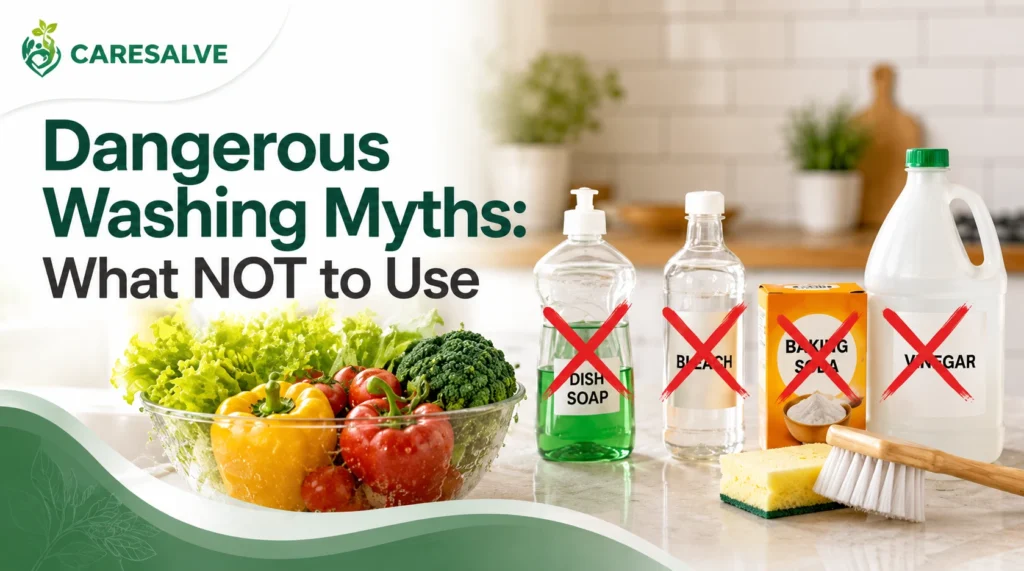
It can feel logical to reach for something stronger than water when trying to remove pesticide residue, but this instinct leads to one of the most common food safety mistakes in home kitchens.
Washing fruit with soap, whether dish soap or a bar of produce soap, is not safe, since these products are not formulated or tested for consumption. Produce skin is porous, especially on tomatoes, strawberries, and leafy greens, meaning soap can seep in during soaking and cannot be fully rinsed back out. The same caution applies to washing fruits and vegetables with hydrogen peroxide. While hydrogen peroxide has antibacterial properties, food grade concentrations are hard to control at home, and ingesting residual hydrogen peroxide can cause stomach irritation. Bleach should never be used under any circumstances, since even trace ingestion carries serious health risks. If you are choosing a vegetable disinfectant, know that most commercial sprays marketed for produce lack strong independent safety testing, making a homemade baking soda or vinegar solution the safer, evidence backed choice for what not to use versus what actually works.
The Dirty Dozen Guide: Which Foods Need Extra Care?
Each year, the Environmental Working Group ranks conventionally grown produce by pesticide residue levels, commonly referred to as the Dirty Dozen and the Clean 15.
Spinach on the dirty dozen list has appeared consistently in recent years, largely due to its thin, absorbent leaves. Strawberries and peaches are peaches on the dirty dozen as well, both ranking among the highest residue fruits tested, largely because of their soft, permeable skin. Is celery on the dirty dozen list? It has shown up frequently in past years thanks to its thin skin and high water content, which tends to retain residue more than firmer vegetables. Cauliflower on the dirty dozen, however, is a different story, since its dense outer layers offer more natural protection, and it typically lands closer to the Clean 15 side of the spectrum. As for are potatoes on the dirty dozen list, placement has varied year to year depending on testing methods, so it is worth checking the most current list if this is a priority for your household, though their thicker skin generally offers more natural protection than soft fruit. Regardless of where a specific item falls, giving every piece of produce a proper wash remains a smart habit.
Frequently Asked Questions (FAQs)
1. Does baking soda remove 100 percent of pesticides?
No single home method removes all pesticide residue, especially residue absorbed systemically into the plant tissue. That said, does baking soda remove pesticides effectively at the surface level? Yes, research shows a proper soak removes a very high percentage of surface residue, making it the strongest home based method currently available.
2. Should I wash produce before storing or right before eating?
Knowing how to wash produce properly means understanding timing as much as method. In most cases, wash fruits and vegetables right before eating or cooking rather than before storing them, since leftover moisture speeds up spoilage and mold growth in the fridge. The main exception is firm produce like potatoes, which can be washed and dried thoroughly ahead of time without much added risk.
3. Does salt water remove pesticides or bugs?
A salt water soak is genuinely useful for how to get rid of pesticides related concerns involving hidden insects, since the salinity encourages small bugs and larvae to surface from leafy greens or broccoli florets. However, salt water has limited effectiveness against actual pesticide residue compared to a baking soda solution, so it works best as a bug removal step rather than your primary residue reducing wash.
4. How to wash fruits and vegetables to remove pesticides?
To reduce pesticide residues, soak fruits and vegetables in a mixture of 1 to 2 teaspoons of baking soda for every 4 cups of cold water for 12 to 15 minutes, then rinse thoroughly under running water. Never use soap, detergent, bleach, or hydrogen peroxide to wash food, as these products are not safe for consumption.
Final Thoughts
Cleaning produce properly does not require anything fancy sitting in your pantry, just a bit of intention and the right ratio of baking soda to water. A quick water rinse covers everyday convenience, while a short baking soda soak is worth the extra few minutes for high residue items like strawberries, spinach, and grapes. Steering clear of soap, bleach, and hydrogen peroxide, while paying closer attention to Dirty Dozen produce, are two of the simplest changes you can make today for a safer, healthier plate.
