
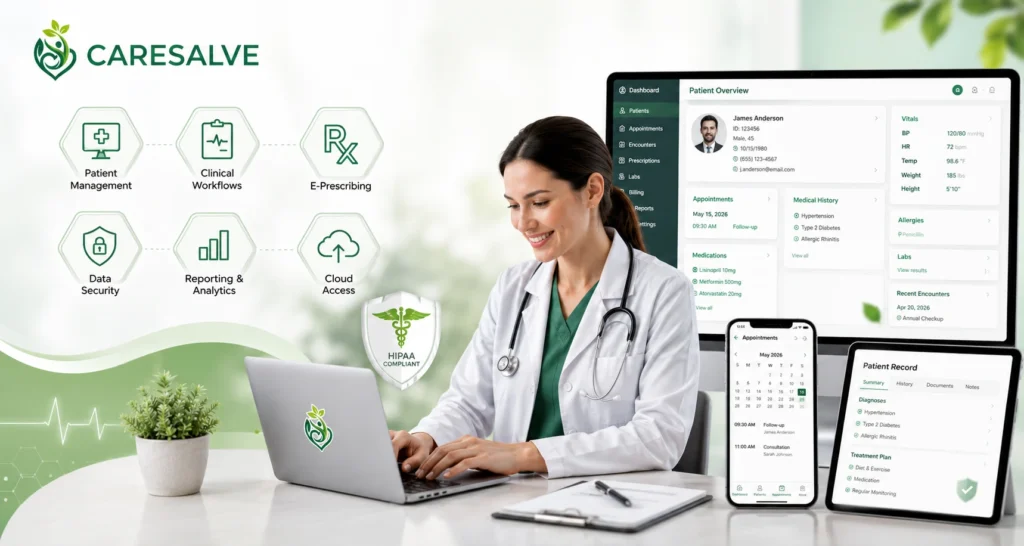

Choosing the right EMR system is one of the most important decisions a medical practice or hospital can make. The software you pick affects everything from daily workflow and billing accuracy to patient satisfaction and compliance. In this guide, CareSalve breaks down the best EMR systems available in the USA in 2026, how they compare, and how to choose the right one for your practice.
Introduction
Electronic medical record software has become the backbone of modern healthcare delivery. Whether you run a small clinic, a specialty practice, or a large hospital network, having the right EMR systems in place determines how efficiently your team documents care, bills patients, and stays compliant with federal regulations.
The market for healthcare EMR systems has grown rapidly, with dozens of vendors offering cloud based, on premise, and specialty focused platforms. This guide walks through what EMR in USA healthcare looks like today, compares the leading vendors, and helps you identify the best emr systems for your specific needs, whether you are a solo practitioner or managing a multi hospital system.
What Is an EMR System?
An EMR system, short for Electronic Medical Record system, is software used by healthcare providers to create, store, and manage digital versions of a patient’s chart within a single practice. It replaces paper charts with searchable, structured digital records that include patient history, diagnoses, medications, immunizations, lab results, and treatment plans.
EMR vs EHR: What’s the Difference?
People often use the terms EMR and EHR interchangeably, but there is an important distinction.
An EMR (Electronic Medical Record) is essentially a digital version of a patient’s chart within one provider’s office. It contains the medical and treatment history of patients as collected by a single practice.
An EHR (Electronic Health Record), on the other hand, is designed to be shared across multiple healthcare organizations. Ehr systems in usa are built to follow a patient across different providers, specialists, labs, and hospitals, giving a more complete picture of a patient’s overall health.
In short, electronic medical record systems are practice focused, while EHRs are patient focused and built for interoperability across the healthcare ecosystem.
How EMR Systems Work
Patient emr systems typically function through a combination of modules that work together:
- A provider logs in and pulls up the patient’s digital chart.
- Clinical notes, vitals, and diagnoses are entered directly into structured templates.
- Orders for labs, prescriptions, or referrals are generated electronically.
- The system updates the patient’s history automatically and stores it securely in the cloud or on local servers.
- Billing codes are generated from the documented visit, often feeding directly into a connected billing module.
Most modern systems also include patient facing tools such as portals, reminders, and telehealth integration.
Benefits of Using an EMR System
- Reduces paperwork and manual charting errors
- Speeds up documentation with templates and voice input
- Improves care coordination within a practice
- Enables faster, more accurate billing and coding
- Supports compliance with HIPAA and federal reporting requirements
- Gives providers instant access to patient history during visits
- Reduces duplicate testing and prescription errors
Types of EMR Systems
Not every practice needs the same kind of software. Understanding what are the different emr systems available helps narrow down the right fit.
Cloud Based EMR Systems
Cloud based platforms are hosted remotely and accessed through a web browser or app. They require little to no on site infrastructure, are updated automatically by the vendor, and are typically priced on a subscription basis. This is the most popular model in 2026 due to lower upfront costs and easier remote access.
On Premise EMR Systems
On premise systems are installed and run on servers physically located at the practice. They offer more control over data and customization but require larger upfront investment, dedicated IT staff, and ongoing maintenance.
Specialty EMR Systems
Specialty EMRs are built with templates, workflows, and billing codes tailored to a specific field of medicine, such as cardiology, dermatology, orthopedics, or behavioral health. These systems reduce the need for heavy customization compared to general purpose software.
Hospital EMR Systems
Emr systems for hospitals are designed to handle high patient volumes, multiple departments, complex billing, and integration with lab and imaging systems. Emr hospital systems must support inpatient and outpatient workflows, nursing documentation, pharmacy management, and interoperability across large networks. Emr software for hospitals is generally more robust, more expensive, and requires longer implementation timelines than solutions built for small practices.
Top EMR Systems in the USA (2026)
Below is a breakdown of the top emr companies in usa and the top electronic medical record systems currently leading the market. These are consistently ranked among the most popular emr systems by practices of every size.
Epic
Epic is widely considered the most used emr in large hospital systems and academic medical centers across the country. Known for its deep functionality, strong interoperability, and extensive reporting tools, Epic is often regarded as the top emr system for large healthcare organizations, though it comes with a higher price tag and longer setup time.
Oracle Health (Cerner)
Formerly known as Cerner, Oracle Health is one of the major emr systems used by hospitals and health systems nationwide. It offers strong clinical decision support, population health tools, and enterprise level scalability, making it a common choice for multi facility organizations.
athenahealth
athenahealth is a cloud based platform popular among small and mid sized practices. It combines EMR, billing, and patient engagement tools into a single connected network, and is known for strong revenue cycle management.
eClinicalWorks
eClinicalWorks offers a full suite of EMR, practice management, and telehealth tools. It serves a wide range of specialties and is known for its customizable templates and affordable pricing tiers for smaller practices.
NextGen Healthcare
NextGen Healthcare provides ambulatory EMR solutions with strong analytics, population health management, and interoperability features, making it a solid choice for multi specialty group practices.
Tebra
Tebra (formed from the merger of Kareo and PatientPop) focuses on helping independent practices manage clinical, billing, and patient acquisition needs in one platform, with an emphasis on ease of use.
AdvancedMD
AdvancedMD offers a cloud based EMR and practice management suite aimed at small to mid sized practices, with strong scheduling, billing, and telehealth capabilities.
CareCloud
CareCloud provides EMR and revenue cycle management software designed for efficiency, with AI powered automation tools for documentation and billing workflows.
CureMD
CureMD is a cloud based EMR known for specialty specific templates and a strong focus on regulatory compliance and patient engagement tools.
Meditech
Meditech is a longstanding player in the hospital EMR space, offering solutions for community hospitals and health systems that need dependable, enterprise grade functionality.
DrChrono
DrChrono, now part of EverHealth, is known for its mobile first approach, offering a highly rated app that lets providers document visits and manage schedules from a tablet or phone.
Greenway Health
Greenway Health offers EMR and practice management tools with a focus on ambulatory care, strong interoperability, and support for value based care initiatives.
EMR Systems Comparison Table
| Company | Best For | Cloud | Hospital/Clinic | Pricing | Mobile App | AI Features |
| Epic | Large hospitals and health systems | Yes | Hospital | Enterprise/Custom | Yes | Yes |
| Oracle Health (Cerner) | Large health systems | Yes | Hospital | Enterprise/Custom | Yes | Yes |
| athenahealth | Small to mid sized practices | Yes | Clinic | Subscription | Yes | Yes |
| eClinicalWorks | Multi specialty practices | Yes | Both | Subscription | Yes | Yes |
| NextGen Healthcare | Ambulatory group practices | Yes | Clinic | Subscription | Yes | Yes |
| Tebra | Independent practices | Yes | Clinic | Subscription | Yes | Limited |
| AdvancedMD | Small to mid sized practices | Yes | Clinic | Subscription | Yes | Limited |
| CareCloud | Practices seeking automation | Yes | Clinic | Subscription | Yes | Yes |
| CureMD | Specialty practices | Yes | Clinic | Subscription | Yes | Limited |
| Meditech | Community hospitals | Yes/On Premise | Hospital | Enterprise/Custom | Yes | Limited |
| DrChrono | Mobile first practices | Yes | Clinic | Subscription | Yes | Limited |
| Greenway Health | Ambulatory and value based care | Yes | Clinic | Subscription | Yes | Yes |
This emr comparison is meant as a general guide. Actual pricing and features vary based on practice size, modules selected, and negotiated contracts, so it is worth requesting a demo before committing. It’s a useful starting point for anyone comparing top rated emr systems side by side.
Best EMR Systems by Practice Type
Best EMR for Small Practices
Small practices generally benefit most from cloud based, all in one platforms that bundle EMR, billing, and scheduling without requiring dedicated IT support. Tebra, AdvancedMD, and athenahealth are commonly recommended for solo and small group practices due to their affordability and quick setup.
Best EMR for Hospitals
Best emr systems for hospitals need to support complex, multi department workflows, inpatient and outpatient care, and large scale interoperability. Epic, Oracle Health, and Meditech are the most established names in this category.
Best EMR for Large Healthcare Organizations
For multi hospital networks and academic medical centers, Epic and Oracle Health remain the dominant choices due to their scalability, extensive third party integrations, and strong analytics capabilities.
Best Specialty EMR
Different specialties have different documentation and billing needs, so specialty specific templates matter.
- Cardiology: eClinicalWorks and NextGen Healthcare offer strong cardiology specific templates.
- Dermatology: CureMD and DrChrono are popular for image heavy documentation.
- Pediatrics: athenahealth and NextGen Healthcare offer pediatric growth charts and immunization tracking.
- Orthopedics: eClinicalWorks and Greenway Health provide orthopedic specific workflows.
- Mental Health: Several platforms, including specialty focused vendors, cater specifically to behavioral health documentation and billing needs.
For providers searching for the best urology emr, CureMD and eClinicalWorks are commonly cited for offering urology specific templates and billing codes, though it is worth requesting a demo to confirm fit for your practice’s exact workflow.
Features to Look for in an EMR System
When comparing top emr software solutions, focus on the following core features:
- ePrescribing: Electronic prescription sending directly to pharmacies, with drug interaction alerts.
- Scheduling: Online booking, automated reminders, and calendar management.
- Billing: Integrated claims submission, coding assistance, and revenue cycle tools.
- Patient Portal: Secure messaging, appointment requests, and access to test results.
- Telehealth: Built in video visit capability for remote care.
- AI: Tools such as ambient documentation, automated coding suggestions, and predictive analytics.
- Mobile App: Access to charts and scheduling from a phone or tablet.
- Reporting: Dashboards for quality metrics, financial performance, and compliance tracking.
How to Choose the Best EMR System
Answering what is the best emr system for your organization depends on several factors:
- Practice Size: Solo practices need lighter, simpler tools, while hospitals require enterprise grade platforms.
- Budget: Subscription based pricing suits smaller practices, while larger systems may justify enterprise contracts.
- Specialty: Look for vendors offering templates built for your field.
- Integration: Check compatibility with existing lab systems, imaging tools, and billing clearinghouses.
- Support: Evaluate the vendor’s training resources, customer service availability, and implementation support.
- Ease of Use: A steep learning curve can slow down adoption and reduce provider satisfaction, so hands on demos are essential before purchase.
EMR Pricing: What Does an EMR Cost?
EMR pricing varies significantly depending on the vendor, deployment type, and practice size.
- Subscription: Most cloud based systems charge a monthly subscription fee, often ranging from around 100 to 500 dollars per provider per month depending on included features.
- Per Provider: Many vendors price per provider or per user, which allows practices to scale costs as they grow.
- Enterprise Pricing: Hospital grade systems like Epic and Oracle Health typically involve custom, negotiated contracts that can run into the millions depending on the size of the health system and modules required.
Additional costs to budget for include implementation, training, data migration, and ongoing support fees.
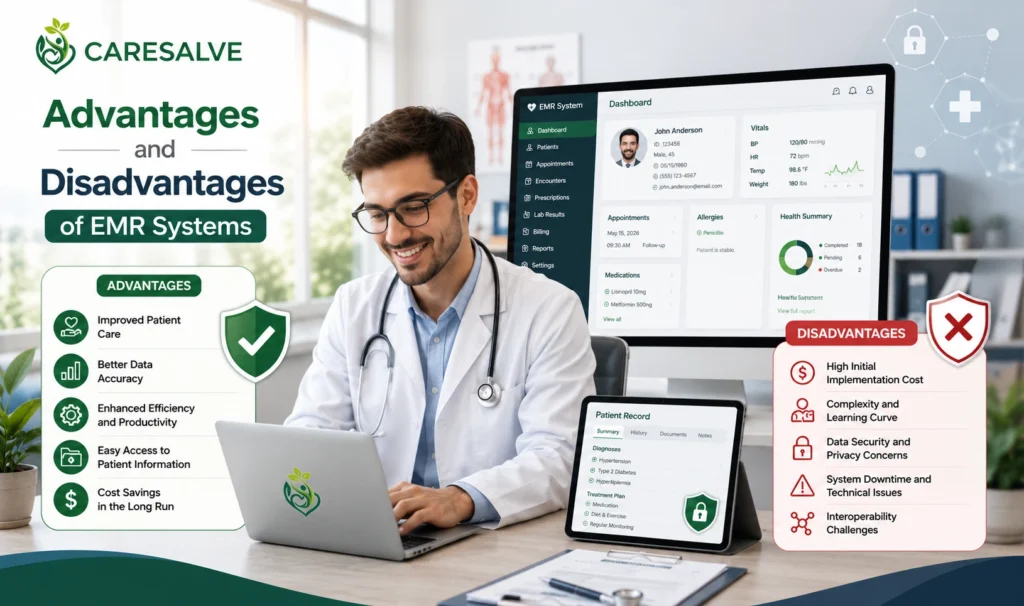
Advantages and Disadvantages of EMR Systems
Pros
- Streamlines documentation and reduces paperwork
- Improves accuracy of billing and coding
- Enhances patient safety through alerts and reminders
- Provides quick access to patient history
- Supports remote work and telehealth integration
- Helps meet regulatory and compliance requirements
Cons
- Upfront and ongoing costs can be significant
- Learning curve can slow down staff during transition
- Poor interoperability between some systems can limit data sharing
- Downtime or technical issues can disrupt clinical workflow
- Customization for specialty needs can require extra investment
Frequently Asked Questions
What is the best EMR system?
There is no single answer to what is the best emr system, since the right choice depends on practice size, specialty, and budget. Epic and Oracle Health lead among hospitals, while athenahealth, Tebra, and AdvancedMD are strong choices for smaller practices.
What are the most popular EMR systems?
The most popular emr systems in the USA include Epic, Oracle Health (Cerner), athenahealth, eClinicalWorks, and NextGen Healthcare, based on market share and adoption across practices and hospitals.
What are examples of EMR systems?
Common emr system examples include Epic, Oracle Health, athenahealth, eClinicalWorks, NextGen Healthcare, Tebra, AdvancedMD, CareCloud, CureMD, Meditech, DrChrono, and Greenway Health.
How many EMR systems are there?
There are hundreds of EMR and EHR vendors operating in the United States today, ranging from small niche specialty tools to large enterprise platforms, though only a smaller group of established vendors dominate most of the market share.
Which EMR is most used in the United States?
Epic is generally recognized as the most used emr among large hospitals and health systems nationwide, covering a significant share of patient records across the country.
What are the top EMR companies in the USA?
The top emr companies in usa include Epic, Oracle Health, athenahealth, eClinicalWorks, NextGen Healthcare, Tebra, AdvancedMD, CareCloud, CureMD, Meditech, DrChrono, and Greenway Health.
Which EMR is best for hospitals?
For best emr systems for hospitals, Epic, Oracle Health, and Meditech are the most commonly deployed platforms due to their scalability, interoperability, and enterprise level support.
Final Verdict: Which EMR System Is Best in 2026?
There is no universal winner among top emr software vendors, since the best choice always depends on your organization’s size, specialty, and workflow needs. For large hospitals and health systems, Epic and Oracle Health remain the industry standard. For small to mid sized practices, athenahealth, Tebra, and AdvancedMD offer strong value with easier implementation. For specialty practices, vendors like eClinicalWorks, CureMD, and NextGen Healthcare provide tailored templates that reduce customization work.
When evaluating top electronic medical records companies, it is worth requesting live demos, checking references from similar sized practices, and comparing total cost of ownership rather than just the advertised subscription price. The right EMR system should not just digitize your paperwork, it should actively make care delivery faster, safer, and more profitable for your practice.
At CareSalve, we recommend starting with a clear list of must have features, getting quotes from at least three vendors, and prioritizing ease of use and support quality alongside price when making your final decision.
