
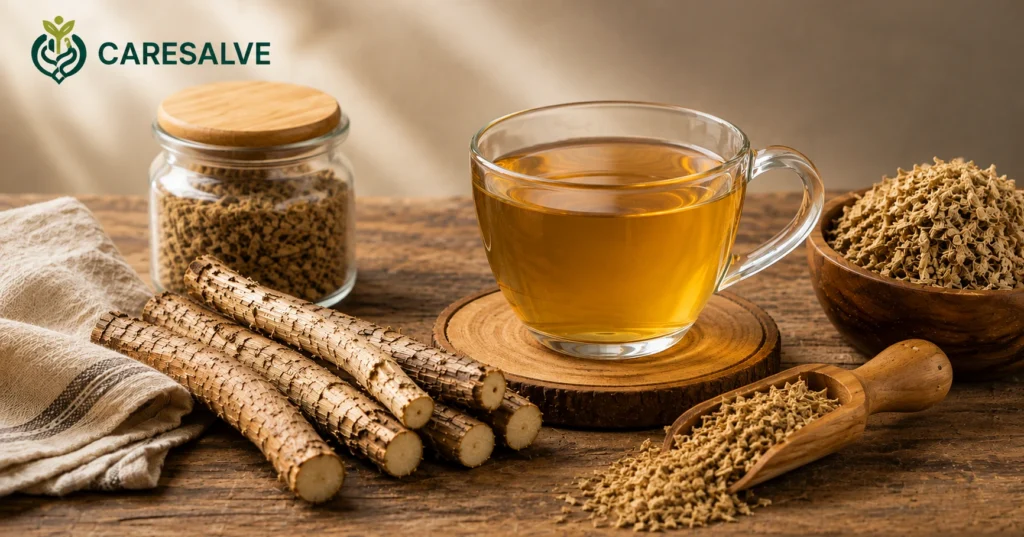

Marshmallow root is one of those herbal remedies that keeps showing up in wellness routines, and for good reason. At CareSalve, people frequently ask us what marshmallow root actually is, what it is used for, and whether it is safe to try. This guide covers everything from the plant itself to its potential benefits, common preparations, and important precautions.
What Is Marshmallow Root?
Marshmallow root comes from the marshmallow plant, whose botanical name is Althaea officinalis. It is a perennial that grows in moist, marshy areas across Europe, Western Asia, and parts of North Africa. The root has a long history of traditional use, dating back thousands of years to ancient Greek and Egyptian herbal practices.
It is worth clearing up a common point of confusion. Marshmallow root is not the same thing as the fluffy white confectionery marshmallow found in supermarkets. Modern marshmallow candy is made mostly from sugar and gelatin. Centuries ago, however, the original sweet treat was made using the sap of the marshmallow root, which is where the candy got its name.
What Is Marshmallow Root Used For?
Traditionally, marshmallow root has been used in herbal medicine for a wide variety of purposes. It contains a gel like substance called mucilage, which coats and soothes tissue when mixed with water. This is the main reason it has been used for cough and throat support, digestive comfort, and skin applications for centuries.
Marshmallow root is commonly prepared as a tea, a cold water infusion, a powder, a capsule, or a topical salve, depending on how it is being used.
Marshmallow Root Benefits
While marshmallow root has a long history of traditional use, it is important to note that modern clinical research is still limited for many of these uses. Most of what is known comes from traditional practice, small studies, or animal research, so the potential benefits below should be understood in that context.
May Help Soothe Coughs and Sore Throat
Marshmallow root tea and lozenges have traditionally been used to ease coughing and calm an irritated throat. The mucilage content is thought to form a soothing, protective coating over irritated tissue, which may explain why it has remained popular for cough support for so long.
May Support Digestive and Gut Health
Some people use marshmallow root for mild stomach upset or discomfort associated with acid reflux. The same coating effect that may soothe the throat is thought to potentially calm irritated tissue in the digestive tract as well, though more research is needed to confirm this use.
May Soothe Skin Irritation
Marshmallow root extract is sometimes included in creams, salves, and other skin care products. It has traditionally been applied to mildly irritated or inflamed skin, though again, formal research on this specific use remains limited.
May Have Antioxidant and Anti Inflammatory Properties
Laboratory research has identified compounds in marshmallow root, including flavonoids and polysaccharides, that may have antioxidant and anti-inflammatory activity. These findings are promising, but they largely come from lab and animal studies rather than large scale human trials.
Marshmallow Root Tea: Benefits and Uses
Marshmallow root tea is one of the most common ways people use this herb. It is generally made by steeping the dried root in water, either hot or cold, until the mucilage releases into the liquid. Some herbalists prefer a cold infusion, since heat can potentially reduce some of the mucilage content, though both methods are widely used.
Potential benefits associated with the tea include soothing an irritated throat, supporting digestive comfort, and general hydration. As with other forms of marshmallow root, people taking medications or managing a health condition should use caution and speak with a healthcare professional before adding it to a routine.
How to Use Marshmallow Root
Marshmallow root is available in several forms, and the right one often depends on personal preference and intended use.
Marshmallow Root Tea
The dried root is steeped in hot water for several minutes to release its soothing properties, then strained before drinking.
Marshmallow Root Cold Infusion
The dried root is soaked in room temperature or cold water for several hours, which some people believe preserves more of the mucilage compared to hot water preparation.
Marshmallow Root Powder and Extract
Powdered marshmallow root can be mixed into water or added to capsules, while liquid extracts offer a more concentrated form. Both are commonly found in health food stores and from herbal suppliers.
How to Make Marshmallow Root Tea
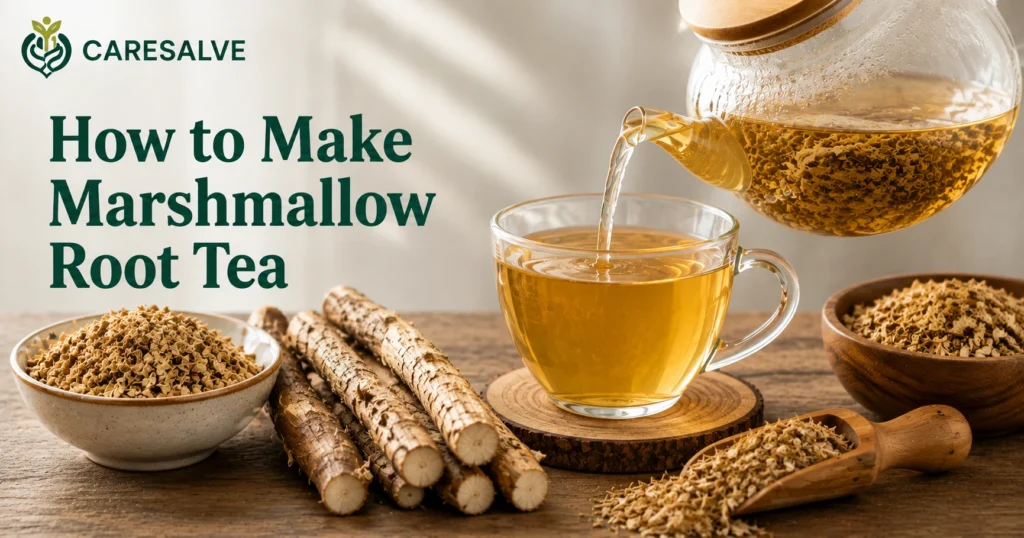
Making a basic cup of marshmallow root tea is fairly simple. Roughly one to two teaspoons of dried root are combined with a cup of water, then left to steep. For a hot preparation, the water is heated first, and the mixture typically steeps for ten to fifteen minutes before straining. For a cold infusion, the same ratio is left to sit at room temperature for several hours, often overnight.
Dried marshmallow root should be stored in a cool, dry place, away from direct light, to help preserve its quality over time.
Marshmallow Root Side Effects and Risks
Marshmallow root is generally considered well tolerated, and reported side effects are uncommon. That said, some people may experience mild digestive effects, such as an upset stomach, particularly when taking larger amounts. Allergic reactions are possible, especially in people with sensitivities to related plants.
Because marshmallow root’s mucilage can coat the digestive tract, there is some concern that it could affect how well the body absorbs oral medications taken around the same time. If any unusual symptoms occur after taking marshmallow root, it is a good idea to stop use and speak with a healthcare professional.
Marshmallow Root Interactions and Precautions
Because of its coating effect in the digestive tract, marshmallow root may interfere with the absorption of other oral medications if taken too close together. It is generally recommended to separate marshmallow root from other medications by at least an hour or two, though the exact timing should be confirmed with a healthcare provider.
Anyone taking prescription medications, managing diabetes, or using other herbal supplements should talk with a healthcare professional before adding marshmallow root to their routine, since interactions are still not fully understood.
Is Marshmallow Root Safe During Pregnancy?
There is limited research on the safety of marshmallow root during pregnancy or breastfeeding. Because of this lack of data, it is not possible to say with confidence whether it is safe in these situations. Pregnant or breastfeeding individuals should avoid self treating with marshmallow root and should speak with a healthcare professional before use.
Who Should Avoid Marshmallow Root?
Certain groups should be especially cautious with marshmallow root, including:
- People currently taking prescription medications
- Pregnant or breastfeeding individuals
- People with known allergies to marshmallow or related plants
- People managing diabetes or other chronic health conditions
In each of these cases, professional medical advice is recommended before use.
Marshmallow Root vs. Marshmallow: Are They the Same?
Althaea officinalis and the marshmallow candy found in stores today share a name and a bit of history, but they are not the same thing. Modern marshmallow candy is made primarily from sugar, corn syrup, gelatin, and flavoring. It no longer contains any part of the marshmallow plant. The connection is purely historical, tracing back to a time when the plant’s root sap was used to create the original version of the treat.
Where Does Marshmallow Root Come From?
The marshmallow plant is native to Europe, Western Asia, and parts of North Africa, where it typically grows in damp meadows, marshes, and along riverbanks. The roots are harvested, cleaned, and dried before being processed into teas, powders, extracts, or other commercial forms. Today, marshmallow root products are widely available through health food stores, herbal suppliers, and online retailers.
What Does Marshmallow Root Look Like?
The marshmallow plant typically grows two to four feet tall, with soft, velvety, toothed leaves and pale pink or white flowers that bloom in late summer. The roots themselves are long, tapered, and pale yellowish or white in color. Once dried for use in teas and supplements, the root often appears as light colored, fibrous pieces or a fine powder.
Marshmallow Leaf vs. Marshmallow Root
Both the leaf and the root of the marshmallow plant have traditionally been used in herbal preparations, and their uses overlap to some degree. The root tends to contain a higher concentration of mucilage, which is why it is more commonly used for soothing coughs, sore throats, and digestive discomfort. The leaf has also been used traditionally, often prepared as a tea, though it is generally considered milder than the root.
Frequently Asked Questions
1. What is marshmallow root good for?
Marshmallow root is traditionally used to soothe coughs and sore throats, support digestive comfort, and calm mildly irritated skin, largely due to its mucilage content.
2. What are the benefits of marshmallow root tea?
Marshmallow root tea may help soothe an irritated throat, support digestive comfort, and contribute to overall hydration, though scientific evidence for these uses is still limited.
3. What are the side effects of marshmallow root?
Marshmallow root is generally well tolerated, though mild digestive upset and allergic reactions are possible in some people.
4. Is marshmallow root safe during pregnancy?
There is not enough research to confirm whether marshmallow root is safe during pregnancy or breastfeeding, so a healthcare professional should be consulted before use.
5. How do you use marshmallow root?
Marshmallow root can be used as a tea, a cold infusion, a powder, a capsule, or a topical extract, depending on personal preference and intended use.
Takeaway
Marshmallow root is a traditional herbal remedy derived from the Althaea officinalis plant, valued for centuries for its soothing, mucilage rich properties. It is commonly used in the form of tea, powder, or extract to support the throat, digestion, and skin, though much of this use is based on tradition rather than extensive clinical research. Side effects are generally mild, but interactions with medications and a lack of safety data during pregnancy mean caution is warranted. As with any herbal supplement, speaking with a healthcare professional before use is the safest approach.
This article is for general information only and is not a substitute for personalized medical advice.
Brought to you by CareSalve, your resource for practical, evidence informed wellness guidance.
References
- WebMD — Marshmallow: Overview, Uses, Side Effects, Precautions, Interactions, Dosing
- RxList — Marshmallow: Health Benefits, Side Effects, Uses, Dose and Precautions
- MedicineNet — Marshmallow Root: Benefits, Uses and Side Effects
- National Center for Biotechnology Information (PMC) — Anti Inflammatory and Anti Oxidative Effects of Root Extract of Althaea officinalis on Macrophages in Vitro
- Dr. Axe — Marshmallow Root Benefits, Uses, Risks, Side Effects and More
