
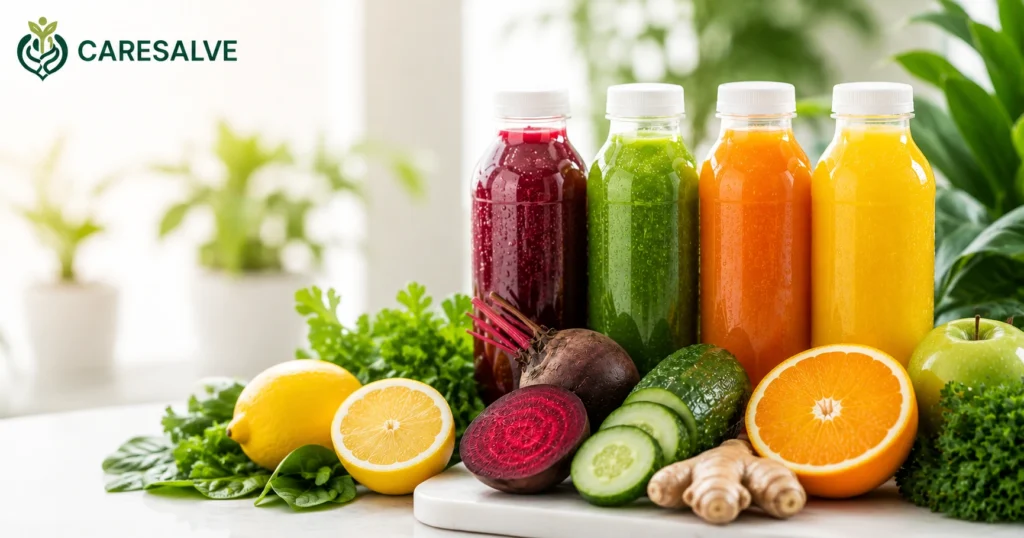

If you have spent any time browsing wellness trends, you have probably come across the term juice cleanse. At CareSalve, people often ask us whether a juice cleanse diet is actually good for the body, whether it helps with weight loss, and what a juice cleanse really does once you start one. This guide from CareSalve walks through everything you need to know, from what a juice cleanse is to how to safely break one once it is finished.
What Is a Juice Cleanse?
A juice cleanse is a short period of time, usually a few days, during which a person replaces solid meals with fresh or bottled fruit and vegetable juice. The idea behind juice cleansing is that giving the digestive system a break from solid food, while still taking in vitamins and plant compounds through liquid, may support the body in some way.
People sometimes use the terms juice cleanse, juice fast, and liquid cleanse interchangeably, but there are small differences. A juice fast usually means consuming only juice and water for a set period. A liquid cleanse can be broader and may include smoothies, broths, or other liquids in addition to juice. A juice cleanse diet typically falls somewhere in between, focused specifically on cold pressed or blended fruit and vegetable juice.
Most juice cleanses last anywhere from one day to about a week, though some programs promote longer versions.
How Does a Juice Cleanse Work?
So how do juice cleanses work, exactly? When solid food is removed from the diet and replaced with juice, several things change at once. Calorie intake usually drops. Fiber intake drops significantly, since juicing removes most of the pulp that contains fiber. Protein and fat intake also drop, since most cleanse juices are made almost entirely from fruits and vegetables.
In the first day or two of a juice cleanse, many people notice hunger, low energy, and a strong desire for solid food. This is a normal response to a sudden drop in calories and fiber. A juice diet plan is very different from a typical balanced diet, since it removes entire food groups rather than adjusting portions.
Do Juice Cleanses Detox the Body?
Juice cleanse detox claims are everywhere, but it helps to understand what detoxification actually means in the body. The liver and kidneys are the organs responsible for filtering waste products and breaking down substances so they can be removed through urine, stool, and sweat. These organs work continuously, whether or not a person is drinking juice.
There is limited scientific evidence that a juice cleanse or detox juice speeds up this natural process or removes toxins any faster than the body already does on its own. Drinking detox juices may increase fluid and antioxidant intake, which is not harmful, but the idea that juice fasting flushes out toxins is not well supported by research. In most cases, a healthy liver and healthy kidneys are already doing this job effectively.
Potential Benefits of a Juice Cleanse
While the detox claims are often overstated, there are some potential benefits of juice fasting worth mentioning.
A juice cleanse can temporarily increase fruit and vegetable intake, which many people do not get enough of. It can also improve hydration, since juice is largely water. Because calorie intake usually drops during a short cleanse, some people notice short term weight changes. For some, the structure of a cleanse can increase awareness of eating habits and act as a reset before returning to more balanced meals.
That said, these benefits of juice cleanse diets are generally short lived, and they come with real limitations, which we will cover next.
Juice Cleanse Pros and Cons
Potential Pros of a Juice Cleanse
- Increased fruit and vegetable intake for a few days
- Improved hydration from high liquid volume
- A possible mental reset around eating habits
- Simplicity, since there is no meal planning involved
Potential Cons of a Juice Cleanse
- Very low fiber, since juicing removes the pulp
- Low protein, which can affect energy and muscle maintenance
- Higher sugar content than many people expect, especially with fruit heavy juices
- Hunger and fatigue, particularly in the first day or two
- Nutritional gaps in fat, protein, and certain minerals
- Difficulty maintaining the approach for more than a few days
Weighing the pros and cons of a juice cleanse is important before starting one, since the drawbacks are often underestimated.
Juice Cleanse Side Effects and Risks
Juice cleanse side effects are common, especially for people trying a cleanse for the first time. These can include headaches, fatigue, dizziness, hunger, and irritability. Blood sugar can rise and fall more sharply than usual, since juice contains natural sugar without the fiber that normally slows its absorption.
Digestive changes are also common during a juice fast, and nutritional deficiencies can develop if a cleanse is extended beyond a few days. Anyone who experiences severe dizziness, fainting, chest pain, confusion, or an inability to keep fluids down should stop the cleanse and seek medical attention.
Juice Cleanses and Gut Health
Fiber plays a major role in digestive health, feeding the beneficial bacteria in the gut and helping keep bowel movements regular. Because juicing removes most of the fiber found in whole fruits and vegetables, a juice cleanse can change how often, and how easily, a person has a bowel movement. Some people notice looser stools during a cleanse, while others notice the opposite. Long term, a lack of fiber may affect the balance of gut bacteria, which is one reason whole fruits and vegetables are generally considered more nutritionally complete than their juiced versions.
Juice Cleanses and Kidney Health
The kidneys are responsible for filtering waste from the blood and maintaining the body’s balance of fluids and electrolytes. A short juice cleanse is unlikely to cause problems for most healthy adults, but prolonged or repeated juice fasting can be a concern, particularly for anyone with an existing kidney condition. Certain vegetable juices, such as those made with large amounts of leafy greens or beets, are also high in oxalates, which may be relevant for people prone to kidney stones. Anyone with kidney disease or a history of kidney stones should speak with a healthcare professional before attempting a juice cleanse.
Can a Juice Cleanse Help You Lose Weight?
Juicing for weight loss is one of the most common reasons people try a cleanse. Weight often does drop during a juice cleanse diet, but much of this is water weight and a reduction in stored carbohydrates, not fat loss. Because a juice cleanse significantly restricts calories, some fat loss can occur over a very short period, but this is not the same as sustainable, long term weight management.
Once normal eating resumes, weight often returns, particularly if the cleanse was not paired with any lasting changes to diet or activity. It is worth noting that very long versions of this approach, such as a 30 day juice fast, a 10 day juice diet, or a two week juice fast, carry a much higher risk of nutrient deficiency and are generally not recommended without medical supervision.
How to Do a Juice Cleanse
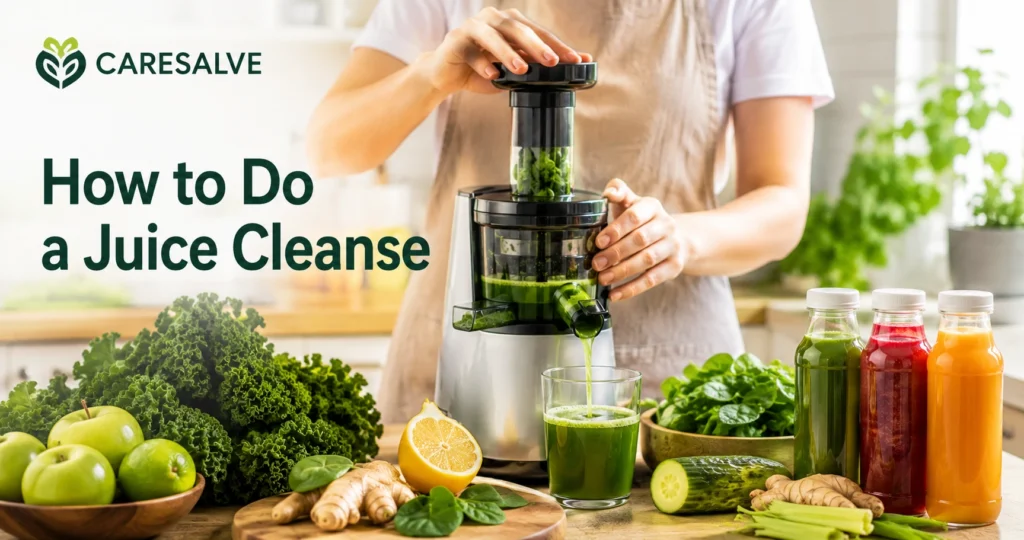
If you are wondering how to do a juice cleanse safely, a few basics can help.
Start by preparing in the day or two beforehand, gradually cutting back on caffeine, alcohol, and heavily processed foods. Choose juices that combine vegetables with lower sugar fruits rather than relying only on fruit juice. Stay well hydrated with plain water in addition to juice. Keep the cleanse short, generally no more than a day or two, unless a healthcare provider has advised otherwise. Pay attention to warning signs such as severe fatigue, dizziness, or a rapid heartbeat.
Prolonged juice only diets are generally not appropriate for most people, and anyone with diabetes, a history of disordered eating, kidney issues, or another chronic health condition should talk to a healthcare professional before starting.
What Juices Are Commonly Used for a Juice Cleanse?
A typical juice cleanse rotates through a few different types of juice throughout the day, including:
- Green vegetable juices made from spinach, kale, or cucumber
- Fruit and vegetable blends that balance sweetness with lower sugar vegetables
- Citrus based juices such as orange or grapefruit
- Carrot and beet juices, which tend to be naturally sweet
Because fruit heavy juices can be high in sugar, choosing a more balanced mix, with a greater proportion of vegetables to fruit, is generally a smarter approach if you are set on trying a cleanse.
One Day Juice Cleanse: What to Expect
A one day juice cleanse is one of the most common and lowest risk versions of this approach. It typically involves five to six juices spread throughout the day, along with plenty of water.
Many people feel hungry by the afternoon and may notice lower energy than usual. Potential benefits include a short break from solid food and an increase in fruit and vegetable intake for the day, while the main drawbacks are hunger and a lack of protein and fat. Staying hydrated is important throughout. Eating a light, balanced meal the evening before and the morning after can make the transition smoother.
How to Break a Juice Cleanse
How a cleanse ends matters just as much as how it begins. Jumping straight into a large, heavy meal after a juice cleanse can cause digestive discomfort.
A better approach is to reintroduce solid food gradually, starting with something light and balanced, such as a small meal with vegetables and a lean protein source. Slowly add healthy fats and continue increasing fiber over the following day or two. Avoid the temptation to overeat, since appetite can be unpredictable right after a period of calorie restriction.
Are Juice Cleanses Good for You?
Whether juice cleanses are good for you really depends on how they are used. A short, one to two day cleanse is unlikely to cause harm for most healthy adults and may offer a temporary boost in fruit and vegetable intake. Prolonged or repeated use, on the other hand, carries real nutritional limitations and potential risks, particularly for people with underlying health conditions.
Whole foods generally provide a more complete nutritional package than juice alone, since they retain fiber, protein, and a wider range of nutrients. A juice cleanse can be a short term addition to a routine, but it is not a substitute for balanced, ongoing nutrition.
What to Do Instead of a Juice Cleanse
If the goal is better health rather than a quick fix, there are steps that tend to hold up better over time:
- Eat whole fruits and vegetables rather than relying only on juice
- Increase fiber intake through whole grains, legumes, and produce
- Drink enough water throughout the day
- Choose balanced meals that include protein, healthy fats, and carbohydrates
- Include adequate protein at each meal
- Limit highly processed foods
- Build sustainable eating habits that do not depend on restriction
At CareSalve, we generally encourage habits that can be maintained long term over short bursts of restriction, since consistency tends to matter more than any single cleanse or diet trend.
Frequently Asked Questions
1. What is a juice cleanse?
A juice cleanse is a short term diet where solid food is replaced with fruit and vegetable juice, usually for one to several days.
2. Do juice cleanses actually work?
They can lead to short term weight loss and increased fruit and vegetable intake, but there is little evidence they detoxify the body, and any weight lost is often regained.
3. What are the benefits of a juice cleanse?
Potential benefits include better hydration, increased produce intake, and a short term calorie reduction, though these effects are generally temporary.
4. What are the side effects of a juice cleanse?
Common side effects include headaches, fatigue, dizziness, hunger, irritability, and changes in digestion.
5. Can a juice cleanse help with weight loss?
It can lead to short term weight loss, largely from water and reduced calorie intake, but this is usually not sustainable once normal eating resumes.
Key Takeaways
A juice cleanse is a short term approach that replaces solid food with fruit and vegetable juice. While it may offer temporary benefits such as increased hydration and produce intake, there is little evidence that it detoxifies the body beyond what the liver and kidneys already do naturally. Side effects like fatigue, hunger, and headaches are common, and prolonged juice only diets carry added risk, especially for people with existing health conditions. For most people, balanced meals, adequate fiber, and consistent healthy habits offer more lasting benefits than any short term cleanse.
This article is for general information only and is not a substitute for personalized medical advice. Anyone with a health condition, or anyone considering a juice cleanse longer than a day or two, should speak with a healthcare professional first.
Brought to you by CareSalve, your resource for practical, evidence informed wellness guidance.
References
- Katherine Zeratsky, Mayo Clinic — Juicing: What Are the Health Benefits?
- Medical News Today — Juice Cleanse: Benefits, Risks, and Effects
- Amanda Beaver, Houston Methodist — Are Juice Cleanses Actually Good for You?
- Dr. Melinda Ring, Northwestern Medicine — Is a Juice Cleanse Good for You?
- Helena Barham, Patient.info — Are Juice Cleanses Good for You?
