
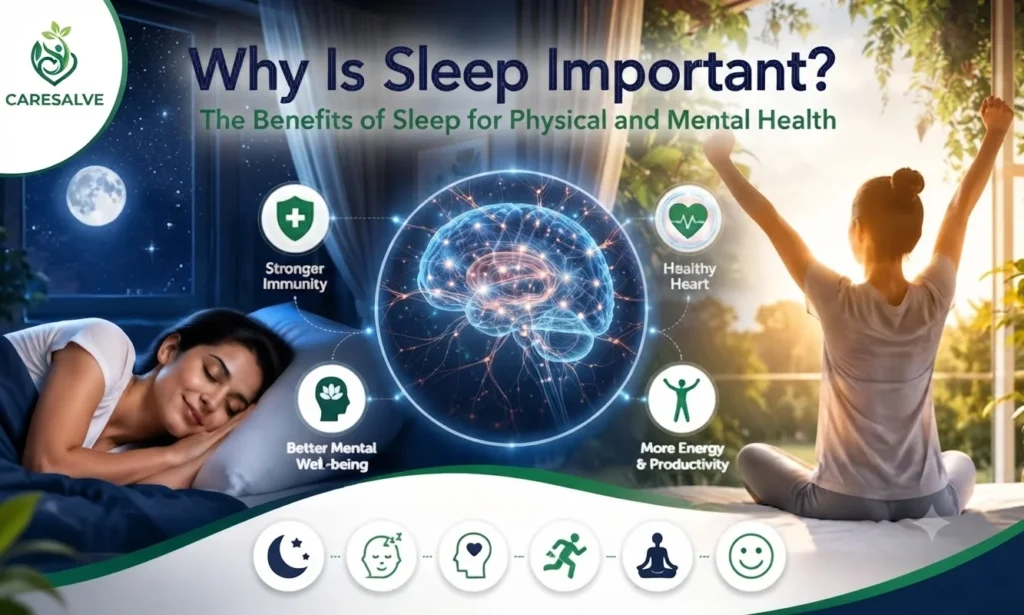

Sleep is one of the most powerful and most overlooked pillars of good health. We spend roughly a third of our lives asleep, yet millions of people still treat sleep as optional, cutting it short to squeeze more into the day. The truth is, the importance of sleep cannot be overstated. From protecting your heart to sharpening your memory and stabilising your mood, the benefits of sleep touch every system in your body. This comprehensive guide explains exactly why sleep matters, what happens when you don’t get enough, and how to start sleeping better tonight.
What Is Sleep and Why Do We Need Sleep?
Sleep is a natural, reversible state of reduced consciousness and physical activity that the body enters in regular cycles. Far from being passive “downtime,” sleep is an intensely active period during which your brain and body carry out critical repair, consolidation, and regulatory work that simply cannot happen while you are awake.
Why we need sleep comes down to survival-level biology. Every living creature with a nervous system sleeps in some form. Humans deprived of sleep entirely would die within weeks faster than they would die from starvation. Sleep is not a luxury; it is a biological necessity as fundamental as food, water, and air.
What Happens to Your Brain During Sleep?
During sleep, the brain runs a kind of overnight maintenance programme. Cerebrospinal fluid flushes through the brain along a system called the glymphatic pathway, washing out metabolic waste products including beta-amyloid, a protein associated with Alzheimer’s disease. Simultaneously, the brain consolidates memories, strengthens neural connections formed during the day, and prunes away unnecessary synapses to keep thinking sharp.
Sleep and mental health are deeply intertwined at the neurological level. During sleep, the brain processes emotional experiences, regulates stress hormones, and resets the prefrontal cortex the rational, decision-making region that keeps anxiety and impulsivity in check. A single night of poor sleep visibly reduces activity in the prefrontal cortex and amplifies the emotional reactivity of the amygdala by up to 60%, according to research from the University of California, Berkeley.
Understanding REM and Non-REM Sleep
Sleep is not one uniform state. Every night, your body cycles through distinct sleep stages, each with a different function:
Non-REM Sleep consists of three stages:
- Stage 1 (N1): Light sleep lasting just a few minutes. Your muscles relax, your heartbeat slows, and you can be woken easily.
- Stage 2 (N2): True sleep. Body temperature drops, eye movements stop, and sleep spindles bursts of neural activity help consolidate memories. You spend roughly 50% of the night here.
- Stage 3 (N3 / Slow-Wave Sleep): Deep, restorative sleep. This is when growth hormone is released, tissues are repaired, and the immune system is fortified. It is the hardest stage to wake from and the most physically restorative.
REM Sleep (Rapid Eye Movement): Occurring first about 90 minutes after falling asleep and recurring in longer stretches throughout the night, REM sleep is when most vivid dreaming happens. The brain is highly active during REM, processing emotional memories, fostering creativity, and solidifying complex learning. REM periods grow longer in the second half of the night, one reason cutting sleep short disproportionately reduces REM time.
Healthy sleep patterns cycle through all stages approximately four to six times per night. Disrupting any stage undermines the unique benefits it provides.
Why Is Sleep Important for Physical Health?
The connection between sleep and physical health is extensive. During sleep, virtually every organ in the body undergoes repair and regulation. Skimping on sleep does not merely leave you feeling tired; it creates measurable physiological harm over time.
How Sleep Supports Heart Health
Sleep health is intimately connected to cardiovascular health. During deep sleep, blood pressure naturally dips by 10–20% a process cardiologists call nocturnal dipping. This nightly drop gives the heart and blood vessels a crucial period of reduced stress.
People who consistently sleep fewer than six hours per night have a significantly elevated risk of hypertension, heart attack, and stroke compared to those sleeping seven to nine hours. A major 2019 study published in the European Heart Journal tracking half a million people across eight countries found that poor sleepers had a 48% higher risk of developing or dying from coronary heart disease. Prioritising sleep is, quite literally, good for your heart.
Sleep and Immune System Function
One of the most direct health benefits of sleep is a stronger immune system. During slow-wave sleep, the body releases cytokines proteins that coordinate the immune response against infection, inflammation, and stress. T-cells, which identify and destroy infected or cancerous cells, also increase their activity during sleep.
Research from the University of California, San Francisco, found that people who slept fewer than six hours per night were four times more likely to catch a cold when exposed to a rhinovirus compared to those sleeping seven or more hours. The benefits of good sleep for immunity are so significant that sleep quality is now considered a predictor of vaccine effectiveness. Better sleepers generate stronger antibody responses after vaccination.
How Sleep Helps the Body Recover
What does sleep do for the body in terms of physical recovery? A great deal. The pituitary gland releases the majority of its daily growth hormone output during Stage 3 (deep) sleep. Growth hormone is essential for:
- Repairing micro-tears in muscle fibres caused by exercise
- Rebuilding connective tissue, tendons, and ligaments
- Synthesising proteins and replenishing energy stores
- Cell turnover and wound healing throughout the body
This is why athletes who prioritise sleep recover faster, sustain fewer injuries, and perform at higher levels. Sleep recovery is not a passive process, it is your body’s most powerful repair mechanism.
Sleep and Energy Levels
How does sleep affect your energy level? More directly than any cup of coffee. During sleep, the body restores glycogen stores in the liver and muscles, the primary fuel source for both physical activity and brain function. The brain also clears accumulated adenosine, a chemical that builds up during waking hours and creates the sensation of feeling tired.
Insufficient sleep leaves adenosine levels partially elevated and glycogen stores partially depleted, producing the familiar groggy, low-energy feeling that persists even after caffeine. The benefits of getting enough sleep include waking with genuine energy, maintaining stamina throughout the day, and avoiding the afternoon energy crashes that plague chronic under-sleepers.
Why Is Sleep Important for Mental Health?
The importance of sleep for mental health is profound. Sleep and mental health have a bidirectional relationship: poor sleep worsens mental health conditions, and mental health conditions disrupt sleep creating cycles that can be difficult to break without addressing both simultaneously.
How Does Sleep Improve Mental Health?
How does sleep improve mental health? Through several overlapping mechanisms:
- Emotional memory processing: REM sleep helps the brain reprocess emotionally charged experiences, separating the emotional charge from the memory itself. This is essentially overnight therapy, the reason distressing events often feel less raw after a good night’s sleep.
- Stress hormone regulation: Sleep normalises cortisol rhythms, ensuring that stress hormones are lowest in the morning (when you need calm clarity) and that the body can respond proportionately to daytime stressors.
- Prefrontal cortex restoration: The rational, calming influence of the prefrontal cortex is restored by sleep, reducing reactive, impulsive, or catastrophic thinking.
- Neuroplasticity: Sleep promotes the formation of new neural connections, supporting adaptability and psychological resilience.
How can sleep improve your mental health in practical terms? People who consistently sleep well report better emotional regulation, stronger relationships, greater optimism, and higher overall life satisfaction.
Sleep and Anxiety
The impact of sleep on mental health is especially clear when it comes to anxiety. Sleep loss activates the brain’s threat-detection systems, making anxious thoughts more intrusive and harder to dismiss. Anticipatory anxiety worrying about things that haven’t happened yet is significantly amplified by sleep deprivation.
Poor sleep quality is both a symptom and a cause of anxiety disorders. People with generalised anxiety disorder, social anxiety, and PTSD almost universally experience disrupted sleep, and that disruption in turn intensifies anxiety symptoms the following day. Improving sleep is often one of the most effective early interventions in anxiety treatment, sometimes producing faster symptom relief than medication alone in the short term.
Sleep and Depression
The lack of sleep effects on mental health are perhaps most severe in the context of depression. Studies consistently show that insomnia significantly increases the risk of developing depression. People with chronic insomnia are up to ten times more likely to develop clinical depression than normal sleepers.
Sleep deprivation and mental health interact through disruptions to serotonin and dopamine the neurotransmitters most directly implicated in mood regulation. Chronic sleep deprivation reduces the brain’s sensitivity to these chemicals, producing the hallmarks of depression: persistent low mood, loss of motivation and pleasure, and negative cognitive biases.
The relationship also runs in reverse: depression disrupts sleep architecture, reducing slow-wave sleep and increasing early-morning waking. Addressing sleep as part of depression treatment through cognitive behavioural therapy for insomnia (CBT-I), sleep hygiene improvements, or appropriate medication leads to substantially better outcomes.
Emotional Well-Being and Sleep
Beyond clinical disorders, sleep and wellbeing are connected across the full spectrum of daily emotional life. Well-rested people experience:
- Greater positive affect (more moments of joy, gratitude, and enthusiasm)
- Lower irritability and reduced emotional reactivity
- Stronger empathy and social connection
- Greater tolerance for frustration and uncertainty
- Better impulse control
Sleep wellness is increasingly recognised by psychologists and wellness researchers as the single most impactful lifestyle intervention for sustained emotional wellbeing ahead of exercise, diet, and mindfulness in several large-scale studies.
Top Benefits of Getting Enough Sleep
The benefits of sleeping well extend far beyond simply not feeling tired. Here is a summary of the most significant advantages that consistent, quality sleep delivers.
Better Memory and Focus
Sleep plays a direct role in memory formation and retrieval making it one of the most important psychological benefits of sleep for students, professionals, and anyone who needs to learn and retain information.
During sleep, the hippocampus (the brain’s short-term memory hub) transfers newly learned information to the neocortex for long-term storage. This process, called memory consolidation, applies to declarative memory (facts and concepts), procedural memory (skills and habits), and emotional memory alike.
The mental benefits of sleep for focus are equally significant. Sleep restores activity in the prefrontal cortex and anterior cingulate cortex regions responsible for attention, working memory, and filtering out distractions. A well-slept brain can maintain sustained focus for significantly longer than a sleep-deprived one, with markedly fewer errors.
Improved Productivity and Performance
Sleep effects on productivity are well-documented in occupational research. Sleep-deprived workers make more errors, take longer to complete tasks, struggle with creative problem-solving, and are more prone to poor decision-making. In high-stakes fields medicine, aviation, law enforcement, financial trading the consequences can be severe.
Studies show that employees who get adequate sleep are approximately 21% more productive than their sleep-deprived counterparts. Sleep’s importance for performance is acknowledged by elite sports organisations, military units, and major corporations that have introduced sleep optimisation programmes for their people.
Better Mood and Reduced Stress
The sleep benefits for mental health include meaningful mood improvements that affect daily quality of life. Even partial improvements in sleep an extra hour per night for chronic under-sleepers produce measurable increases in positive mood within days.
Sleep reduces baseline cortisol levels, making it easier to approach the day’s challenges with equanimity rather than reactive stress. It also supports the production and regulation of serotonin, the neurotransmitter most associated with contentment and emotional stability. Mental health benefits of sleep compound over time: people who sleep well consistently report lower perceived stress, greater life satisfaction, and a more positive outlook on the future.
Healthy Weight Management
The sleep effects on health include a surprising influence on body weight and appetite regulation. Sleep governs the balance between two key appetite hormones:
- Leptin (the satiety hormone): Levels drop significantly with sleep deprivation, reducing the signal that you’ve had enough to eat.
- Ghrelin (the hunger hormone): Levels rise with sleep deprivation, increasing appetite particularly cravings for high-calorie, high-carbohydrate foods.
The impact of sleep on health extends to metabolism: insufficient sleep impairs insulin sensitivity and glucose metabolism, increasing the risk of type 2 diabetes. People who sleep fewer than six hours per night are significantly more likely to be overweight or obese than those sleeping seven to nine hours, independent of other lifestyle factors.
What Happens When You Don’t Get Enough Sleep?
Understanding the consequences of insufficient sleep reinforces just how critical adequate sleep is to every dimension of health and function.
Common Signs of Sleep Deprivation
Why is getting enough sleep important? Because without it, the signs of impairment appear quickly and broadly. Common indicators that you are not getting enough sleep include:
- Difficulty waking up in the morning, even after a full night in bed
- Needing an alarm clock every morning (well-slept people often wake naturally)
- Feeling drowsy or low-energy during the day
- Relying on caffeine to function
- Difficulty concentrating or making decisions
- Increased irritability, emotional reactivity, or mood swings
- Frequent minor illness (colds, infections)
- Falling asleep within minutes of lying down
Cognitive and Memory Problems
Sleep deprivation and mental health produce well-documented cognitive effects. Even 17–19 hours without sleep produces impairment equivalent to a blood alcohol level of 0.05% at or above the legal driving limit in many countries. After 24 hours awake, impairment equals 0.10% blood alcohol.
The effects of sleep deprivation on cognition include reduced working memory capacity, slowed reaction time, impaired logical reasoning, reduced creativity, and a reduced ability to notice one’s own errors, the last of which is particularly dangerous because sleep-deprived people consistently overestimate their own competence and alertness.
Increased Risk of Health Conditions
How can sleep affect your health over the long term? The research is alarming. Chronic sleep deprivation (consistently fewer than 6–7 hours per night) is independently associated with increased risk of:
- Cardiovascular disease and hypertension
- Type 2 diabetes and metabolic syndrome
- Obesity
- Certain cancers (particularly colon and breast cancer)
- Alzheimer’s disease and other dementias
- Immune dysfunction and increased susceptibility to infection
- Depression and anxiety disorders
- All-cause mortality
The effects of sleep on health are dose-dependent: the less and poorer you sleep over years, the greater the cumulative health risk.
Daytime Fatigue and Low Energy
The most immediately noticeable impact of sleep deprivation is fatigue and reduced energy. Chronic fatigue impairs not just physical energy but cognitive energy the mental stamina required to sustain focus, maintain willpower, and resist unhealthy impulses. People who are chronically fatigued are more likely to skip exercise, choose convenience foods over nutritious ones, and engage in other behaviours that compound health problems over time.
Common Causes of Poor Sleep Quality
Understanding what affects sleep is the first step toward addressing it.
Stress and Anxiety
Psychological stress is the number one cause of acute insomnia worldwide. When the nervous system is in a state of alert elevated cortisol, activated amygdala, racing thoughts it is physiologically very difficult to transition into the parasympathetic “rest and digest” state needed for sleep. Unresolved stress creates a feedback loop where poor sleep worsens stress, which further disrupts sleep.
Screen Time Before Bed
Screens emit blue light short-wavelength light that directly suppresses melatonin production in the pineal gland. Melatonin is the hormone that signals the body that it is dark outside and time to sleep. Using phones, tablets, and laptops in the hour before bed delays melatonin release by up to 1.5 hours, pushing back the natural sleep window and reducing total sleep time.
Poor Sleeping Habits
Sleeping habits have an enormous influence on sleep quality. Common bad sleeping habits include:
- Irregular sleep and wake times (confuses the circadian clock)
- Napping too late in the day or for too long (reduces sleep pressure at night)
- Using the bed for work, scrolling, or watching TV (breaks the mental association between bed and sleep)
- Exercising intensely within two hours of bedtime
- Consuming alcohol before bed (disrupts REM sleep even if it aids initial sleep onset)
What are sleeping habits? In the context of sleep science, sleep habits (or sleep hygiene) refers to the collection of behaviours, routines, and environmental conditions that influence the quality and quantity of sleep.
Diet, Caffeine, and Lifestyle Factors
Caffeine has a half-life of approximately 5–7 hours, meaning that a coffee consumed at 3 pm still has half its caffeine load in your system at 8–10 pm. Large meals close to bedtime raise core body temperature and divert blood flow to digestion, both of which inhibit sleep onset. Alcohol, while sedating initially, fragments sleep architecture in the second half of the night, suppressing REM sleep and causing more fragmented, unrefreshing sleep overall.
Healthy Sleep Habits for Better Sleep
Building healthy sleep patterns is one of the most impactful investments you can make in your health. Here is how to begin.
Create a Consistent Sleep Schedule
The single most powerful change most people can make is going to bed and waking up at the same time every day including weekends. This anchors your circadian rhythm, which is an internal biological clock running on approximately a 24-hour cycle. A consistent schedule means your body begins preparing for sleep at the right time (releasing melatonin, lowering core temperature) and waking at the right time (releasing cortisol to promote alertness). The importance of rest and sleep regularity cannot be overstated even slight shifts in timing (social jet lag) measurably impair performance and mood.
Build a Relaxing Bedtime Routine
A wind-down routine signals to the nervous system that sleep is approaching and initiates the shift from sympathetic (alert) to parasympathetic (restful) activity. Effective wind-down activities include:
- Reading a physical book or e-reader without backlight
- Light stretching or yoga
- A warm bath or shower (the subsequent drop in core temperature promotes sleepiness)
- Journaling or writing a brief to-do list for tomorrow (reduces cognitive arousal)
- Breathing exercises or meditation
Aim for a 30–60 minute routine. Consistency matters more than perfection.
Optimize Your Sleep Environment
Proper sleep requires an environment that supports it. Key factors:
- Temperature: The ideal bedroom temperature for sleep is 16–20°C (60–68°F). The body needs to drop its core temperature slightly to initiate and maintain sleep.
- Darkness: Complete darkness maximises melatonin production. Use blackout curtains or a sleep mask.
- Noise: Sustained loud noise disrupts sleep. Use earplugs, a white noise machine, or a fan if you cannot eliminate ambient noise.
- Association: Reserve the bed for sleep and sex only. This strengthens the mental cue that bed equals sleep.
Limit Blue Light Exposure
Avoid screens for at least 45–60 minutes before your target bedtime. If screen use is unavoidable, use blue-light-blocking glasses or enable “night mode” settings on devices. Keep bedrooms free of televisions and avoid checking your phone if you wake during the night, as even brief bright light exposure can reset your circadian clock and make returning to sleep more difficult.
How Much Sleep Do You Need?
How much of our lives do we spend sleeping? Roughly a third and that is by biological design.
Recommended Sleep Duration by Age
The National Sleep Foundation and American Academy of Sleep Medicine recommend the following sleep durations:
| Age Group | Recommended Sleep |
| Newborns (0–3 months) | 14–17 hours |
| Infants (4–11 months) | 12–15 hours |
| Toddlers (1–2 years) | 11–14 hours |
| Preschoolers (3–5 years) | 10–13 hours |
| School-age (6–13 years) | 9–11 hours |
| Teenagers (14–17 years) | 8–10 hours |
| Young Adults (18–25 years) | 7–9 hours |
| Adults (26–64 years) | 7–9 hours |
| Older Adults (65+) | 7–8 hours |
These are population-level recommendations. Some individuals function optimally at the lower end of the range; others require the upper end. Genetics play a role; a small percentage of the population carries a gene variant (DEC2) that allows them to function well for 6 hours, but true “short sleepers” are genuinely rare (under 3% of the population). Most people who believe they function fine for 5–6 hours are adapted to their impairment rather than unaffected by it.
Signs You’re Not Getting Enough Sleep
If you are not getting enough sleep, your body will tell you. Key signs include:
- You need an alarm to wake up most mornings
- You feel significantly better after sleeping on weekends (social jet lag indicates a weekly sleep debt)
- You fall asleep within 5 minutes of lying down (normal is 10–20 minutes; less than 5 minutes signals significant sleep deprivation)
- You feel sleepy or unfocused between 1pm and 3pm daily
- You need caffeine to function normally
- Your mood, patience, or motivation is noticeably worse than your best self
Frequently Asked Questions
1. Why Is Sleep So Important?
Sleep is important because it is the body’s primary recovery and maintenance period. During sleep, the brain clears metabolic waste, consolidates memories, regulates hormones, restores emotional balance, and carries out cellular repair throughout the body. Without adequate sleep, virtually every system cardiovascular, immune, hormonal, neurological, and psychological begins to deteriorate. Sleep is not optional rest; it is essential biology.
2. Is Sleep Good for You?
Absolutely. Sleep is one of the most powerful health-promoting behaviours available to humans. The research is unambiguous: people who consistently sleep 7–9 hours per night live longer, have lower rates of chronic disease, maintain healthier body weights, have stronger immune systems, perform better cognitively, and report higher overall wellbeing compared to those who sleep less.
3. Why Is Sleep Good for Mental Health?
Sleep allows the brain to process emotional experiences, regulate stress hormones, restore the prefrontal cortex’s moderating influence on emotional reactions, and support the neurochemical systems underlying mood. Without adequate sleep, the brain becomes emotionally reactive, negatively biased, and less capable of coping with stress creating or worsening anxiety, depression, and mood disorders.
4. Does When You Sleep Matter?
Yes, timing matters as well as duration. The body’s circadian rhythm creates a biological preference for sleeping during darkness and being active during daylight. Sleeping at night aligns with this rhythm; sleeping during the day (as shift workers must) is associated with worse health outcomes even when total sleep duration is equivalent, because it disrupts hormonal and metabolic rhythms tied to the light-dark cycle. For most people, sleeping roughly between 10pm and 7am best aligns with circadian biology.
5. Do You Need Sleep to Live?
Yes. Sleep is physiologically necessary for survival. Total sleep deprivation in animal studies causes death within two to three weeks. In humans, extreme sleep deprivation causes hallucinations, cognitive collapse, immune failure, and eventually multi-organ dysfunction. Fatal familial insomnia, a rare prion disease that destroys the brain’s ability to initiate sleep, is uniformly fatal, typically within 12–18 months of onset, illustrating that humans cannot survive without sleep.
6. Can You Recover From Sleep Debt?
Research suggests that some recovery from short-term sleep debt is possible with extended recovery sleep over several nights. However, the picture is more complicated for chronic sleep debt accumulated over weeks, months, or years. While subjective sleepiness and some cognitive functions do partially recover with sleep extension, some studies suggest that certain forms of cognitive damage from chronic deprivation, particularly impairments in emotional regulation and complex reasoning do not fully recover, even after extended catch-up sleep. The best strategy is prevention: protect consistent, adequate sleep rather than relying on recovery.
Conclusion:
The importance of sleep is beyond question. Sleep is the foundation upon which physical health, mental clarity, emotional balance, and long-term wellbeing are built. When you prioritise sleep, you are not sacrificing productivity, you are investing in the mental sharpness, physical health, emotional resilience, and sustained energy that make everything else in life more achievable.
The importance of sleep and rest is now backed by decades of research across every branch of medicine, neuroscience, and psychology. The message from the science is consistent and clear: adults need 7–9 hours of quality sleep per night, and most people who are getting less are paying a health price they may not yet fully recognise.
Sleep and wellbeing are inseparable. Eating well and exercising while chronically under-sleeping is like filling a car with premium fuel but never changing the oil. The other good habits cannot compensate for the foundational damage. Prioritising sleep is one of the most immediate, effective, and scientifically supported steps any person can take toward a longer, healthier, and more fulfilling life.
Why sleep is important is no longer a matter of debate it is one of the most settled questions in health science. The only question that remains is whether you will act on that knowledge.
