

Medically reviewed content. This article is for general information only and does not replace personal medical advice. Read our full Editorial Policy to learn how we fact check content.
If you are in the two week wait and you notice a strange twinge low in your belly, it is natural to wonder whether it means something. This guide from CareSalve walks through what implantation cramps are, when they tend to happen, where people usually feel them, and how they compare with ovulation pain and period cramps, so you can make sense of what your body is telling you.
What Are Implantation Cramps?
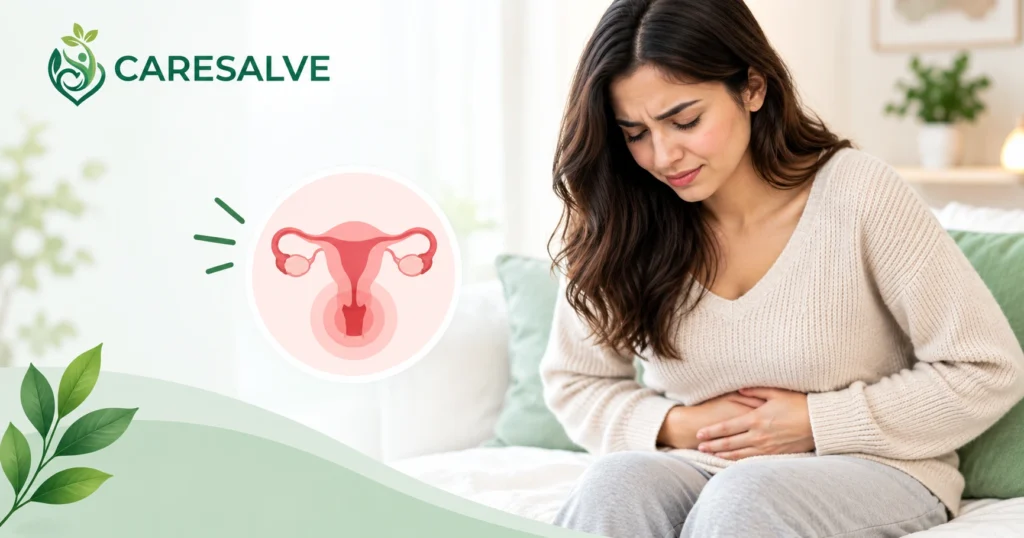
Implantation cramping refers to the mild pulling or twinging sensation some people notice around the time a fertilized egg attaches to the lining of the uterus. Not everyone experiences it, and its absence does not mean implantation has not occurred. Experts note that the fertilized egg is extremely small when it implants, smaller than a millimeter across, so much of what people describe as implantation pain may actually relate to hormonal shifts and early changes in the uterus rather than the implantation event itself.
Cramping in implantation is generally described as mild and short lived rather than intense, which is one of the clues used to tell it apart from a typical period.
When Does Implantation Cramping Happen?
Cramps during implantation are usually tied to the process of fertilization and the days that follow ovulation. According to the National Institute of Child Health and Human Development, part of the National Institutes of Health, implantation of the fertilized egg typically occurs about 6 to 12 days after ovulation, and roughly one in four pregnant people notice some light bleeding around this window.
Because this timing overlaps with when a period would normally begin, implantation cramps can easily be mistaken for the earliest signs of a menstrual cycle starting.
How Long Do Implantation Cramps Last?
When cramping is directly tied to implantation, it tends to be brief, often resolving within a day or two. General cramping in the early weeks of pregnancy, driven by rising progesterone and a growing uterus, can continue on and off for several weeks, which is why duration alone is not a reliable way to diagnose the cause.
What Does Implantation Cramping Feel Like?
People commonly describe implantation pain as a dull ache, a light pulling sensation, a series of small twinges, or a brief fluttering feeling low in the abdomen. It is typically milder than period pain and does not usually build in intensity the way menstrual cramps can.
It is worth being clear that these sensations, on their own, cannot confirm a pregnancy. Many early pregnancy symptoms overlap heavily with premenstrual symptoms, so a pregnancy test remains the only reliable way to know for sure.
Where Do You Feel Implantation Cramps?
Most people who notice implantation cramping location describe it as centered in the lower abdomen or pelvis, sometimes extending toward the lower back. Because the uterus is a midline organ, the sensation is often felt centrally, though some describe it as slightly more noticeable on one side.
Can Implantation Pain Occur on the Right Side?
Yes, some people report implantation pain on right side of the lower abdomen rather than centrally, and this alone is not usually a cause for concern. That said, pain that is sharp, severe, or strictly confined to one side deserves attention. According to the American College of Obstetricians and Gynecologists, persistent one sided pelvic pain, especially alongside abnormal bleeding, can be an early sign of an ectopic pregnancy, in which a fertilized egg implants outside the uterus. You can read more from ACOG on this condition. If pain like this is severe or worsening, seek prompt medical care rather than waiting it out.
Can Implantation Cause Lower Back Pain?
Lower back pain implantation reports are common, and mild lower back discomfort can appear in very early pregnancy as ligaments begin to loosen and the uterus starts to change shape. Lower back pain also has plenty of other everyday causes, from posture to muscle strain to an approaching period, so it should be weighed alongside other symptoms rather than read as a sign on its own.
Implantation Cramps vs Period Cramps: What Is the Difference?
Implantation cramps vs period is one of the most searched comparisons for good reason, since the two can feel remarkably similar in the days before a missed period.
Differences in Timing
Possible implantation related cramping tends to appear about 6 to 12 days after ovulation, often a few days before a period would be due. Period cramps vs implantation timing is usually more predictable, arriving right before or during menstrual bleeding, in line with a person’s typical cycle length.
Differences in Pain and Intensity
Implantation cramping vs period cramping often comes down to intensity. Implantation related discomfort is generally mild, brief, and easy to overlook, while period cramps can range from mild to quite severe and often build over the first day or two of the period.
Differences in Bleeding and Other Symptoms
Light spotting is sometimes reported alongside implantation, but spotting alone does not confirm that implantation has taken place, since breakthrough spotting can happen for several unrelated reasons. A full menstrual period, in contrast, involves a heavier and longer flow that matches a person’s usual cycle.
| Feature | Possible Implantation Related Cramping | Period Cramps |
| Timing | About 6 to 12 days after ovulation | Just before or during menstruation |
| Intensity | Often described as mild | Can range from mild to severe |
| Duration | Brief, often a day or two | Often lasts several days |
| Other signs | May occur with other early pregnancy symptoms | Usually accompanies a full menstrual flow |
Implantation Cramps vs Ovulation Cramps
Ovulation cramps vs implantation cramps is another common point of confusion, particularly for people tracking their cycle closely while trying to conceive.
When Do Ovulation Cramps Happen?
Ovulation pain, sometimes called mittelschmerz, tends to occur around the middle of the cycle, close to the release of an egg from the ovary, roughly two weeks before the next expected period.
How Does Ovulation Cramping Feel Compared With Implantation Cramping?
Ovulation cramping vs implantation cramping differs mainly in timing and location. Ovulation pain is often felt on one side, corresponding to the ovary that released an egg that cycle, and tends to be a brief, sharp twinge. Implantation cramps vs ovulation cramps show up later in the cycle and are usually described as duller and more central.
Ovulation vs Implantation vs Period Cramps
| Symptom | Ovulation Cramps | Possible Implantation Cramping | Period Cramps |
| When it happens | Around mid cycle, at ovulation | About 6 to 12 days after ovulation | Just before or during menstruation |
| Location | Often one sided | Usually central, sometimes one sided | Often lower abdomen and pelvis |
| Pattern | Brief and sharp | Mild and intermittent | Can be persistent over days |
| What confirms the cause | Cycle timing and other ovulation signs | A pregnancy test and clinical evaluation when needed | Onset of a full menstrual flow |
What Other Symptoms Can Happen Around Implantation?
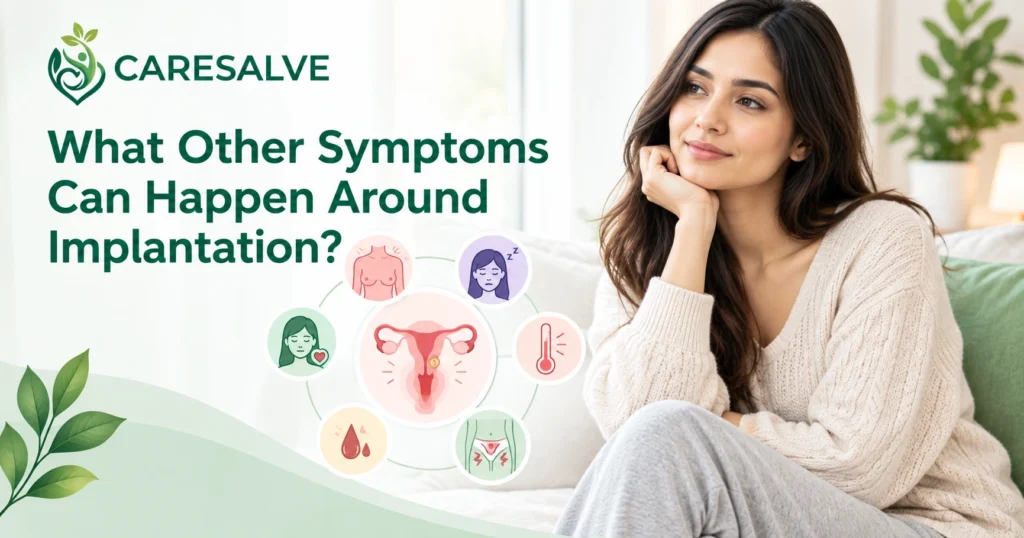
Implantation cramping is often just one of several subtle early changes people notice. Common ones include the following.
Light Spotting
Some people notice light pink or brown spotting around the time of implantation, though as noted above this is not conclusive on its own.
Breast Changes
Tenderness, fullness, or heightened sensitivity in the breasts can appear early, driven by rising hormone levels.
Fatigue
A noticeable drop in energy is common in the first weeks after conception as the body redirects resources to support early pregnancy.
Bloating
Hormonal changes can slow digestion, leading to a feeling of fullness or bloating similar to premenstrual bloating.
Nausea or Other Early Pregnancy Symptoms
Mild nausea, changes in appetite, and heightened smell sensitivity are frequently reported in the first several weeks. As with the other symptoms above, none of these confirm implantation or pregnancy on their own, and a home pregnancy test or clinical evaluation is needed for confirmation.
What Else Could Cause Cramping Besides Implantation?
Cramping in the lower abdomen has many possible explanations beyond implantation, which is part of why symptoms alone cannot be used to diagnose pregnancy.
PMS or Menstrual Cramps
Premenstrual cramping is extremely common and can feel similar to what people describe as implantation cramping, particularly in the days right before a period.
Ovulation Pain
As covered above, ovulation itself can cause a brief cramp roughly midway through the cycle.
Digestive Problems
Gas, constipation, or general digestive discomfort can cause cramping that is easy to mistake for something reproductive in origin.
Urinary or Pelvic Conditions
Urinary tract infections and other pelvic conditions can also cause lower abdominal discomfort. If cramping is paired with pain during urination, fever, or unusual discharge, it is worth checking in with a healthcare provider rather than assuming it is related to implantation.
When Should You Take a Pregnancy Test?
Home pregnancy tests detect human chorionic gonadotropin, a hormone that rises after a fertilized egg implants and the placenta begins to form. According to MedlinePlus, a service of the National Institutes of Health, hCG levels rise quickly in early pregnancy, roughly doubling every few days, which is why testing too soon after a missed period can sometimes produce a false negative result. Waiting until the first day of a missed period, or a few days after, generally gives a more reliable reading.
What If the Test Is Negative but Your Period Hasn’t Started?
If a test comes back negative but your period still has not arrived after several more days, it is reasonable to retest with a first morning urine sample, since hCG is typically most concentrated at that time. If your period continues to be delayed or you have ongoing symptoms, checking in with a healthcare professional can help rule out other causes of a delayed cycle.
When Should You Contact a Doctor About Cramping?
Most cramping in early pregnancy or in the lead up to a period is not an emergency, but certain symptoms warrant prompt medical attention. According to the Mayo Clinic, warning signs that should never be ignored include the following.
- Severe or worsening pelvic pain
- Heavy vaginal bleeding
- Fainting or persistent dizziness
- Sudden shoulder pain
- Severe pain confined to one side of the pelvis
- Any of the above during a confirmed or suspected pregnancy
These signs can point to conditions such as an ectopic pregnancy or early pregnancy loss, both of which need timely medical evaluation. Ordinary implantation cramping and PMS related cramping, by contrast, are usually mild and manageable at home.
Key Takeaways About Implantation Cramps
Implantation cramps are a mild, often brief sensation some people notice around 6 to 12 days after ovulation, generally centered low in the abdomen and sometimes felt toward the back or on one side. They can resemble ovulation pain or the earliest stage of a period, and symptoms alone cannot confirm pregnancy. A pregnancy test taken after a missed period, along with attention to warning signs like severe or one sided pain, heavy bleeding, or shoulder pain, is the safest way to understand what your body is experiencing.
FAQs About Implantation Cramps
1. Where Do You Feel Implantation Cramps?
Most people feel implantation cramps low in the abdomen, near the pelvis, and sometimes toward the lower back. Some describe the sensation as more noticeable on one side.
2. What Is the Difference Between Implantation and Period Cramps?
Implantation cramping tends to be milder, briefer, and occurs about 6 to 12 days after ovulation, while period cramps are usually more predictable in timing and can range from mild to severe, often lasting several days.
3. Can Implantation Pain Be on the Right Side?
Yes, mild cramping on the right side is common and usually not a concern. However, severe or persistent one sided pain should be evaluated by a healthcare provider to rule out other causes.
4. How Can You Tell Ovulation Cramps From Implantation Cramps?
Ovulation cramps typically occur around the middle of the cycle and are often sharp and one sided, while implantation cramping happens later, closer to the expected period, and tends to feel duller and more central.
5. Can You Have Implantation Cramps Without Being Pregnant?
Cramping that feels similar to implantation pain can occur for reasons unrelated to pregnancy, including ovulation, PMS, digestive issues, or minor pelvic conditions. Because cramping alone cannot confirm implantation, a pregnancy test remains the most reliable way to know for certain.
This article was medically fact checked using authoritative sources including the National Institutes of Health, the American College of Obstetricians and Gynecologists, and the Mayo Clinic. Read our full Editorial Policy for more on how CareSalve reviews and sources its health content.
