

Introduction
Sunflower seeds, sometimes called sunflower nuts or sun seeds, are one of the most popular plant based snacks in the world. They come from the sunflower plant and are enjoyed raw, roasted, shelled, or in the shell. People often ask what sunflower seeds are good for, whether sunflower seeds are healthy, and what nutrients from sunflower seeds actually do for the body. The short answer is that sunflower seeds are packed with protein, fiber, healthy fats, vitamin E, magnesium, iron, zinc, and selenium.
In this guide from CareSalve, you will find sunflower seeds nutrition facts, sunflower seed nutrition per serving, sunflower seeds health benefits, sunflower seeds benefits for men and women, sunflower seeds side effects, and answers to the most common questions people search for, including do sunflower seeds have protein, do sunflower seeds have fiber, and are sunflower seeds a nut.
What Are Sunflower Seeds?
Sunflower seeds come from the sunflower plant, scientifically called Helianthus annuus. Also known as sunflower nuts or sun flower seeds, they develop inside the large flower head and are harvested once the plant matures.
Where Do Sunflower Seeds Come From?
Sunflowers are native to North America but are grown worldwide today, including in Eastern Europe, Argentina, and China. The plant is grown both for edible sunflower seeds and for sunflower oil.
Sunflower Kernels vs Sunflower Seeds
A common question is what are sunflower kernels and how are they different from whole sunflower seeds. A sunflower seed usually refers to the whole seed including the outer shell, while a sunflower kernel is the soft edible part found inside once the husk is removed. So when people ask what is a sunflower kernel, the answer is simply the inner, shelled portion of the seed.
Are Sunflower Seeds Nuts or Seeds?
Many people wonder is sunflower seeds a nut, are sunflowers nuts, or is sunflower seeds nuts. Botanically, sunflower seeds are seeds, not nuts. True nuts grow inside a hard shell on trees, while sunflower seeds grow inside the flower head of an annual plant. They are also not a fruit and not a grain, even though they are often placed near nuts in the snack aisle.
Shelled vs Unshelled Sunflower Seeds
Shelled sunflower seeds, sometimes called sunflower seeds peeled or seedless sunflower seeds, have already had the husk removed and are ready to eat. Unshelled or in shell sunflower seeds still have the outer husk and need to be cracked open. Raw unsalted sunflower seeds in either form can be used the same way in recipes once the shell is gone.
Sunflower Seeds Nutrition Facts
Sunflower seeds are nutrient dense, which means a small serving delivers a strong amount of protein, fiber, healthy fats, vitamins, and minerals.
Sunflower Seeds Nutrition Facts Per 100g
| Nutrient | Amount per 100g (raw, unsalted) |
| Calories | About 584 kcal |
| Protein | About 21 g |
| Carbohydrates | About 20 g |
| Fiber | About 8.6 g |
| Fat | About 51 g |
| Magnesium | About 325 mg |
| Iron | About 5.2 mg |
| Zinc | About 5 mg |
| Vitamin E | About 35 mg |
| Selenium | About 53 mcg |
| Copper | About 1.8 mg |
| Folate | About 227 mcg |
These sunflower seeds nutrition facts can shift slightly depending on whether the product is raw, roasted, shelled, or in the shell, and whether salt has been added.
Sunflower Seeds Calories and Macros by Serving Size
People frequently search for sunflower seeds calories per tablespoon, per teaspoon, and per ounce, so here is a simple breakdown using shelled kernels.
| Serving Size | Calories | Protein | Fat | Carbs | Fiber |
| 1 teaspoon (about 3 g) | About 17 kcal | About 0.6 g | About 1.5 g | About 0.6 g | About 0.3 g |
| 1 tablespoon (about 9 g) | About 52 kcal | About 2 g | About 4.5 g | About 1.8 g | About 0.8 g |
| 1 ounce, roughly 28 to 30 g | About 165 kcal | About 6 g | About 14 g | About 6 g | About 2.4 g |
| 100 g | About 584 kcal | About 21 g | About 51 g | About 20 g | About 8.6 g |
This table answers common questions such as calories in 1 tbsp sunflower seeds, calories in 1 tsp sunflower seeds, 1 oz of sunflower seeds, and sunflower seeds macros in one place.
Nutrients Found in Sunflower Seeds
Protein
Sunflower seeds contain protein, roughly 21 grams per 100 grams, which is why so many people search for how much protein in sunflower seeds or is there protein in sunflower seeds. They are a helpful plant based protein source for vegetarians and vegans.
Fiber
Sunflower seeds have fiber, close to 9 grams per 100 grams. This fiber content of sunflower seeds supports digestion, helps you feel full, and contributes to steady blood sugar.
Carbohydrates
For anyone asking how many carbs in sunflower seeds or how many carbs in sunflower kernels, the answer is roughly 20 grams of carbohydrates per 100 grams, with a large portion of that coming from fiber rather than sugar.
Healthy Fats
Most of the fat in sunflower seeds is unsaturated, including polyunsaturated and monounsaturated fat, which supports heart health when it replaces saturated fat in the diet.
Vitamin E
Sunflower seeds and vitamin E go hand in hand, since these seeds are one of the richest natural food sources of this antioxidant vitamin.
Magnesium
Sunflower seeds and magnesium are closely linked as well, with a serving providing a meaningful share of the daily recommended intake, supporting muscle and nerve function.
Iron
Sunflower seeds iron content helps support red blood cell formation and healthy energy levels.
Zinc
Zinc in sunflower seeds supports immune function, wound healing, and metabolism.
Selenium
This trace mineral supports thyroid function and acts as an antioxidant, and sunflower seeds are a strong plant based source.
B Vitamins
Sunflower seeds contain folate and other B vitamins that support energy production and cell growth.
Top Health Benefits of Sunflower Seeds
Rich in Antioxidants
Vitamin E and plant compounds in sunflower seeds help fight oxidative stress in the body.
Help Reduce Inflammation
Many people ask does sunflower seeds cause inflammation or are sunflower seeds anti inflammatory. In general, sunflower seeds are considered anti inflammatory rather than inflammatory, thanks to their vitamin E, healthy fat, and antioxidant content.
Support Heart Health
The unsaturated fat and fiber in sunflower seeds support healthy cholesterol and overall heart function.
May Help Lower Cholesterol and Support Sunflower Seeds and Cholesterol Balance
Regular, moderate intake of sunflower seeds is linked to improved cholesterol markers, largely due to their fat profile and fiber content.
Support Healthy Blood Sugar
Fiber and fat slow digestion, which helps prevent sunflower seeds from raising blood sugar sharply.
Good for People With Diabetes
Sunflower seeds and diabetes management can work well together thanks to their low glycemic index of sunflower seeds and their fiber content.
Promote Digestive Health
Fiber supports regular digestion and feeds beneficial gut bacteria.
Support Immune Function
Zinc, selenium, and vitamin E all contribute to healthy immune defenses.
Increase Energy Naturally
B vitamins, iron, and magnesium help the body turn food into usable energy.
Help With Muscle and Nerve Function
Magnesium and protein support muscle contraction, recovery, and nerve signaling.
May Support Thyroid Health
Selenium is essential for healthy thyroid hormone production.
Help Maintain Healthy Skin
Vitamin E and healthy fats help protect skin cells and support hydration.
Sunflower Seeds Benefits for Men
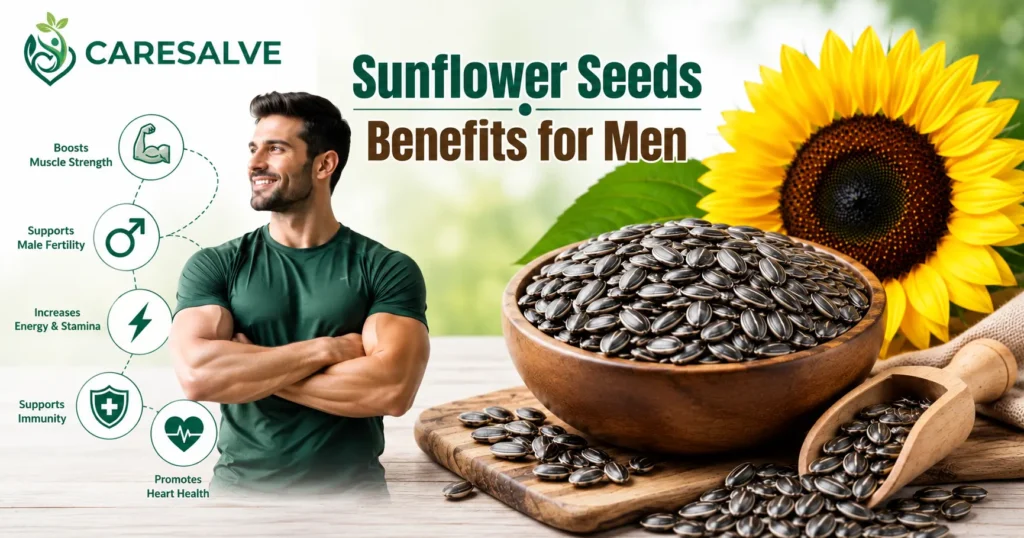
Sunflower seeds benefits for men, sometimes searched as sunflower seed benefits for male or sunflower seeds benefits men, include the following.
- Protein and healthy fats support muscle recovery after exercise.
- Zinc supports healthy testosterone levels.
- Vitamin E and unsaturated fat support cardiovascular health.
- Magnesium supports muscle function and may reduce exercise related cramping.
Sunflower Seeds Benefits for Women
Sunflower seeds benefits for women, also searched as sunflower seed benefits for female or sunflower seeds benefits for females, include the following.
- Iron supports energy levels, which is especially important during menstruation.
- Folate supports women who are pregnant or planning pregnancy.
- Vitamin E and healthy fat support skin hydration and elasticity.
- Small amounts of biotin support healthy hair.
- Calcium and magnesium contribute to bone strength.
Are Sunflower Seeds Good for Weight Loss and Snacking?
Sunflower seeds for snacking can support weight management when portioned properly. They are rich in fiber and protein, both of which promote fullness and reduce overeating later on. Since they are calorie dense, portion control matters, which is why measuring out a small handful instead of eating from a large bag is smart. Many people ask about the best time to eat sunflower seeds for weight loss, and a mid morning or early afternoon snack is a popular choice to help curb cravings before the next meal.
Are Sunflower Seeds Good for Diabetes?
Sunflower seeds have a relatively low glycemic index, so they do not cause sharp blood sugar spikes. Their fiber and fat content slow digestion, which is why many people ask can diabetics eat sunflower seeds or are sunflower seeds ok for diabetics. In general, sunflower seeds can fit into a diabetes friendly eating plan, especially unsalted varieties eaten in controlled portions.
How Much Sunflower Seeds Should You Eat Daily?
A common serving size for sunflower seeds is about 1 ounce, or 28 to 30 grams, roughly a small handful. This is the amount most commonly used to answer questions like how many sunflower seeds should I eat a day or how much sunflower seeds to eat daily. This portion typically provides:
- Around 165 calories
- About 6 grams of protein
- About 14 grams of fat, mostly unsaturated
Sticking to one serving per day is a sensible way to enjoy sunflower seeds nutritional benefits without going overboard on calories or sodium.
How to Eat Sunflower Seeds
Raw Sunflower Seeds
Raw sunflower seeds retain the most natural nutrient content. Many people ask can you eat sunflower seeds raw or can you eat raw sunflower seeds, and the answer is yes, raw sunflower seeds are safe to eat as long as they are clean and fresh.
Roasted Sunflower Seeds
Roasted sunflower seeds have a deeper, nuttier flavor. Choosing dry roasted, unsalted sunflower seeds is a smart way to avoid excess sodium.
Sunflower Kernels
Shelled sunflower kernels are ready to eat with no shell to remove, which makes them convenient for salads, snacks, and baking.
How Do You Eat Sunflower Seeds With a Shell?
If you are wondering how to eat sunflower seeds in the shell, or how to chew sunflower seeds, most people crack the shell with their teeth, remove the kernel, and spit out or discard the husk rather than swallowing it.
Salads
A sunflower salad or salad topped with sunflower seeds adds crunch, protein, and healthy fat.
Yogurt
Stir sunflower seeds into plain or Greek yogurt for a filling snack.
Smoothies
Blend a spoonful of sunflower seeds into smoothies for extra protein and creaminess.
Oatmeal
Top oatmeal with sunflower seeds for added crunch and staying power.
Homemade Trail Mix
Combine sunflower seeds with dried fruit, oats, and a few dark chocolate chips for an easy energy boosting snack.
Sunflower Sprouts
Sunflower sprouts are young sunflower greens grown from the seed and are valued for their healthy fats and fresh, nutty flavor. Sprouted sunflower seeds benefits include easy digestibility and a concentrated source of nutrients, making them a popular addition to salads and sandwiches.
Raw vs Roasted Sunflower Seeds
| Factor | Raw Sunflower Seeds | Roasted Sunflower Seeds |
| Nutrition | Highest retention of natural nutrients | Slightly reduced due to heat exposure |
| Taste | Milder, softer flavor | Deeper, nuttier flavor |
| Shelf Life | Shorter, more prone to oxidation | Longer, especially when packaged |
| Sodium | Naturally low | Can be high if salted |
| Calories | Similar per serving | Similar per serving, unless oil roasted |
Pros and Cons of Sunflower Seeds
Pros
- Good source of plant based protein and fiber
- Rich in vitamin E, magnesium, iron, zinc, and selenium
- May support heart health and healthy cholesterol
- Convenient, portable snack
Cons
- Calorie dense, so portions should be measured
- Salted and flavored sunflower seeds can be high in sodium
- Possible allergy risk for some individuals
- Shells should not be swallowed in large amounts
Potential Side Effects of Sunflower Seeds
High Calorie Intake
Sunflower seeds are calorie dense, so eating large amounts without portion control can contribute to unwanted weight gain.
Too Much Sodium
Salted and flavored sunflower seeds can be high in sodium, which may affect blood pressure. Choosing unsalted or raw unsalted sunflower seeds helps manage this.
Cadmium Exposure
Sunflower seeds can absorb trace amounts of cadmium from the soil. Eating them in moderation as part of a varied diet keeps this risk low.
Digestive Discomfort
Eating very large amounts at once, especially with shells, can cause stomach discomfort in sensitive individuals.
Gas and Bloating
People often ask do sunflower seeds cause gas or does sunflower seeds give you gas. The fiber content, while beneficial overall, can cause temporary gas or bloating if your body is not used to a high fiber intake.
Stool Blockage
Swallowing whole shells in large amounts, rather than spitting them out, can occasionally contribute to digestive blockage, so it is safer to remove shells before eating.
Allergies
Although less common than peanut or tree nut allergies, sunflower seed allergies do exist and can cause reactions ranging from mild to severe. Anyone with a known seed allergy should avoid sunflower seeds and consult a healthcare provider.
Buying and Storing Sunflower Seeds
Sunflower seeds, sunflower kernels, and sunflower nuts are widely available at grocery stores, health food stores, and online, so if you are wondering where can I buy sunflower seeds, most supermarkets carry raw, roasted, salted, and unsalted varieties. Once opened, sunflower seeds stay freshest when kept in a sealed, airtight container in a cool, dry place or in the refrigerator, which helps answer the common question of how long are sunflower seeds good for. Properly stored, shelled sunflower seeds generally stay fresh for several months, while seeds still in the shell can last even longer.
Can You Plant the Sunflower Seeds You Eat?
A frequent question is can you plant sunflower seeds that you eat. Raw, unroasted sunflower seeds sold for eating can often be planted and may grow, though seeds specifically sold as planting seed tend to give more reliable results, since roasted or heavily processed snack seeds usually will not sprout.
Frequently Asked Questions
1. Are Sunflower Seeds Healthy?
Yes. Sunflower seeds are rich in protein, fiber, healthy fats, vitamin E, magnesium, and several other nutrients that support heart, immune, and skin health when eaten in moderation.
2. Are Sunflower Seeds High in Protein?
Yes, they contain roughly 21 grams of protein per 100 grams, making them a strong plant based protein source.
3. Do Sunflower Seeds Have Fiber?
Yes, with about 8.6 grams of fiber per 100 grams, sunflower seeds support digestive health and help you feel full.
4. Do Sunflower Seeds Have Magnesium?
Yes, they are one of the richer food sources of magnesium, supporting muscle and nerve function.
5. Do Sunflower Seeds Have Iron?
Yes, sunflower seeds provide a useful amount of iron, which supports healthy red blood cell production.
6. Are Sunflower Seeds High in Carbs?
They are relatively low in carbohydrates, with most of their calories coming from fat and protein rather than carbs.
7. Are Sunflower Seeds Good for Cholesterol?
Yes, their unsaturated fat and fiber content can support healthy cholesterol levels when eaten as part of a balanced diet.
8. Can You Eat Sunflower Seeds Every Day?
Yes, in moderate amounts, generally around one ounce per day, sunflower seeds can be a healthy daily addition to your diet.
9. Can You Eat Sunflower Seeds Whole?
The kernel inside is edible, but the outer shell is not meant to be swallowed in large amounts. Most people either shell them by hand or buy pre shelled kernels.
10. What Are Sunflower Kernels?
Sunflower kernels are the soft, edible inner part of the sunflower seed once the outer husk has been removed.
Final Thoughts
Sunflower seeds, sunflower kernels, and sunflower nuts are a small but powerful addition to almost any diet. They deliver a strong combination of protein, fiber, healthy fats, and essential vitamins and minerals, including vitamin E, magnesium, iron, zinc, and selenium. Regular, moderate consumption may support heart health, immune function, skin health, and stable blood sugar levels.
As with most nutrient dense foods, portion size matters. Sticking to around one ounce per day and choosing unsalted or lightly salted varieties helps you enjoy the benefits of sunflower seeds without the downsides of excess sodium or calories. Paired with a balanced diet full of vegetables, fruits, whole grains, and lean protein sources, sunflower seeds can be a simple, satisfying way to boost your everyday nutrition.
